In this article:
What Are Neonatal Seizures?
Neonatal seizures are episodes of abnormal electrical activity in the brain that occur during the first 28 days after birth. They may indicate an underlying neurological, metabolic, or infectious condition.Unlike seizures in older children, neonatal seizures do not always involve noticeable shaking or vigorous body movements. Some episodes produce subtle signs that parents may find it difficult to recognise. Therefore, any unusual, repetitive movement or unexplained change in a newborn’s behaviour should be assessed by a doctor.
What Causes Neonatal Seizures?
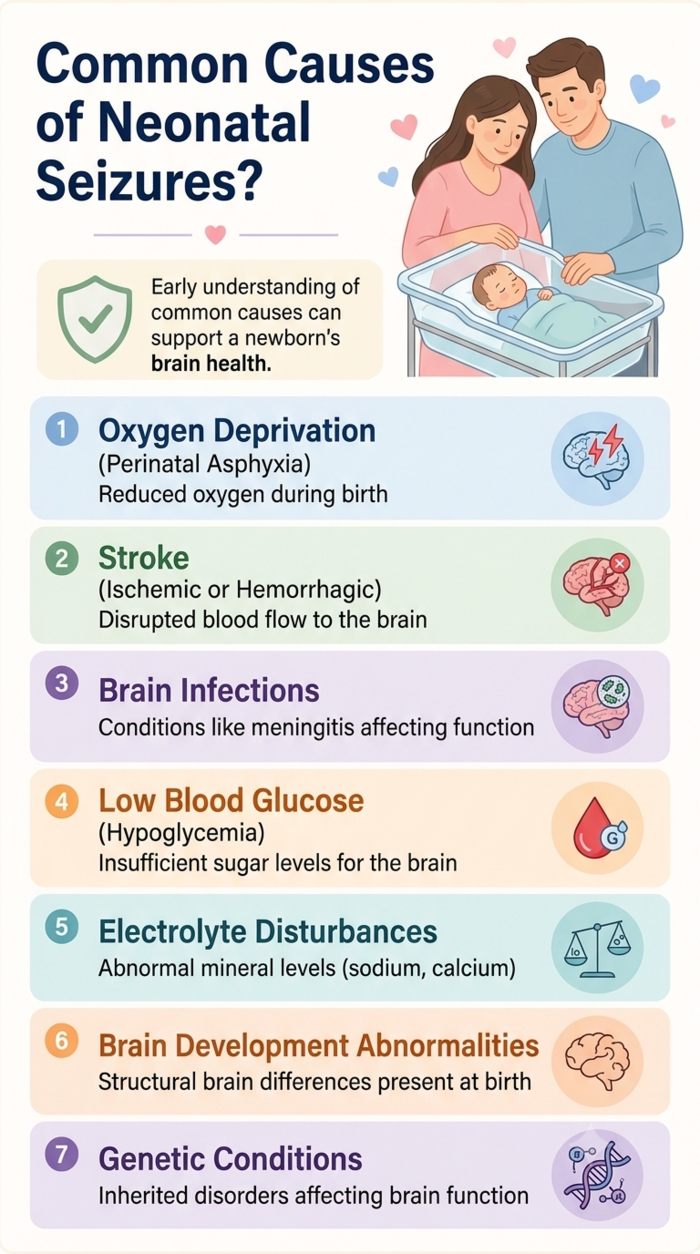
Common causes include the following:- Oxygen deprivation during birth: Reduced oxygen supply to the brain during or right after birth can cause brain injury and seizures
- Stroke: A disruption in blood flow to a part of the baby's brain may trigger seizure activity
- Brain infections: Conditions such as meningitis and encephalitis can affect brain function
- Low blood glucose: Insufficient glucose can interfere with the brain's normal functioning
- Electrolyte disturbances: Abnormal levels of sodium, calcium, or other electrolytes may trigger seizures
- Brain development abnormalities: Structural differences in the brain can contribute to seizure activity
- Genetic conditions: Certain genetic disorders can affect brain function and increase seizure risk
Early recognition, prompt diagnosis, and appropriate treatment are essential to protect a newborn's neurological health.
What Are The Signs of Neonatal Seizures?
The signs of neonatal seizures can vary depending on the part of the brain involved. Parents should watch for the following signs:- Repetitive jerking movements: Repeated twitching or jerking of the arms, legs, or other body parts
- Unusual stiffening: Sudden stiffening of the baby's body or limbs without an obvious reason
- Rhythmic movements: Repeated movements of the arms or legs that follow a regular pattern
- Repeated eye deviation: The eyes repeatedly turning to one side or showing unusual movements
- Changes in breathing: Sudden, unexplained pauses, or alterations in the baby's breathing pattern
- Repetitive facial movements: Repeated movements of the mouth, lips, or face that appear normal
How Are Neonatal Seizures Diagnosed?
Depending on the symptoms and clinical state of the baby, Dr Abhishek Chopra may suggest the following tests:- Electroencephalography (EEG): Captures the electrical activity of the brain, which helps reveal fits, including those without visible shaking
- Blood tests: Measure sugar, electrolyte levels, and other factors so that any metabolic defects can be diagnosed
- Brain imaging: Ultrasound scans or MRI can determine structural defects, stroke, or injury in the brain
- Tests for infections: More tests are done in case of a suspected brain infection or any other type of infection
How Are Neonatal Seizures Treated?
The treatment options are usually determined by the root cause of the condition, the state of the baby, and the types of seizures experienced.Options may include the following:
- Antiepileptics: Medication may be used to help stop the seizures
- Treatment of metabolic issues: Conditions like hypoglycemia (low blood sugar levels) and electrolyte imbalance might be treated
- Supportive care: Babies may receive breathing support, fluids, and temperature regulation in the neonatal intensive care unit (NICU)
- Continuous monitoring: EEG monitoring helps doctors assess brain activity and determine whether seizures have stopped
What Should Parents Do if a Newborn Has a Seizure?
Suspected neonatal seizures require immediate emergency medical assessment. Parents should take the following precautions:- Seek emergency medical care immediately
- Do not restrain the baby's movements
- Never place fingers or objects inside the baby's mouth during an episode
- Do not give food, milk, or oral medication during the episode
- If possible, note the movements, the duration, and any changes in breathing to share with the medical team
Whether you’re pregnant, a new mom, or navigating postpartum, you don’t have to do it alone. Join our support group to connect, share, and support one another.
FAQs on Neonatal Seizures: What Parents Should Know
- Can a newborn experience seizures in sleep?
Yes, seizures can take place when a newborn sleeps or is awake. Some seizures can go unnoticed since they comprise slight and involuntary movements and behaviour changes. It is vital to consult a doctor about any movements that seem odd during sleep. - Is it possible to experience seizures that involve no visible movements?
Yes, neonatal seizures can occur without visible movements. These are called subtle or electrographic seizures and may involve changes in heart rate, breathing, eye movements, or brain activity alone. EEG monitoring helps doctors detect seizures that are not externally noticeable. - Will seizures affect the newborn brain development?
Neonatal seizures may affect brain development depending on their cause, severity, and duration. Early diagnosis, appropriate treatment, and regular developmental monitoring can help improve outcomes.