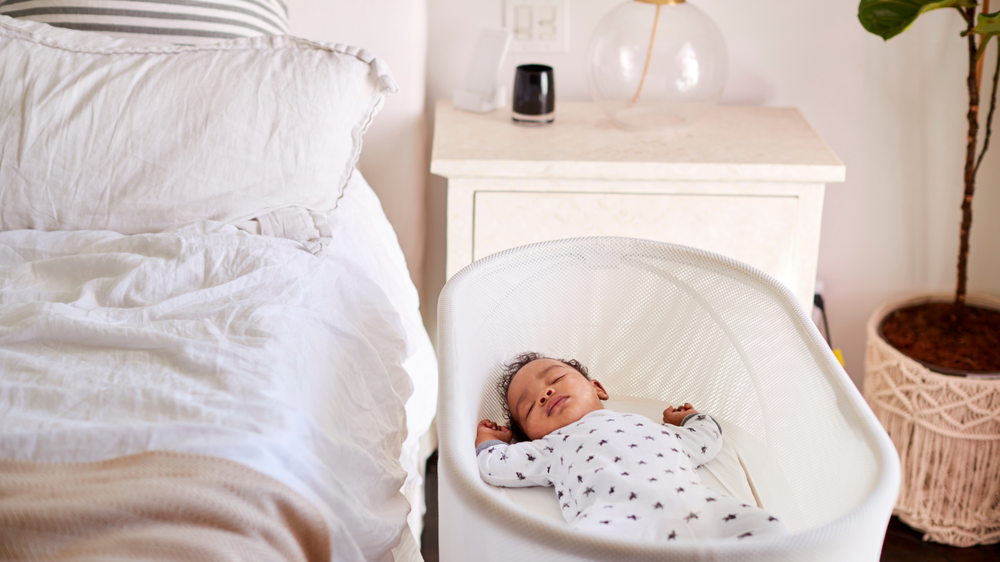
The conventional recommendation is that most newborns will sleep in the same room with their parents but in a separate cot, crib, or bassinet, which can be seen as a good compromise between having the baby near and ensuring safety.
What is Room Sharing?
Room sharing means keeping the baby in the parents' room on a separate sleep surface, such as a cot, crib, or bassinet. It makes nighttime feeding, settling and checking easier. Parents can respond promptly to the baby while maintaining safe sleep practices and avoiding the risks linked with sharing an adult bed.“Keeping your baby close at night can make feeding easier, while a separate sleep surface helps maintain a safer sleep environment.”
- Dr Grover
Why is Room Sharing Recommended for Newborns?
Newborns need frequent care, feeding, and attention during the day and night. Keeping the baby nearby allows parents to notice feeding cues, check on them and respond to crying more easily. Room sharing is also linked with a lower risk of sleep-related infant death. Dr Rajat Grover recommends keeping the baby close while ensuring they sleep on a separate, firm, and flat surface.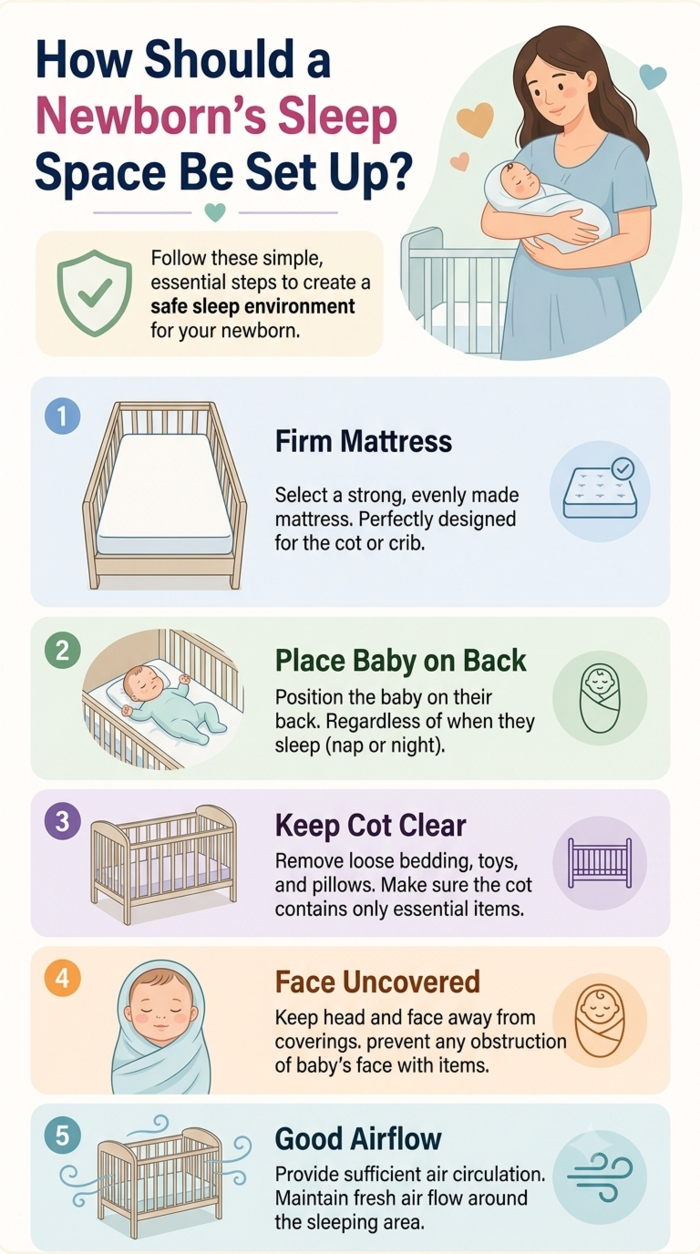
How Should a Newborn's Sleep Space Be Set Up?
Parents must adopt the following steps while caring for their babies:- Select a strong and evenly made mattress that is perfectly designed to suit the baby's bed
- Position the baby on their back, regardless of when they sleep
- Keep the head and face away from any covering
- Avoid adding anything that might hamper safe sleep
- Ensure that there is sufficient air circulation around the baby
- Make sure that the baby's cot doesn't contain anything apart from some essential items
Is Bed Sharing Safe for a Newborn?
Bedsharing means sharing the same sleep surface as the parent or another person. This creates a greater possibility of experiencing sleep-related risks. Risks for bed sharing increase in specific situations, for instance, when a parent is tired or takes medication that makes them sleepy. There is an even greater chance of risks when premature or low-body-weight babies are concerned. Therefore, parents should opt for a separate sleeping area whenever possible.When Can a Baby Move to a Separate Nursery?
There is no fixed age for moving the baby to a separate nursery. The decision may depend on the baby's development, family needs, and the safety of the new sleep setting. Before making the move, ensure the nursery has a safe cot or crib. Continue the same safe-sleep practices and avoid adult beds, sofas, or other unsuitable surfaces.What Should Parents Consider Before Choosing a Nursery?
Parents can consider several practical factors before moving their baby to a separate room.- Baby's age and development: Newborns and young infants need frequent feeding and care. Keeping them nearby can make these tasks easier during the early months.
- Nighttime feeding: If the baby wakes frequently for feeds at night, having the baby close to the parents can reduce the efforts involved in nighttime care
- The safety of the sleep space: The room should have a suitable cot or crib with a firm, flat mattress. The sleep area should remain free of loose and soft items
- Parents' comfort: Parents should choose an arrangement that allows them to follow safe-sleep practices consistently. If they have concerns about moving the baby, they can discuss the decision with a paediatrician
Room Sharing vs. Separate Nursery: What Matters Most?
The most important consideration is not simply whether the baby sleeps in the parents' room or a separate nursery. The focus should remain on creating a safe and consistent sleep environment. The American Academy of Paediatrics (AAP) recommends sharing a room with your baby for at least the first 6 months of their life. Dr Rajat Grover advises parents to keep the baby's sleep area separate, firm, flat, and free from objects that could interfere with breathing. Families can also seek professional guidance if their baby was born prematurely or has specific medical or developmental needs.Sharing a bedroom with a separate bed, cradle, or bassinet is a feasible idea for infants and will simplify night care. Parents must not share a bed with their babies and must ensure the baby is out on a firm, flat, clean surface while sleeping. As babies grow older, they can be shifted to a different bedroom while following safe sleeping habits.
Whether you’re pregnant, a new mom, or navigating postpartum, you don’t have to do it alone. Join our support group to connect, share, and support one another.
FAQs on Room Sharing vs. Separate Nursery: What Experts Recommend
- Can a newborn sleep in a travel cot?
A travel cot may be suitable if it is designed and approved for infant sleep and is used according to the manufacturer's instructions. Parents should use only the recommended mattress and avoid adding extra padding or layers. - Should parents use a baby monitor when the baby sleeps?
A baby monitor can help parents hear or see the baby when they are not in the same room. However, it should not replace safe sleep practices or direct care when the baby needs attention. - Can siblings share a room with a newborn?
A newborn may eventually share a room with an older sibling, but the baby's sleep space should remain separate. Parents should also ensure that toys, bedding, and other items belonging to the older child cannot enter the baby's cot or crib.