In this article:
Why Does GFR Increase During Pregnancy?
GFR describes how much blood the kidneys filter over a given period. Blood vessels relax, and blood flow increases throughout the body during pregnancy. Renal blood flow rises, allowing the kidneys to filter more blood.This increased filtration begins early in pregnancy and remains elevated through much of gestation. Research suggests that measured GFR can increase by more than 50% in healthy pregnancies, although the exact amount varies with the method and stage of pregnancy.
The kidneys also adapt how they handle sodium, water, and other electrolytes. These changes help the mother's body accommodate the increased blood volume needed during pregnancy.
What Is a Normal Kidney Function Test Result in Pregnancy?
Laboratory ranges built for non-pregnant adults do not apply during pregnancy. The table below shows how key kidney markers shift.| Test | Non-pregnant normal | Normal in pregnancy | Note |
| Serum creatinine | Up to 0.9–1.0 mg/dL | Lower than non-pregnant baseline; ≥0.9 mg/dL in the third trimester can indicate underlying kidney disease | Falls due to higher GFR |
| GFR | 90–120 mL/min | Rises by 40–50%, peaking in the first/second trimester | Reflects increased renal blood flow |
| Urine glucose | Absent | Mild glycosuria is normal | Caused by reduced tubular reabsorption |
| Urine protein (24-hour) | Under 150 mg | Up to 300 mg is normal | Higher levels need clinical review |
Dr Soumya Lakshmi, Sr. Consultant, Obs & Gyn, Aster CMI Hospital
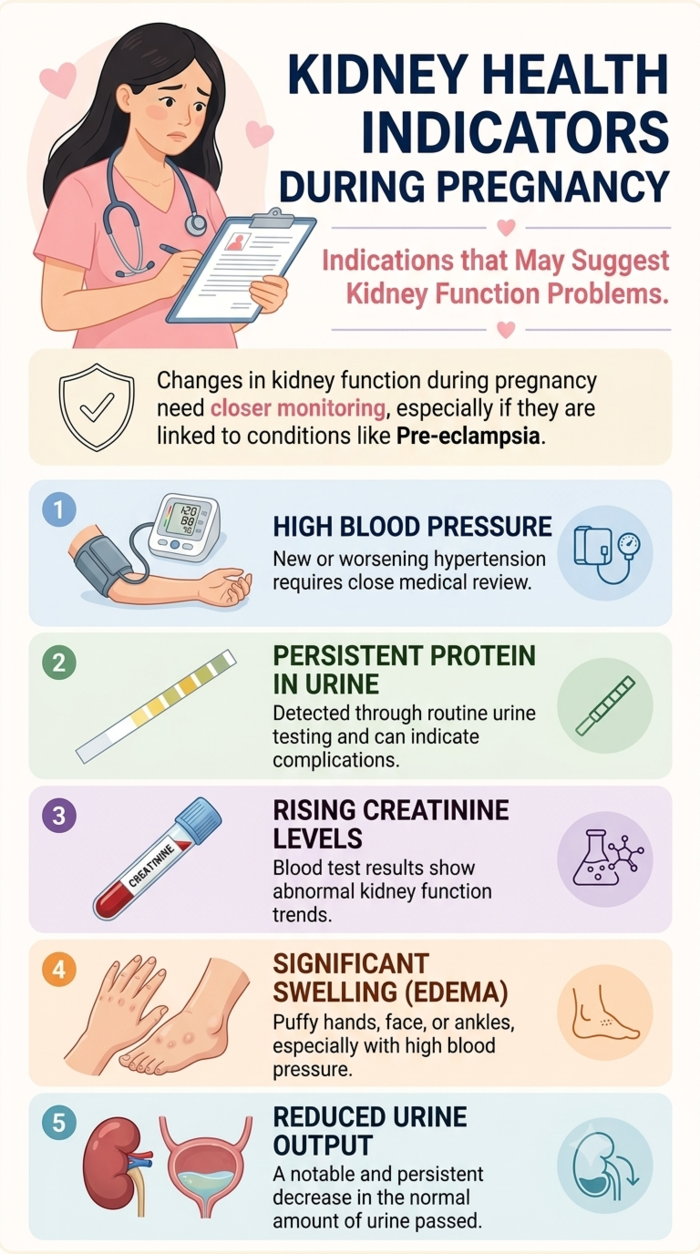
When Can Changes in Kidney Function Indicate a Problem?
Kidney problems may be suspected when there is:- A rise in serum creatinine
- Persistent or significant protein in the urine
- High blood pressure
- Blood in the urine
- Reduced urine output
- Swelling associated with abnormal blood pressure or kidney findings
- Abnormal electrolyte levels
- Symptoms suggesting a kidney infection or acute kidney injury
How Do Kidney Function Changes Progress Through Pregnancy?
Kidney adaptation does not happen at a single pace across all nine months.| Trimester | What happens to GFR | What it means |
| First (weeks 1–13) | Rises sharply, often detectable by week 4 | Kidneys begin filtering more blood almost as soon as pregnancy starts |
| Second (weeks 14–27) | Peaks and plateaus at its highest level | Filtration stays elevated to match rising blood volume |
| Third (weeks 28–40) | May decline slightly | Some studies link this to the uterus compressing renal blood vessels near term |
Does Pregnancy Affect the Kidneys After Delivery?
Kidney function does not immediately return to pre-pregnancy levels after childbirth. Some physiological changes can persist during the postpartum period before gradually returning towards the non-pregnant state.Persistent proteinuria, elevated creatinine, high blood pressure, or other abnormal kidney findings after delivery should be evaluated rather than assumed to be a normal consequence of pregnancy.
In most cases, kidney function changes during pregnancy reflect healthy adaptation. Regular antenatal monitoring separates normal hyperfiltration from early signs of preeclampsia or kidney disease.
Whether you’re pregnant, a new mom, or navigating postpartum, you don’t have to do it alone. Join our support group to connect, share, and support one another.
FAQs on Kidney Function Changes During Pregnancy: What Do They Mean?
- Can pregnancy trigger kidney disease in a healthy woman?
Pregnancy itself does not cause chronic kidney disease, but conditions like preeclampsia can cause temporary or, rarely, lasting kidney damage if untreated. - Is protein in urine always a bad sign during pregnancy?
No. Proteinuria under 300 mg in 24 hours is normal. Higher levels, especially with raised blood pressure, need evaluation for preeclampsia. - How often should kidney function be tested during pregnancy?
Urine tests are done at every antenatal visit; blood tests for creatinine and related markers are usually done once each trimester, or more often if risk factors are present.