
To know more about it, we got in touch with Dr Rajat Grover, Senior Consultant, Paediatrician and Neonatologist, Cloudnine Group of Hospitals, Patparganj, New Delhi.
The Truth About Sleep Training
According to Dr Grover, sleep training involves guiding the baby in developing proper sleep patterns that do not require as much attention from the parents. This is not about making the baby cry and ignoring them.This is important to mention because many people have wrong perceptions about the meaning of sleep training. Sleep training is a process of learning. As the baby learns how to sleep with less help, the parent remains attentive to their needs all the time.
The Common Skill That Underlies All the Techniques
Each sleep training technique relies on one concept. Placing a baby in a cot when they are drowsy yet awake can help to train them to fall asleep alone.That is, the baby is put into the cot in a half-awake state instead of sleeping in the arms of the parent. With time, the baby begins to associate sleep with the cot. The following techniques vary in how much help the parent provides during this process.
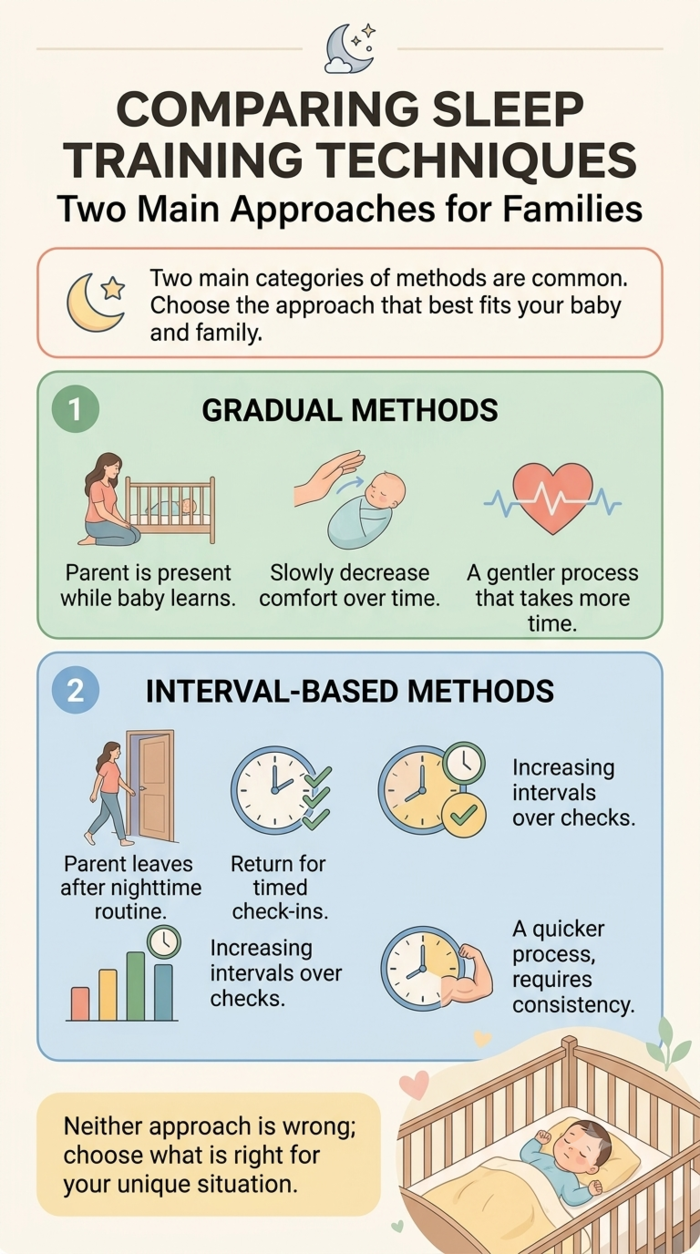
Different Sleep Training Techniques
There are different sleep training techniques used today, which can be divided into two categories. One of them includes gradual techniques:- A parent remains with a child, and the child learns to sleep in the presence of a parent.
- The comfort is provided, then it is gradually decreased.
- There are slow changes which give enough time to the baby to get used to them.
- It takes more time to train a baby; however, many parents find the process gentler.
- A parent goes away from a baby after a nighttime routine.
- Then, a parent comes back to check on a baby during certain intervals.
- The intervals might become longer with time.
- The process is quick; however, it requires a lot of consistency and persistence.
Selecting an Approach That Will Work
Families can choose an approach that suits them and their baby. Some babies cope with slight changes well, while others resist and require a slower pace.It will help families to ask themselves some questions to make a choice:
- What is the reaction of the baby to minor changes in their daily routine?
- What is the approach that both parents can apply steadily?
- How much time does a family have for an approach to show results?
- Is an approach convenient for all of those who are engaged?
Safe Sleep Always Comes First, Whatever the Approach
Safety is paramount irrespective of the approach that you are using for your child. Babies need to be put to sleep on their back on a firm and flat surface and without any loose pillows, blankets, toys or soft items.
A simple checklist may come in handy:
- Babies are put to sleep on their back
- Sleeping surface is firm and flat
- There are no loose pillows, blankets, toys or any soft items in the cot
- Consistency in the setup for daytime naps also
Responding to the Baby Throughout
Sleep training is about more than just getting babies to sleep for longer. The aim is to create safe, reliable, and healthy sleeping behaviours while reacting properly to the needs of the baby.Reacting properly involves checking if the baby needs food, is ill, is hot, or needs a diaper change. A baby crying due to any of these reasons needs assistance, not further waiting. Distinguishing between these situations requires practice, and a paediatrician will be able to guide parents on normal behaviour for babies at different ages.
When Should a Doctor Be Consulted?
In the following cases, a paediatrician can advise about how to choose the right approach:- The baby is too young, and feeding is frequent
- There are some health issues or the baby has some sleeping-related problems, like reflux or breathing problems
- Problems with sleep persist despite having the routine
- Parents have disagreements regarding which approach to use
- Unusual sleep behaviour for the age of the baby
Not all sleep training approaches fit all babies. The most suitable approach would be one that guarantees safety, is comfortable for the parents and can be applied consistently.
Whether you’re pregnant, a new mom, or navigating postpartum, you don’t have to do it alone. Join our support group to connect, share, and support one another.
FAQs on Sleep Training Methods: Which One Is Right for Your Baby?
- Is there an option for changing techniques if the chosen one is not suitable?
Yes, families have the option to change the technique. It is always better to give a certain technique enough time to try before making a decision, as frequent changes can be confusing for the baby. The paediatrician may give recommendations regarding when to do it. - Is it necessary for both parents to stick to the same technique?
Consistency is good for faster learning in a baby. If parents adopt the same technique, then the baby will receive the same information every bedtime. - What about illnesses or changes in the schedule due to travelling?
Sometimes it makes sense to stop training a baby when they are sick or when there is a significant change in the schedule.