
In this article:
How Your Body Adjusts to Breastfeeding Twins
The biological mechanism of breastfeeding is highly adaptive. When both babies nurse frequently, they send strong hormonal signals to your brain to scale up milk production to match their collective appetite. Such demand triggers certain physiological adjustments and also necessitates lifestyle modifications.
- Increased Milk Production: Your breasts adjust milk volume based on how often they are emptied. Feeding both infants simultaneously or in close succession naturally maximises breastmilk supply.
- Nutrition Needs While Feeding Twins: Your nutritional intake and hydration must be sufficient to replenish the high demands of feeding two babies.
- Managing Sleep and Recovery: During the first few weeks after birth, feeding frequency is usually high, which can lead to maternal sleep deprivation. Indian families enable dedicated time for maternal healing, so focus on establishing breastfeeding and sleep routines early on.
5 Tips for Tandem Breastfeeding Twins
It is essential to consult a certified lactation specialist for personalised breastfeeding guidance. A few strategies will help you handle tandem breastfeeding with complete confidence:
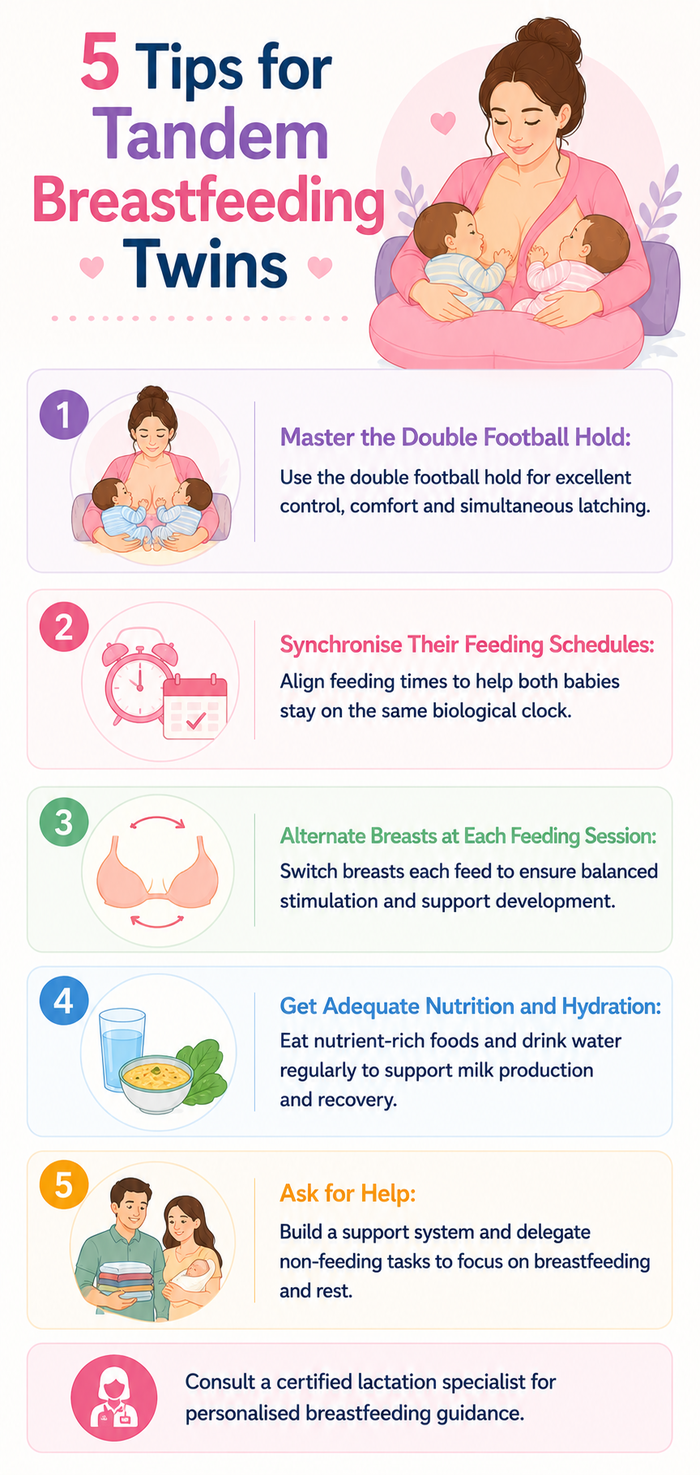
- Master the Double Football Hold: The double football hold – when both your babies are tucked under your arms like footballs with their legs extending behind you- is highly recommended for twin breastfeeding. This position offers excellent control over both babies’ heads, does not strain your abdomen or spine and allows them to latch simultaneously. You might need to use a pillow or two to support your lower back and/or the children’s heads.
- Synchronise Twins’ Feeding Schedule: Help your babies stay on the same biological clock by aligning their feeding times. If one twin wakes up hungry, gently wake the second twin to feed at the same time or immediately after. Keeping them on a similar schedule ensures you get predictable windows of rest and gives you longer in-between feeds. Using expressed milk (with a breast pump) is also helpful and saves time if you are not practising tandem feeding initially.
- Alternate Breasts at Each Feeding Session: Many mothers worry about one twin getting more milk than the other, especially if one baby has a stronger suckling reflex. To ensure balanced stimulation, switch which breast each baby nurses from at every feed. This practice not only evens out your milk production but also aids your babies' visual and physical tracking development.
- Get Adequate Nutrition and Hydration: To support your milk production and your own physical recovery, focus on nutrient-rich meals. Incorporate traditional, easily digestible foods like oats porridge, dal and leafy vegetables into your regular diet. Also, remember to drink a glass of water before every feed. Ask your dietician about how you can choose healthy options within your Indian food menu to meet the extra caloric demands for feeding your twins.
- Ask for Help: You will need support from your partner or family members during the first few months after childbirth. So, build a reliable support system and do not hesitate to delegate non-feeding tasks. Let others handle nappy changes, burping or household chores so you can focus entirely on breastfeeding and resting.
When Should You Seek Medical Help or Lactation Support?
While lifestyle adjustments help, please seek professional medical or lactation advice immediately if you notice these red flags:
- One or both twins show signs of poor weight gain or fewer than six wet diapers a day.
- Either the baby consistently struggles to latch or shows extreme fussiness during feeds.
- You experience persistent, severe nipple pain or signs of a breast infection like fever and hard, painful lumps.
- You experience deep, overwhelming feelings of anxiety, sadness or exhaustion.
How to Make Breastfeeding Twins Easier
Trust the Process: Your body’s ability to adapt is incredible. If a tandem feed feels clumsy at first, it is okay to feed them individually until you gain confidence.
Communicate Your Needs: Share your experience and challenges relating to the physical demands of feeding two babies with a close family member. Take emotional support from your partner or loved ones. When your support circle understands how vital your rest is, they can step in to protect your health.
Whether you’re pregnant, a new mom, or navigating postpartum, you don’t have to do it alone. Join our support group to connect, share, and support one another.
FAQs on How to Navigate Breastfeeding When You Have Twins? 5 Practical Tips
- Will I have enough colostrum for both babies in the first few days?
Yes. Your body produces early milk (colostrum) in sufficient quantities tailored to your infants' needs. Early, frequent skin-to-skin contact with both babies will help stimulate an abundant supply quickly. Your lactation specialist may even advise you to express milk (if you are pumping) immediately after skin-to-skin for a better yield. - Should I supplement with formula milk?
While many mothers exclusively breastfeed twins, some use a combination of breast milk and formula to manage exhaustion. Discuss your feeding goals with your paediatrician to ensure your babies reach their growth milestones safely.