In this article:
What is an Umbilical Hernia?
An umbilical hernia happens when a piece of the intestine bulges out from the abdomen where there is weakness, usually close to the navel. This causes a soft lump, which might be more evident whenever the baby cries or exerts pressure.Normally, the lump will not cause any pain and can be easily pushed back into the body. It gets smaller or disappears when the baby is resting.
Do Premature Babies Have a Greater Chance of Getting an Umbilical Hernia?
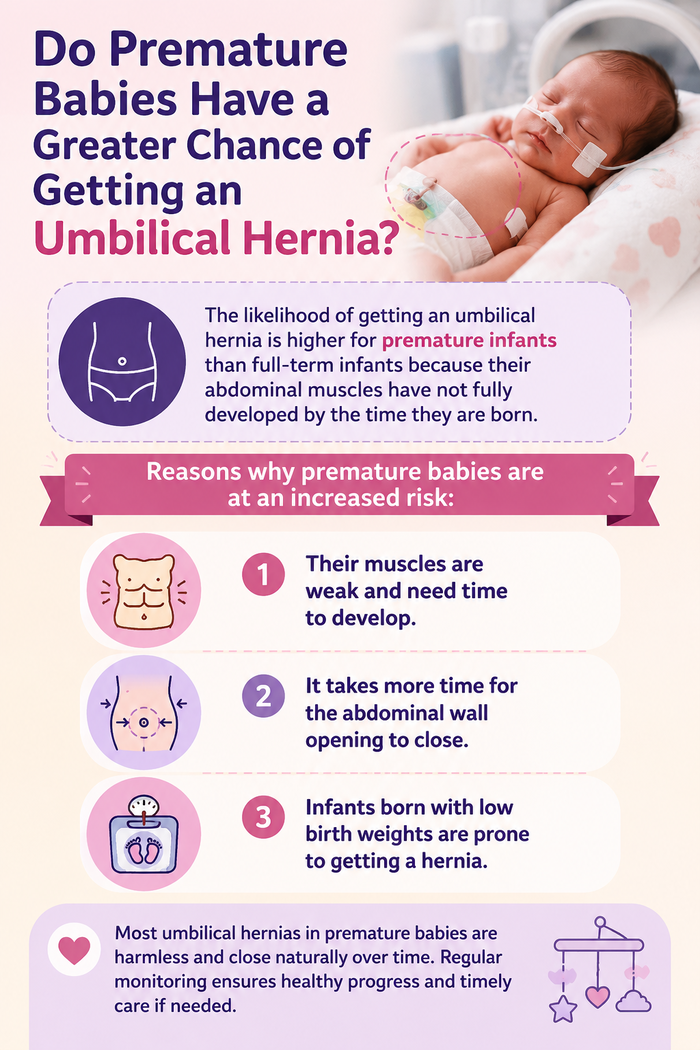
The likelihood of getting an umbilical hernia is higher for premature infants than full-term infants because their abdominal muscles have not fully developed by the time they are born.Reasons why premature babies are at an increased risk:
- Their muscles are weak and need time to develop
- It takes more time for the abdominal wall opening to close
- Infants born with low birth weights are prone to getting a hernia
Signs and Symptoms to Watch for
Umbilical hernias tend to be easily recognisable, with the following signs:- A soft bulge or swelling near the belly button, especially when the baby cries, coughs, or strains
- The bulge may become less visible or disappear when the baby is calm
- The area is usually painless
- The swelling may slightly increase over time before gradually improving
When do Symptoms Call for Immediate Medical Attention
Seek medical care if you notice:- Hardening or tenderness of the bulge
- Baby shows signs of pain, excessive crying, or discomfort
- Discolouration or redness around the bulge
- Vomiting and refusal to feed
- Persistent bulge without returning to normal
Complications of Umbilical Hernia in Premature Babies
An umbilical hernia is usually harmless and rarely causes problems in babies. However, sometimes a small portion of the intestine can get trapped in the opening, a condition called incarceration. This can make the bulge feel firm, swollen, or difficult to gently push back in. In very rare cases, the trapped tissue may lose its blood supply, which needs urgent medical care.How is Umbilical Hernia Treated?
Umbilical hernias heal naturally within one to two years of age; however, doctors advise routine monitoring.Routine Treatment Methods
Regular checkups are conducted to monitor the size of the lump. Medication is usually not required since the lump is harmless and may resolve on its own due to muscle strengtheningSurgery
If the hernia does not close by 4 to 5 years of age, doctors may suggest surgery to prevent further complications. The procedure is usually safe and easy but recommended only if necessary.Taking Care of a Premature Baby Having an Umbilical Hernia
Proper care will promote recovery and avoid unnecessary worries.- Gently handle your child during their normal daily activities
- Make sure to take your child for his/her paediatric appointments
- Keep the area clean and dry
- Do not try any at-home remedies such as bands on the swelling
Umbilical Hernia Myths
Here are some common umbilical hernia myths debunked:Myth 1: Pressing the hernia will help it heal
Fact: It does not do any good; rather, this can cause discomfort to the baby
Myth 2: Surgery is always necessary
Fact: Not all umbilical hernias require surgery since it will heal on its own
Myth 3: The baby will have a lot of pain from the hernia
Fact: The majority of babies do not have any pain since it is usually harmless and painless
The Need for Medical Advice
Hernia around the belly button in babies born prematurely is generally harmless, but all children are unique. It is always best to seek the opinion of a professional paediatrician. Never use home treatments or listen to other people's ideas that have not been medically verified.Premature babies may have more chances of having an umbilical hernia as a result of their weak abdominal muscles, but in general, this problem is usually harmless and temporary. For the most part, your baby will heal by itself with time. The important thing is to keep yourself well-informed and be on the lookout for when to get professional help.
Whether you’re pregnant, a new mom, or navigating postpartum, you don’t have to do it alone. Join our support group to connect, share, and support one another.
FAQs on Umbilical Hernia in Premature Babies: Why Is It More Common?
- Will an umbilical hernia affect my child's growth?
Umbilical hernias do not affect growth or development in the majority of children. The babies keep feeding, growing, and meeting all their developmental milestones as expected. - Can I put my child to lie on the stomach position?
Tummy lying is safe and even recommended for your baby's development. This practice will not harm the baby if done appropriately. - Will my child’s crying cause any problem?
Crying causes the lump to become more noticeable as a result of increased pressure.