In this article:
Why Do Cholesterol Levels Rise During Pregnancy?
Cholesterol naturally increases through pregnancy because the body needs it to build the placenta, produce hormones like progesterone and oestrogen, and support the baby's brain and cell development.Levels begin rising from the second trimester and climb steadily, reaching 25–50% above pre-pregnancy levels by the third trimester, when the demand for hormone and cell-membrane building is highest.
This rise typically continues through the third trimester and returns to pre-pregnancy levels a few months after delivery. It is a normal metabolic adaptation in most women with no prior history of high cholesterol.
What Causes High Cholesterol in Pregnancy?
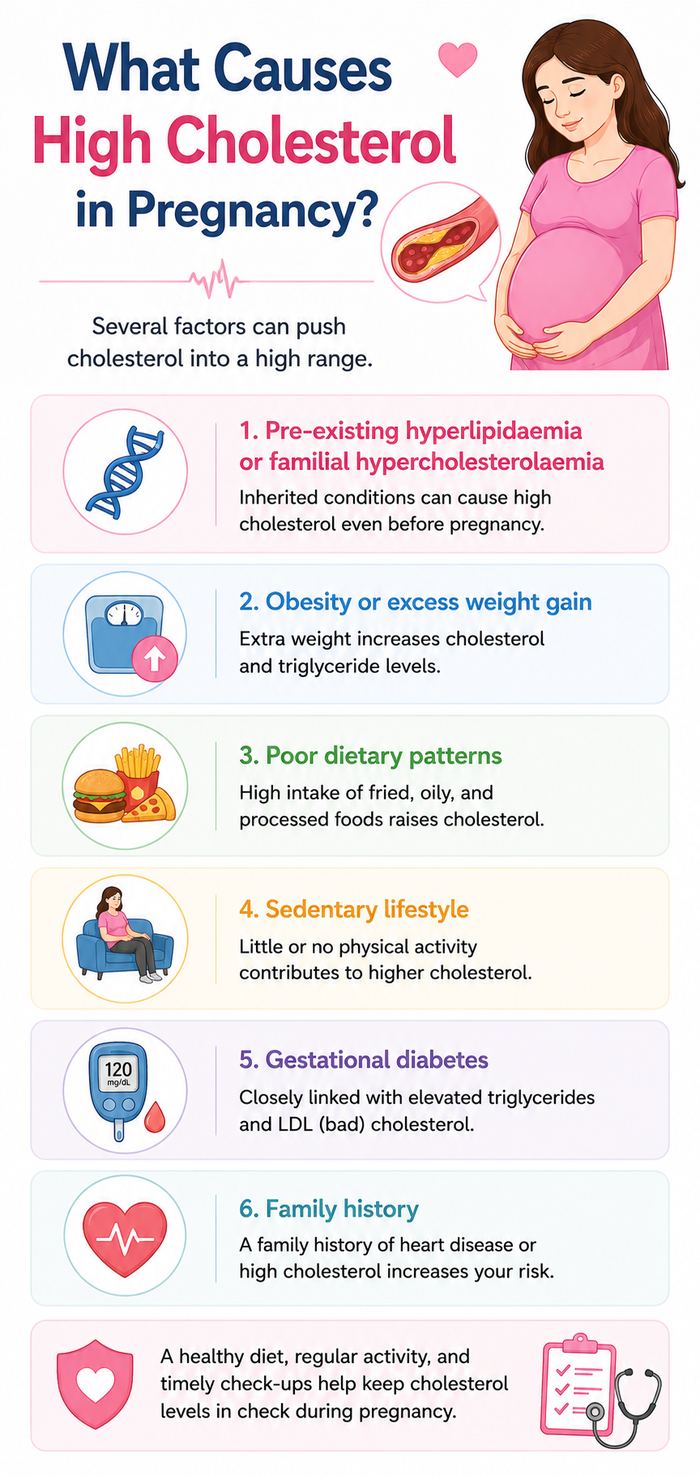
Several factors can push cholesterol into a high range:- Pre-existing hyperlipidaemia or familial hypercholesterolaemia
- Obesity or excess weight gain during pregnancy
- Poor dietary patterns, including high intake of fried, oily, and processed food
- Sedentary lifestyle with little physical activity
- Gestational diabetes, which is closely linked with elevated triglycerides and LDL cholesterol
- Family history of heart disease or high cholesterol
What Counts as High Cholesterol in Pregnancy?
There is no single fixed cholesterol range for pregnancy, since levels naturally shift by trimester. Doctors instead look at the trend and flag levels that cross a set threshold, regardless of trimester.| Category | Total Cholesterol (mg/dL) | What it means |
| Normal (non-pregnant adult) | Below 200 | Baseline reference range |
| Borderline high (general clinical threshold) | 200–239 | Watched, not usually treated |
| Expected rise, second trimester | Around 210–220 | Natural increase begins, not treated |
| High (general clinical threshold) | 240 and above | Flagged for monitoring in non-pregnant adults |
| Expected rise, third trimester | Around 240–250 | Expected natural rise; often crosses the "high" cutoff without being abnormal in pregnancy |
What Are the Risks of High Cholesterol in Pregnancy?
A large US-based study covering more than 10,000 women found that pre-pregnancy hyperlipidaemia was associated with higher risks of:- Arrhythmia (irregular heartbeat)
- Acute coronary syndrome (a group of conditions caused by sudden reduced blood flow to the heart)
- Antepartum haemorrhage (bleeding from the vagina after 20 weeks of pregnancy and before childbirth)
- Gestational diabetes
- Labour and delivery complications
- Hypertensive disorders of pregnancy
According to the American College of Cardiology, moderately raised cholesterol during pregnancy alone does not raise the risk of birth defects above the general background risk; the added risk mainly comes from related conditions like diabetes and obesity.
Can High Cholesterol Affect the Baby's Development?
Cholesterol itself is essential for the foetus, it supports brain growth, hormone synthesis, and cell membrane formation, and the baby's liver starts producing its cholesterol later in gestation.Emerging research has shown that extremely low maternal cholesterol has been linked to congenital heart defects. The concern in pregnancy is not cholesterol, but high levels combined with other risk factors like gestational diabetes, since these together raise the chance of complications for both mother and baby.
How Is High Cholesterol Managed During Pregnancy?
Cholesterol-lowering medications such as statins are not prescribed during pregnancy, as they may affect foetal development and are typically stopped one to two months before conception if planned. Instead, doctors focus on lifestyle measures:- Follow a balanced diet with vegetables, legumes, whole grains, and limited saturated fat
- Choose healthier cooking oils and reduce fried and ultra-processed foods
- Stay physically active with doctor-approved exercise, such as walking
- Monitor blood sugar, since gestational diabetes and dyslipidaemia frequently occur together
- Regular antenatal check-ups to track lipid levels and blood pressure
Whether you’re pregnant, a new mom, or navigating postpartum, you don’t have to do it alone. Join our support group to connect, share, and support one another.
FAQs on High Cholesterol During Pregnancy: Causes, Risks, and What to Do
- At what level is cholesterol considered too high in pregnancy?
Total cholesterol above 240 mg/dL is generally flagged for further testing and monitoring by your obstetrician. - Can I take cholesterol medication while pregnant?
Statins and most lipid-lowering drugs are avoided in pregnancy due to potential risks to the baby; lifestyle changes are the primary approach instead. - Can high cholesterol cause miscarriage?
There is no strong evidence directly linking high cholesterol to miscarriage. Talk to your doctor if you have specific concerns about your lipid levels.