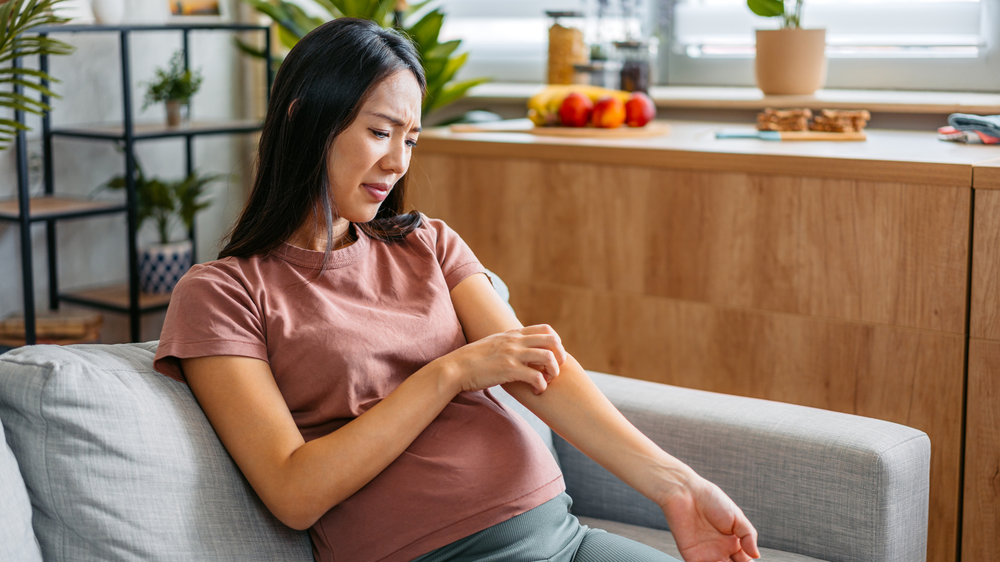
What Causes Eczema in Pregnancy?
Pregnancy causes a shift in oestrogen and progesterone levels, which affects the skin barrier and immune response. This shift pushes the body toward a type of immune activity linked to allergic skin conditions, making eczema more likely to appear or worsen.Common causes and contributing factors include:
- Hormonal changes: Rising oestrogen and progesterone levels affect the skin barrier and immune response.
- New-onset eczema: Doctors call first-time eczema during pregnancy "atopic eruption of pregnancy," which most often appears in the first two trimesters.
- Genetics: A personal or family history of eczema, asthma, or allergic rhinitis raises the chance of flares.
- Climate and lifestyle triggers: High humidity in coastal states, dry winters in the north, synthetic fabric use, and frequent handwashing during pregnancy-related hygiene routines.
What Are the Symptoms of Pregnancy Eczema?
Eczema symptoms during pregnancy match those seen outside pregnancy. Common signs include:- Dry, rough, or scaly patches of skin
- Redness, which may appear darker or greyish on brown skin tones
- Intense itching, often worse at night
- Small raised bumps that may crust or ooze
- Thickened skin from repeated scratching
Does Eczema Affect Pregnancy Outcomes?
Current evidence shows no direct link between eczema and miscarriage, birth defects, or premature birth.Eczema activity is unpredictable in pregnancy: studies report symptoms worsening in anywhere from 17% to 61% of affected women, while about one in five see improvement.
Flares are also more common in the postpartum period due to sleep disruption, hormonal drop, and frequent handwashing while caring for a newborn.
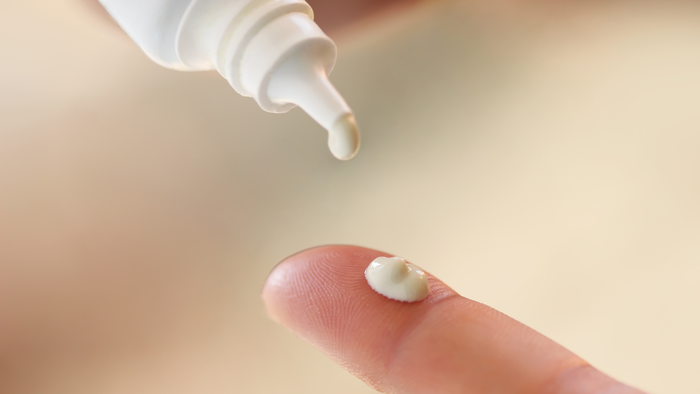
What Are Safe Eczema Treatments During Pregnancy?
Treatment focuses on restoring the skin barrier while avoiding medicines with known risks in pregnancy.- Emollients and moisturisers: Fragrance-free, ceramide- or glycerin-based moisturisers are the first line of treatment. Applying a thick emollient at least twice daily, especially after bathing, helps reduce dryness and itching. Coconut oil, widely used in many households, is a reasonable option for mild dryness, though it should be patch-tested first since it can clog pores for some skin types.
- Topical corticosteroids: Mild to moderate steroid creams, such as hydrocortisone, are considered safe for short-term use during pregnancy under medical supervision. Even potent steroids can be used in short bursts of up to two weeks when prescribed by a doctor. Prolonged use of high-potency steroids over large areas should be avoided, as it has been linked to lower birth weight in some studies.
- Topical calcineurin inhibitors: Tacrolimus and pimecrolimus creams show limited absorption into the bloodstream and are generally considered low-risk when standard treatments are insufficient.
- Antihistamines: Certain antihistamines, such as loratadine or chlorpheniramine, may be used for itch relief, but only after checking with a doctor or obstetrician.
- Phototherapy: Narrowband UVB light therapy is considered safe during pregnancy for moderate to severe eczema that does not respond to creams.
How Can Women Manage Eczema at Home?
Simple home care habits, alongside medical treatment, can help keep flares under control:- Use lukewarm water for bathing instead of hot water, and limit baths to once daily
- Switch to mild, soap-free cleansers instead of traditional bar soaps
- Wear loose, breathable cotton clothing suited to Indian weather
- Apply moisturiser within a few minutes of bathing to lock in hydration
- Avoid known triggers such as dust, strong detergents, and synthetic fabrics
- Speak to a doctor about vitamin D levels, since low vitamin D has been linked to worse eczema symptoms
When to See a Doctor
Consult a gynaecologist or dermatologist if the rash:- Spreads rapidly
- Oozes fluid
- Shows signs of infection such as warmth or pus
- Does not improve with regular moisturising
Eczema during pregnancy is common and treatable, and with the right combination of moisturising, doctor-approved medication, and trigger avoidance, most women manage symptoms safely through to delivery.
Whether you’re pregnant, a new mom, or navigating postpartum, you don’t have to do it alone. Join our support group to connect, share, and support one another.
FAQs on Eczema During Pregnancy: Causes, Symptoms, and Safe Treatment Options
- Is eczema during pregnancy harmful to the baby?
No. Eczema does not directly affect fertility, miscarriage risk, or foetal development. It mainly causes maternal discomfort. - Can eczema appear for the first time during pregnancy?
Yes. This is called atopic eruption of pregnancy and can occur even in women with no prior history of eczema, usually in the first two trimesters. - Will eczema go away after delivery?
For many women, symptoms improve as hormone levels normalise after childbirth, though some experience flares again postpartum due to sleep loss and frequent handwashing.