In this article:
Difference Between UIP And IAP Vaccination Schedule
Dr Grover highlights the following distinction points between UIP and IAP vaccination schedules:| UIP | IAP |
| Based on national public-health priorities | Based on recommendations from paediatric experts and the Advisory Committee on Vaccines and Immunisation Practices (ACVIP) |
| Follows the National Immunisation Schedule | Provides broader recommendations |
| Focuses on population-level protection | Includes vaccines based on individual age and disease risk |
| Vaccines are provided through public health services. Many of them are free of cost | Some additional vaccines may be available through private providers |
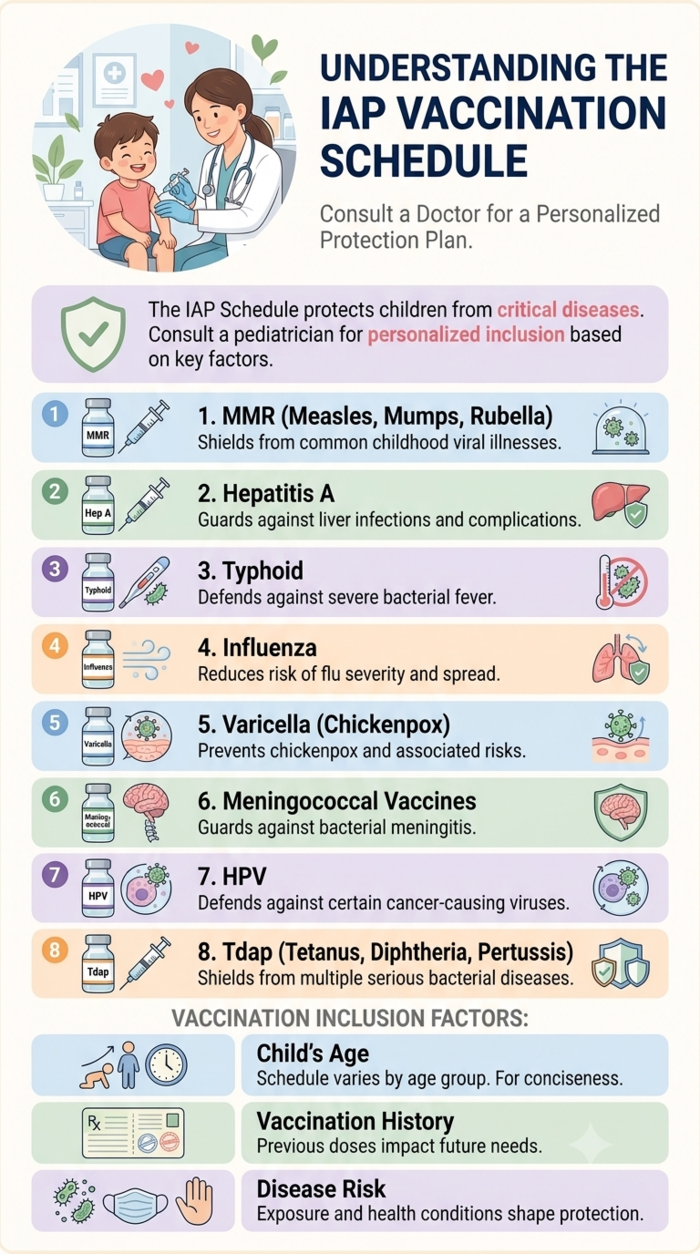
The IAP schedule may include the following vaccines:
- Measles, Mumps and Rubella (MMR)
- Hepatitis A
- Typhoid
- Influenza
- Varicella
- Meningococcal vaccines
- HPV
- Tdap
- Child’s age
- Vaccination history
- Disease risk
Why Do UIP and IAP Recommendations Differ?
According to Dr Grover, parents should understand that the two schedules can differ in the following aspects:- Number of vaccines
- Timing of certain doses
- Availability through the public health system
Your paediatrician can help determine which vaccines your child should receive based on:
- Age
- Previous vaccine doses
- Health conditions
- Travel
- Local disease risks
Does My Child Need Vaccines Beyond the UIP?
Not every additional vaccine will be necessary for every child. Your paediatrician can assess your child’s vaccination history and individual risk factors before recommending additional vaccines.If a vaccine outside the routine UIP schedule is recommended, ask what infection it prevents, why it is appropriate for your child, how many doses are needed and when the next dose is due.
What Should Parents Do?
Dr Grover emphasises that maintaining an accurate vaccination record and ensuring that recommended doses are received on time are important.If you are unsure which schedule your child is following, discuss the vaccination card with your paediatrician. Review all records, including vaccines received through government and private healthcare services.
Do not skip or duplicate a dose simply because two vaccination schedules appear different. Your paediatrician can review the doses already given and advise whether any remaining or catch-up doses are needed.
Your child's vaccination plan should consider their age, previous vaccinations, health and individual risk factors. If you are unsure whether your child needs an additional vaccine, discuss it with your paediatrician rather than relying on social media posts or informal advice. They can review previous doses and advise you about the vaccines your child needs.
Whether you’re pregnant, a new mom, or navigating postpartum, you don’t have to do it alone. Join our support group to connect, share, and support one another.
FAQs on Universal Immunisation Programme vs IAP Vaccination Schedule
- Is the IAP vaccination schedule mandatory?
No. The IAP schedule provides professional recommendations for childhood and adolescent immunisation. Your paediatrician can explain which recommendations apply to your child. - Can my child receive vaccines from both the UIP and IAP schedules?
Yes. A child may receive vaccines provided through the UIP as well as additional vaccines recommended under the IAP schedule, depending on their individual vaccination needs. - What should I do if my child’s UIP and private vaccination records are different?
Take both records to your paediatrician. They can review the vaccines and doses already received and advise you about any remaining or catch-up doses.