
In this article:
We spoke with Dr Chetna Jain, Director – Department of Obstetrics and Gynaecology at Cloudnine Group of Hospitals, Gurgaon, to understand how parents can recognise infantile spasms, distinguish them from normal baby movements, and know when to seek medical help.
What Are Infantile Spasms?
Infantile spasms are a type of seizure that usually starts in babies between 3 and 12 months of age. They are sometimes called West syndrome when they occur with a particular EEG pattern and developmental changes.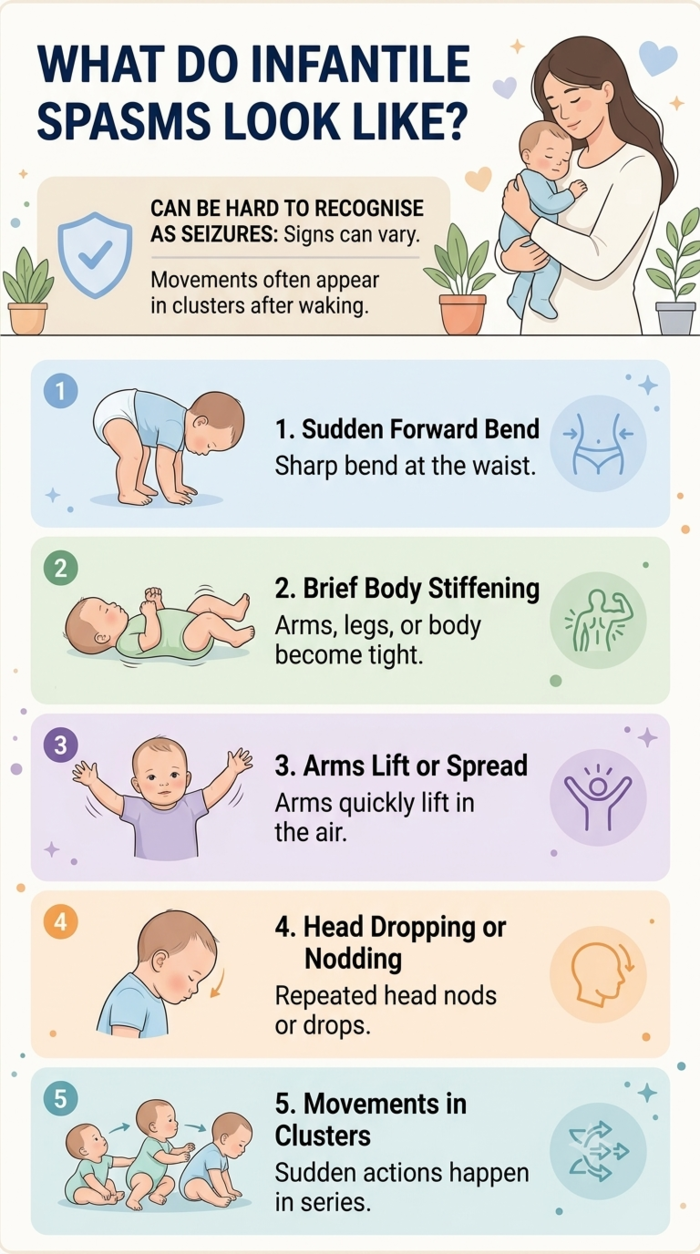
What Do Infantile Spasms Look Like?
The appearance can vary from one baby to another.Some common signs include:
- A sudden bend forward at the waist
- Brief stiffening of the arms, legs or body
- Arms suddenly lifting or spreading out
- The head dropping or nodding repeatedly
- The body briefly crunching forward
- A sudden movement that happens in clusters
- Episodes occurring several times close together
- Movements appearing shortly after waking
“Infantile spasms are often repetitive and follow a similar pattern. If you notice unusual repeated movements or developmental changes, record a video and show it to your paediatrician promptly.”
- Dr Chetna Jain, Director – Department of Obstetrics and Gynaecology at Cloudnine Group of Hospitals, Gurgaon
How Are They Different From Normal Baby Movements?
Babies are naturally active, and many movements can look unusual. The key differences usually lie in the pattern, timing, and repetition.Here is a simple comparison:
| Normal Baby Movements | Infantile Spasms |
| Often happen during play, crying or excitement | May happen suddenly without an obvious trigger |
| Movements can be irregular | Movements may look very similar each time |
| Usually stop when the baby settles | May occur repeatedly in clusters |
| Startle reflex is common in young babies | Sudden repeated jerking or stiffening may occur |
| Baby generally continues normal behaviour | Baby may briefly appear less responsive or change expression |
How Are Infantile Spasms Diagnosed?
Doctors may use several steps to understand whether a baby is having infantile spasms:- Medical history: The doctor asks when the movements started, how often they happen and whether they occur in clusters.
- Video of episodes: A recording can help the doctor understand what the movements look like.
- EEG: An electroencephalogram checks the brain’s electrical activity. An abnormal pattern called hypsarrhythmia may be seen in some babies.
- Brain imaging: An MRI may be suggested to look for possible changes in the brain.
- Blood or genetic tests: These may help identify an underlying genetic, metabolic or other cause.
- Developmental assessment: The doctor may check whether the baby is meeting expected developmental milestones.
Why Is Early Treatment Important?
Infantile spasms should be taken seriously because repeated seizures can interfere with normal brain development. The earlier they are recognised and treated, the better the opportunity to control the spasms and address any underlying problem.Treatment may include medicines specifically used for infantile spasms. In some babies, doctors may also consider other approaches, depending on the cause and the child's response.
Treatment should always be guided by a paediatric neurologist or another specialist experienced in childhood seizures.
When Should Parents Be Concerned?
Pay attention if you notice movements that:- Repeat in the same pattern
- Happen several times in a row
- Occur after waking
- Become more frequent
- Cause changes in behaviour or awareness
- Occur with loss of developmental skills
Whether you’re pregnant, a new mom, or navigating postpartum, you don’t have to do it alone. Join our support group to connect, share, and support one another.
FAQs on What Are Infantile Spasms and How Are They Different From Normal Baby Movements?
- Do infantile spasms always involve the whole body?
No. Some episodes may involve only the head, arms, legs or upper body. The movements can be very subtle and may be difficult for parents to recognise. - How long does an infantile spasm usually last?
An individual spasm often lasts only one or two seconds. The important clue may be several brief episodes occurring close together rather than a single prolonged event. - Can infantile spasms happen more than once a day?
Yes. Some babies may have multiple episodes or clusters throughout the day. Keeping a simple record can help doctors understand how frequently the events occur.