
In this article:
We spoke with Dr Hitesha Ramnani Rohira, Consultant, IVF, Kokilaben Dhirubhai Ambani Hospital, Mumbai, to understand the possible link between adenomyosis and recurrent pregnancy loss.
What Is Adenomyosis?
Adenomyosis happens when the tissue lining your uterus grows into its muscular wall. This can make your uterus thicker and may cause heavy periods, painful cramps, or pelvic discomfort. Some women may have adenomyosis without noticing any symptoms.What Is Recurrent Pregnancy Loss?
Recurrent pregnancy loss means experiencing two or more miscarriages. It can happen due to different factors, such as genetic changes, uterine problems, hormonal conditions, immune-related issues, or other health factors.In some cases, even after evaluation, doctors may not find one clear reason. This is why your doctor may consider several possible factors rather than linking repeated losses to a single condition.
Can Adenomyosis Be Linked to Recurrent Pregnancy Loss?
Yes, adenomyosis may be linked to a higher risk of recurrent pregnancy loss. However, this does not mean that adenomyosis directly causes every miscarriage. Research shows an association, but findings differ between studies.The risk may also depend on the location and extent of adenomyosis. Other factors, such as your age, endometriosis, and fertility treatment, can also affect pregnancy outcomes.
“Adenomyosis does not mean someone is destined to miscarry. Research shows an association with pregnancy loss, but stronger prospective studies are needed to confirm the link and identify those at greater risk.”
- Dr Hitesha Ramnani Rohira, Consultant, IVF, Kokilaben Dhirubhai Ambani Hospital, Mumbai
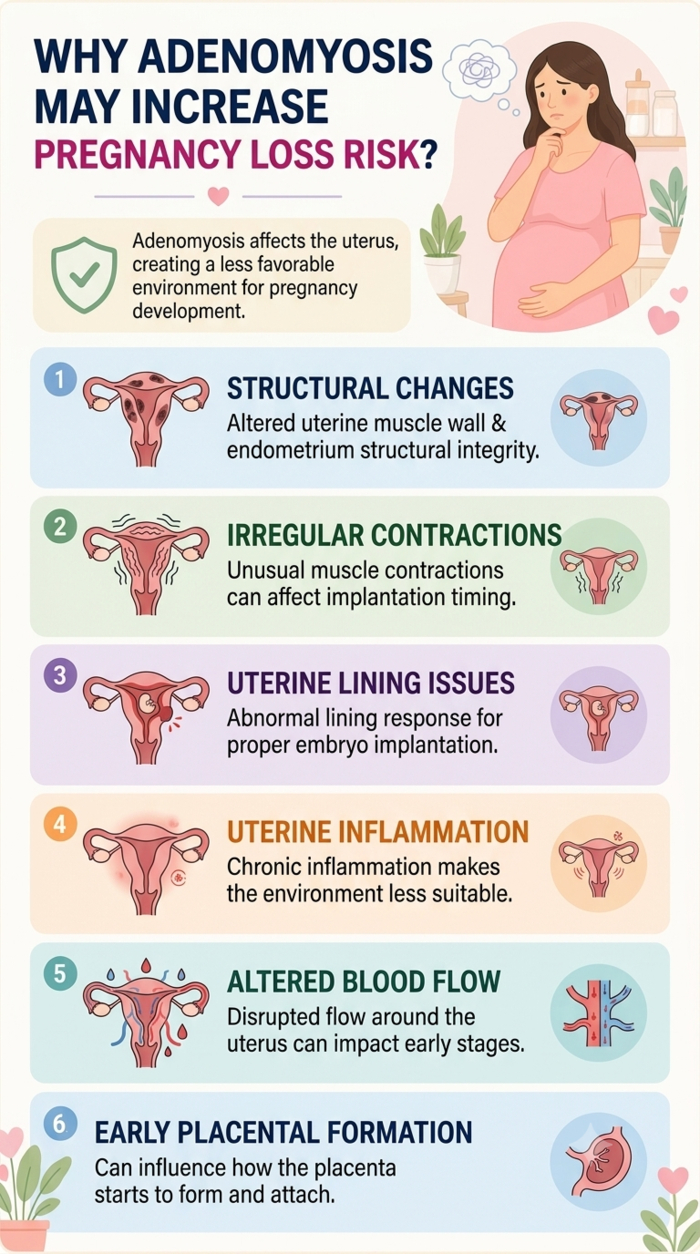
Why Might Adenomyosis Increase the Risk of Pregnancy Loss
Here are some possible reasons adenomyosis can increase the risk of pregnancy loss:- Changes in the uterine wall: Adenomyosis can change the normal structure of your uterine muscle and the area around the lining.
- Irregular contractions: Changes in the uterine muscle may cause unusual contractions that could affect implantation.
- Changes in the uterine lining: The lining may not respond normally during the time when an embryo needs to implant.
- Inflammation: Adenomyosis can cause inflammation in the uterus, which may affect the environment needed for early pregnancy.
- Changes in blood flow: Altered blood flow around the uterus may affect how the pregnancy develops in its early stages.
- Early placental development: These changes may also affect how the placenta begins to form and connect with the uterus.
Does the Type of Adenomyosis Affect Miscarriage Risk?
Yes, the type of adenomyosis may affect pregnancy outcomes. Adenomyosis can occur in different parts of your uterine muscle, so it may not affect every woman in the same way.- Intrinsic adenomyosis: This affects the inner part of your uterine muscle, closer to the uterine lining.
- Extrinsic adenomyosis: This mainly affects the outer part of your uterine muscle.
Does the Severity of Adenomyosis Matter?
Yes, the severity of adenomyosis may matter for pregnancy outcomes. Focal adenomyosis affects one area of your uterus, while diffuse adenomyosis involves a larger area. More extensive disease may have a greater effect on pregnancy, but your severity alone cannot predict miscarriage risk. Doctors may use ultrasound or MRI to assess how much of your uterus is affected.Can Treating Adenomyosis Prevent Recurrent Miscarriage?
Treating adenomyosis may help create a healthier environment for pregnancy, but it cannot guarantee that miscarriage will be prevented.Your doctor may suggest the following treatments depending on how adenomyosis affects your uterus and your pregnancy plans.
- Hormonal treatment: It may reduce adenomyosis activity and inflammation before you try to conceive.
- Conservative surgery: In selected cases, removing adenomyosis may improve the uterus for pregnancy while keeping the uterus intact.
- IVF strategies: Your doctor may treat adenomyosis before embryo transfer to improve the chances of successful implantation.
When Should You See a Fertility Specialist?
Consider seeing a fertility specialist if you have recurrent pregnancy loss along with adenomyosis, especially if:- You have had two or more miscarriages
- You have been trying to conceive without success
- Your scans show moderate or extensive adenomyosis
- You have other fertility concerns, such as endometriosis or irregular periods
- You are planning IVF or another fertility treatment
Whether you’re pregnant, a new mom, or navigating postpartum, you don’t have to do it alone. Join our support group to connect, share, and support one another.
FAQs on Adenomyosis and Recurrent Pregnancy Loss: Is There a Link?
- Can adenomyosis affect pregnancy after a previous miscarriage?
It may influence pregnancy outcomes, but having adenomyosis does not mean your next pregnancy will end in miscarriage. - Can adenomyosis affect pregnancy even when your periods are normal?
Yes. You may have regular periods and still have adenomyosis. Symptoms alone cannot confirm or rule out the condition. - Can you have adenomyosis and never experience a miscarriage?
Yes. Many women with adenomyosis have successful pregnancies. Having the condition does not mean that pregnancy loss will definitely occur.