What to Expect When Teething Begins
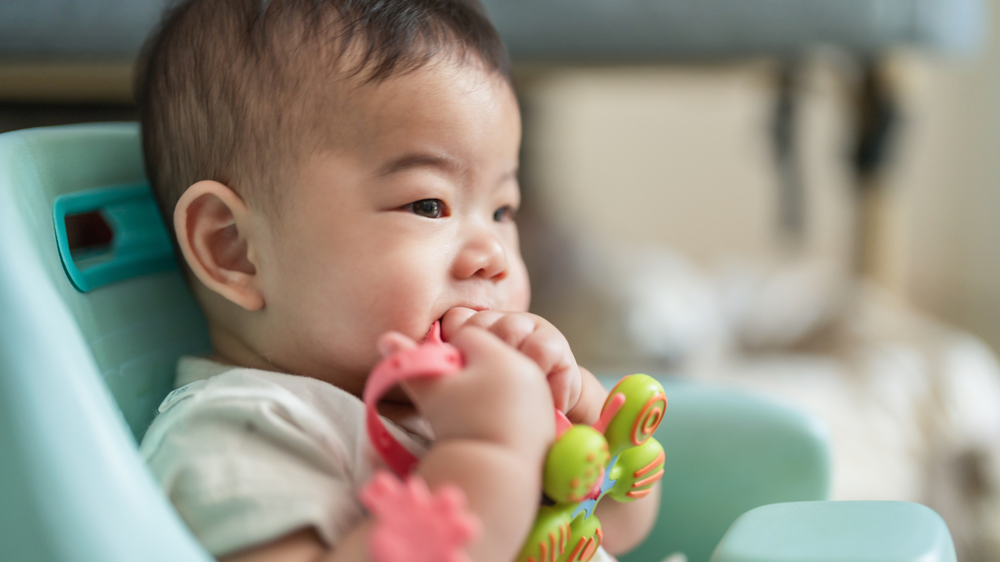
While each child has their own growth pace, for most babies, the first tooth appears between ages six and ten months. Typically, the lower central front teeth (incisors) emerge first, which are preceded by the upper front teeth. This natural milestone is frequently associated with specific behavioural and physical signs, such as:
- Increased drooling: Increased salivation is common during teething, which can cause a mild rash around the chin or mouth.
- Gum swelling and tendency to bite: The gums may appear slightly red or tender as the tooth moves closer to the surface, prompting the baby to bite or chew on hard objects.
- Mild irritability: Your baby may experience fussiness or changes in their sleeping patterns due to gum sensitivity.
5 Practical Ways to Relieve Teething Discomfort
A few strategies will help you handle their teething episodes better.
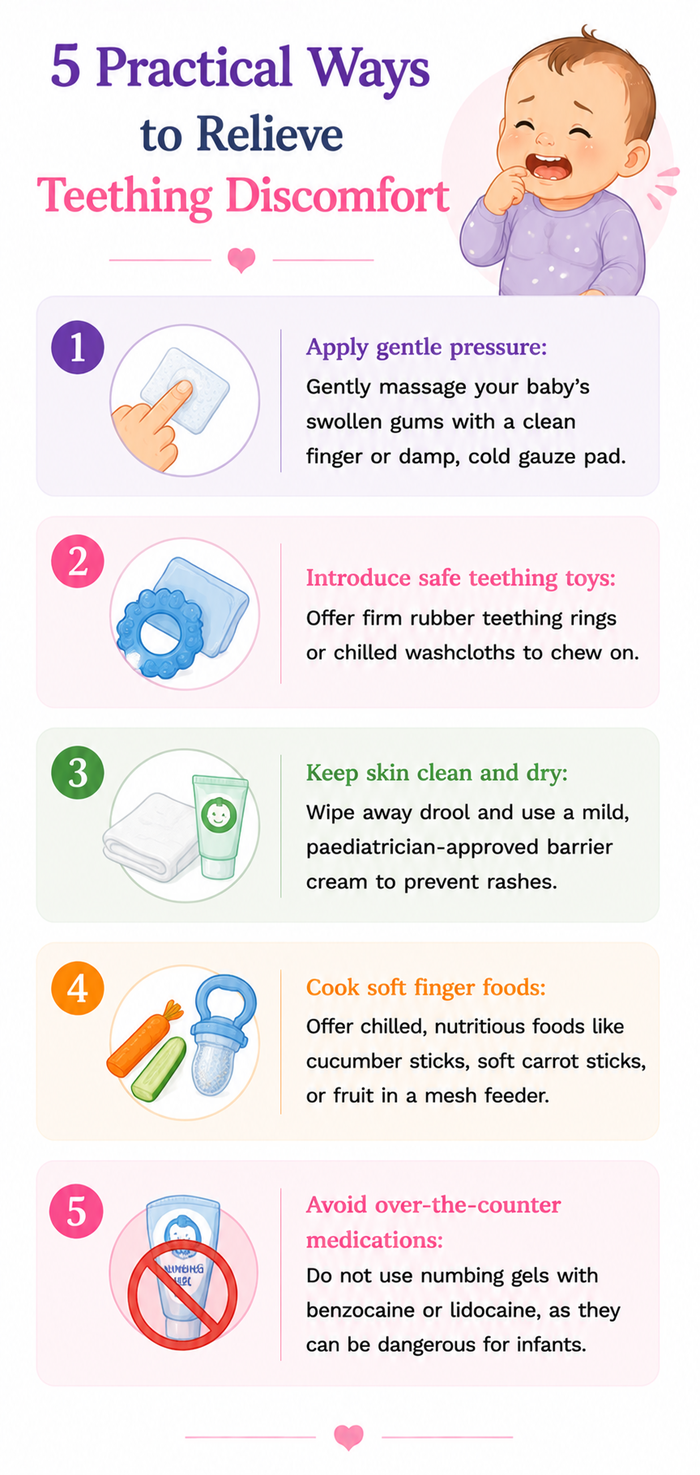
- Apply gentle pressure: Wash your hands thoroughly and use a clean finger or a damp, cold gauze pad to gently massage your baby’s swollen gums. The firm, steady counter-pressure temporarily numbs the area and relieves the deep ache of an emerging tooth.
- Introduce safe teething toys: Help your baby stay comfortable by offering firm rubber teething rings or chilled washcloths to chew on. Ensure the items are cooled in the main refrigerator compartment rather than in the freezer, as extremely low temperatures can bruise delicate infant gums.
- Keep skin clean and dry: Some infants drool heavily during this phase, which can irritate their sensitive facial skin. Keep a soft, clean cotton cloth handy to gently wipe away excess saliva from your baby's chin, neck, and chest. Applying a mild, paediatrician-approved barrier cream can prevent chapping and rashes.
- Cook soft finger foods: If your toddler is over six months and already eating solid foods, offer chilled nutritious options. Giving them traditional finger foods, cucumber sticks, soft carrot sticks, or a cold piece of fruit wrapped in a mesh feeder will enable them to safely bite while supplementing essential nutrients to their daily menu.
- Avoid over-the-counter medications: However, global health guidelines strongly advise against using over-the-counter numbing gels containing benzocaine or lidocaine, as they can be dangerous for infants.
When to Prioritise Clinical Intervention
While teething causes mild discomfort, it is a physiological transition and not an illness. It is important to seek immediate medical advice from your paediatrician or a paediatric dentist if you notice these symptoms:
- Your baby runs a fever (above 100.4°F or 38°C).
- The child develops persistent diarrhoea, vomiting or a full-body rash.
- Your little one refuses to nurse or shows signs of dehydration.
- You notice severe bleeding, extreme swelling or pus around the infant's gums.
Start cleaning your baby's mouth early. Even before teeth pop up, wiping the gums with a wet cloth establishes excellent habits for long-term oral health.
Whether you’re pregnant, a new mom, or navigating postpartum, you don’t have to do it alone. Join our support group to connect, share, and support one another.
FAQs on When Do Babies Start Teething? Symptomatic Relief Methods for Indian Parents
- Does teething cause loose motions or a high fever?
No. While a slight increase in body temperature can happen, teething does not cause true fever and diarrhoea. Usually, these are signs of a viral infection, often acquired, since babies tend to chew on toys or other objects during this phase. - When should a baby see a dentist for the first time?
Modern dental guidelines recommend scheduling your child’s first dental visit within six months of their first tooth eruption, or by their first birthday.