In this article:
7 Lifestyle Changes to Improve Male Fertility
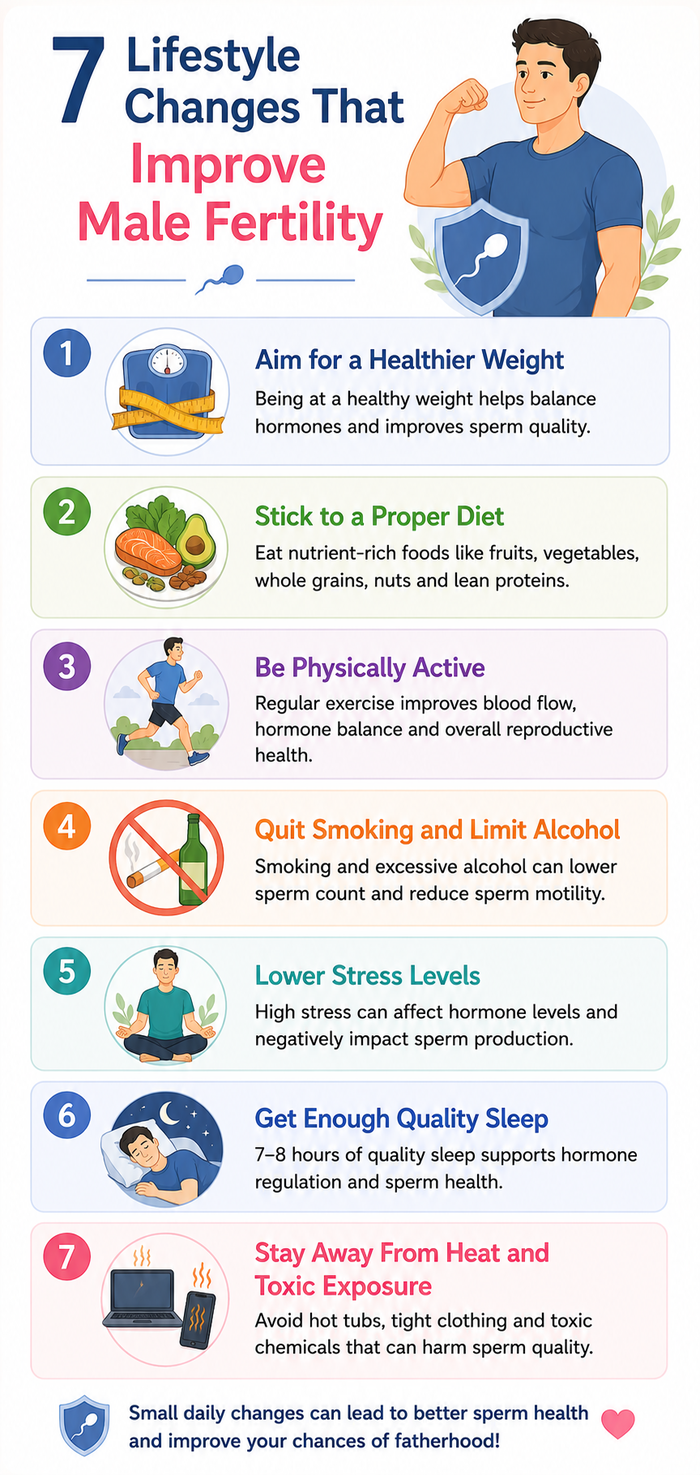
1. Aim for a Healthier WeightWeight affects hormone levels, testosterone production, and sperm quality. Being either too thin or too heavy may cause fertility issues, so gaining the proper weight can be productive. It will also help with many potential diseases, including diabetes.
- Lose weight steadily
- Have normal meals with sufficient nutrients, such as protein, fibre, and fat intake
- Avoid crash diets and starvation
- Combine nutritional adjustments with proper exercise for optimal weight
Nutrition can greatly influence the production of sperm and hormones. A proper diet may help to maintain fertility. Antioxidants in such foods can prevent sperm cells from any damage.
- Consume plenty of fruits and vegetables
- Eat nuts, whole grains, eggs, seeds, fish, and legumes
- Reduce the intake of frozen or processed foods
- Avoid fried and other junk items
Physical activity helps maintain blood circulation, keeps you from being overweight, and regulates mood and hormone balance. Light physical activity helps improve fertility, but excessive workouts without proper rest cause stress to your body and negatively affect fertility.
- Adopt some light physical activities such as walking, riding a bike, swimming, etc.
- Avoid straining your body with vigorous activities
- Rest whenever you feel exhausted
- Try not to sit for too long
Smoking cigarettes affects the quantity, motility, and quality of sperm. Smoking causes genetic damage to the sperm. The intake of too much alcohol reduces the level of testosterone and sperm production; thus, cutting down on alcohol will improve fertility.
- Stop smoking and using e-cigarettes and other tobacco products
- Stay away from secondhand smoke if you can
- Limit your alcohol intake or completely stop drinking
Stress not only affects your mood but also your ability to sleep, hormone production, and decision-making skills. Persistent stress might also disrupt sexual functioning and your fertility behaviour. Adopt the following steps to relax:
- Create a daily routine with relaxation time included
- Practice deep breathing, praying, meditation, or journalling
- Spare time for engaging in leisure activities and family bonding
- If stress becomes overwhelming or persistent, you should consider asking for help
Sufficient sleep is essential for balancing the hormones responsible for sperm production. Men who have poor sleep are likely to experience problems related to reproduction. Adequate sleep will not only positively impact your physical state but also give you more energy and concentration to practice healthy behaviour.
- Have 7-9 hours of sleep per day
- Stick to a regular sleep schedule
- Limit late-night screen time
- Create a comfortable environment in your bedroom
Testicles function well below body temperature. Regular exposure to heat can have an impact on sperm production. Exposure to chemicals at the workplace or home may also be a hazard; hence, take proper precautions.
- Avoid regular hot tubs or overly hot baths
- Choose loose, porous underpants if you feel like
- Avoid placing a laptop on your lap for a prolonged period
- Be sure to wear protective gear at the place of work where there are chemical exposures
Medical Help for Male Fertility Matters
Fertility issues may indicate other underlying diseases that affect male health, for example, hormonal disorders, diabetes, infections, varicocele, and thyroid disorders. It is best to visit a doctor when attempts to conceive fail even after a year.Small, steady habits can make a difference in male fertility. Focus on a healthy weight, nutritious diet, regular exercise, good sleep, and stress management, and avoid smoking, alcohol consumption, and heat exposure. These changes support sperm health and overall wellness at the same time. If conception is still delayed, consult a doctor to check for causes and guide you further.
You’re not alone in your journey when trying to conceive. Join our supportive community to connect with others, share experiences, and find encouragement every step of the way.
FAQs on 7 Lifestyle Changes That Improve Male Fertility
- How long will it take for lifestyle changes to show results?
Consistent healthy lifestyle changes can take about two to three months, since sperm production follows a cycle of approximately 74 days. Efforts count more than quick results. - When should a man consult a doctor due to fertility issues?
A man should consult a doctor if pregnancy has not happened after 12 months of regular unprotected sex or sooner if there is testicular pain, swelling, erectile problems, low sex drive, or abnormal semen changes. Early evaluation can find treatable causes. - Does age affect male fertility?
Yes, age can affect male fertility by slowly reducing sperm count, movement, and quality, which may make conception take longer.