Various factors can affect your sperm quality, including lifestyle habits, medical conditions, and infections. One factor that often confuses many couples is a high fever. Since sperm production is sensitive to heat, a fever can temporarily affect sperm quality and may reduce fertility for a short period.
In this article, we explain how a high fever can affect your sperm health, how long recovery may take, and when you can safely start trying for pregnancy again.
How Does a High Fever Affect Male Fertility?
If you and your partner are trying to conceive, it is natural to wonder whether a recent illness could affect fertility.
The testicles are located outside the body because sperm develop at a temperature slightly lower than normal body temperature. When a man develops a high fever, the rise in body temperature can temporarily disrupt sperm production.
Fever may reduce sperm count, slow down sperm movement, and increase the number of abnormal sperm. In some cases, it may also temporarily affect sperm DNA quality.
How Long Does It Take for Sperm to Recover After a Fever?
Sperm take about 74 days to develop, followed by a few weeks of maturation. This means a high fever can affect sperm quality for several weeks even after you recover. Sperm count and motility typically improve within 2–3 months as new sperm are produced.For this reason, many fertility specialists recommend waiting one full sperm production cycle before trying to conceive.
Does Every Fever Affect Fertility?
Not every fever affects fertility in the same way. The impact usually depends on how high the fever was, how long it lasted, and the underlying illness causing it.
The table below explains how different types of fever may influence fertility.
| Type of Fever | Potential Impact on Fertility |
| Mild fever (below 38°C) | Usually minimal effect on sperm health |
| High fever (38.5°C or above) | May temporarily reduce sperm count and motility |
| Fever lasting several days | Greater chance of affecting sperm quality |
| Fever due to infections (flu, COVID-19, dengue, etc.) | May cause temporary changes in sperm production |
Can Men Still Conceive Soon After a Fever?
Yes, they can. Having a high fever does not mean you cannot get your partner pregnant. Many men successfully conceive even if they have recently recovered from an illness.However, because fever can temporarily affect sperm count and quality, the chances of conception may be slightly lower for a short time. But these effects are usually temporary. As your body recovers, it continues to produce new, healthy sperm.
What Indicates That Sperm Production Has Recovered?
There are no obvious symptoms that can confirm whether sperm production has fully recovered after a fever. However, the following factors may indicate that your body is healing and sperm health is gradually returning to normal:- You have fully recovered from the fever and infection
- Your energy levels and overall health have returned to normal
- You are no longer experiencing symptoms such as fatigue, body aches, or weakness
- At least 2–3 months have passed since the illness
- You have returned to your regular diet, sleep, and daily routine
- There are no ongoing infections or health concerns
- A semen analysis shows a healthy sperm count, movement, and shape
Tips to Support Sperm Health After a Fever
While your body naturally produces new sperm over time, certain healthy habits may support recovery and promote better sperm health.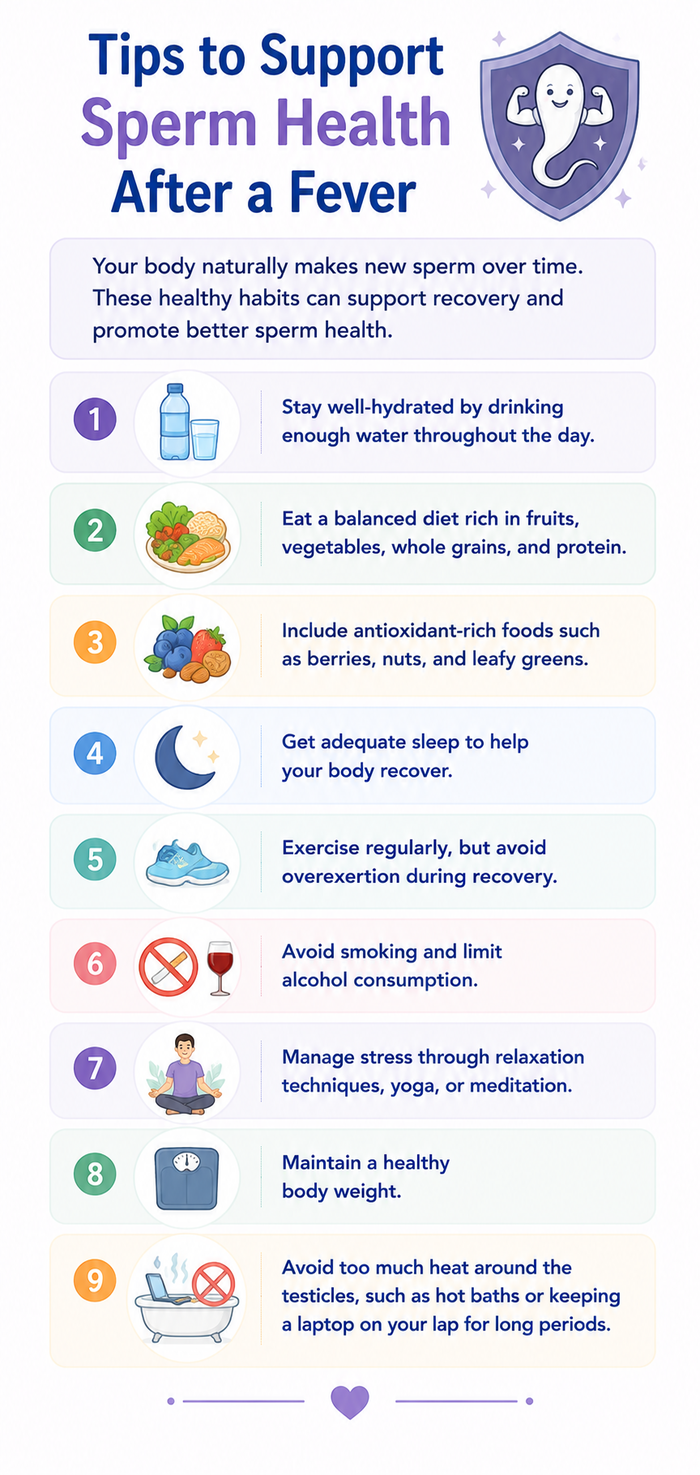
- Stay well-hydrated by drinking enough water throughout the day
- Eat a balanced diet rich in fruits, vegetables, whole grains, and protein
- Include antioxidant-rich foods such as berries, nuts, and leafy greens
- Get adequate sleep to help your body recover
- Exercise regularly, but avoid overexertion during recovery
- Avoid smoking and limit alcohol consumption
- Manage stress through relaxation techniques, yoga, or meditation
- Maintain a healthy body weight
- Avoid too much heat around the testicles, such as hot baths or keeping a laptop on your lap for long periods
When to Consult a Fertility Specialist
You should consider consulting a fertility specialist if:- You and your partner have been trying to conceive for several months without success
- Your fever was very high or lasted for several days
- You have had repeated episodes of high fever or serious infections
- A semen analysis shows abnormal results
- You have a history of male fertility problems
- You have other symptoms, such as testicular pain, swelling, or hormonal concerns
You’re not alone in your journey when trying to conceive. Join our supportive community to connect with others, share experiences, and find encouragement every step of the way.
FAQs on Can High Fever Affect Male Fertility? When to Try for Pregnancy Again
- Can taking fever medicines affect sperm health?
Most common fever medications do not have a long-term effect on sperm health. However, the illness causing the fever may temporarily affect sperm quality. - Does a one-day fever affect male fertility?
A mild fever that lasts only a day is less likely to have a significant impact on sperm health compared to a prolonged or high fever.