
In this article:
What Exactly Is a Smart Feeding System?
A smart feeding bottle typically contains a small sensor in the teat or base that measures sucking pressure, swallow rate, and volume consumed. This data is sent via Bluetooth to a smartphone app, giving parents a feeding log and eliminating the need for manual measurements.
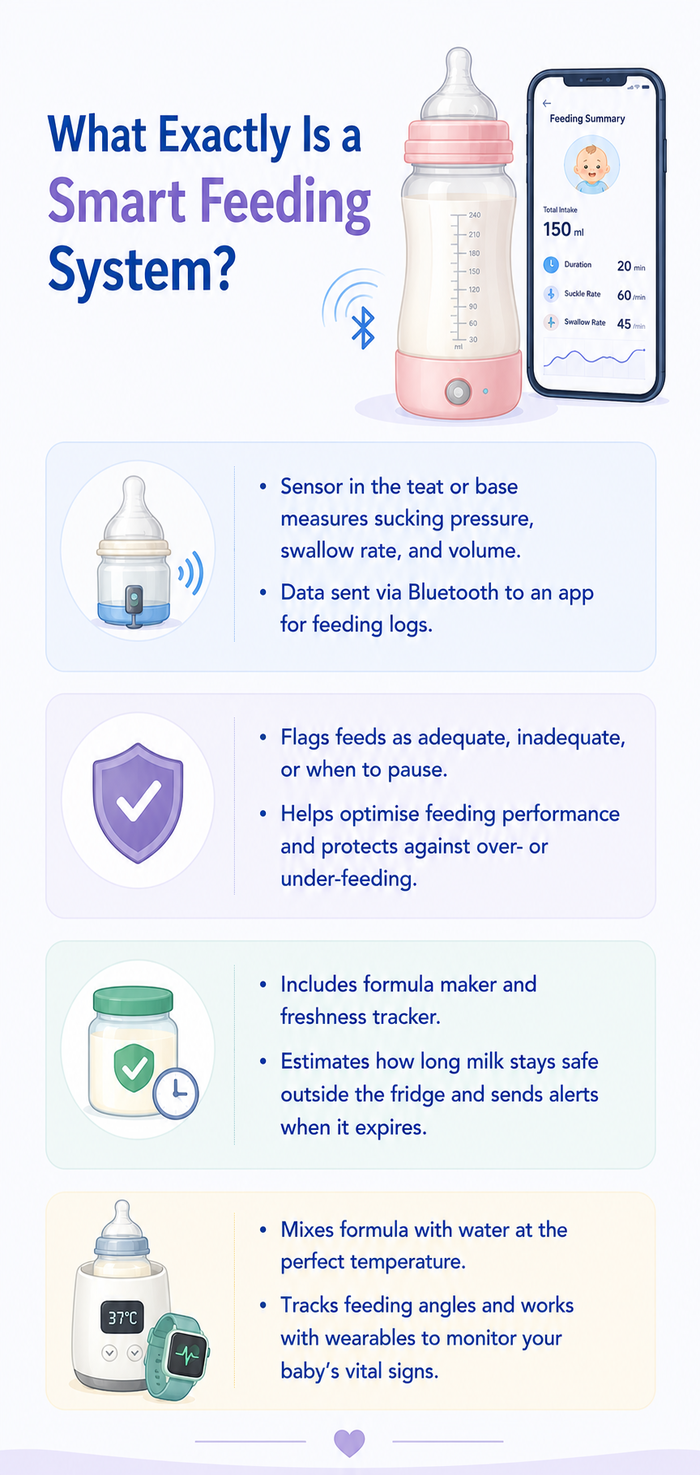
Patented designs describe electronic feeding bottles built to flag when a feed is adequate, inadequate or when feeding should be paused. This technology was developed to optimise feeding performance and safety while protecting infants from over- or under-feeding.
Some models also include automated formula makers and a freshness tracker that estimates how long breastmilk or formula remains safe outside the fridge. Based on the storage guidance from international health bodies, these devices make automatic adjustments and send alerts in case the food has surpassed its shelf life.
Furthermore, these devices can mix formula with water at the perfect temperature for your baby’s feed. They track milk intake angles while wearable devices monitor your baby's vital signs during or after a feed.
What Smart Feeding Technology Means for Your Nursery
In Indian households, grandparents or nannies often share feeding duties. A connected bottle that logs every feed can help everyone stay on the same page about timing and quantity—reducing the chance of overfeeding or accidental gaps between feeds.
For preterm or low-birth-weight babies, where sucking strength and feeding efficiency are crucial, instrumented bottles have been developed to give objective feedback to caregivers and clinicians on oral feeding skills.
This shift toward automated baby gear is frequently associated with specific lifestyle outcomes, such as:
- Effortless monitoring of daily milk or formula volume
- Streamlining late-night prep times for exhausted parents
- Collecting real-time data for the paediatrician
1. Prioritise daily sterilisation
Automated formula dispensers have internal tubes and funnels where moisture and powder accumulate. These can serve as a breeding ground for harmful bacteria. Dismantle the feeding components daily, wash them thoroughly in warm, soapy water and run them through a standard steam steriliser.
2. Verify physical temperature and calibration
Help protect your infant from accidental scalds or nutritional imbalances by double-checking your device's settings. Smart formula mixers can seldom miscalibrate, leading to a formula that is too concentrated, too watery or too hot. Always test a drop of milk on the inside of your wrist before offering the bottle to your baby.
3. Secure your wireless network
Modern baby monitors and smart feeding stations connect directly to your home Wi-Fi, making them potential targets for digital privacy breaches. Protect your family's privacy by changing the factory-default passwords on all smart gear immediately. Use a secure, encrypted home network and update the device’s app firmware regularly to block security vulnerabilities.
4. Never Leave Automated Gear Unattended
Leaving an infant unattended in a tech-enabled self-rocking seat or propping an infant with a smart bottle can cause choking and suffocation risks. No matter how advanced your baby gear is, direct adult supervision remains absolutely essential during every feed.
5. Rely on Trusted Certifications
To stay reassured, only buy devices that carry recognised safety certifications, such as the CE mark or RoHS compliance. These certifications guarantee the plastics used are strictly BPA-free and the electrical components meet rigorous safety standards.
When to Prioritise Clinical Advice Over Tech Data
You must always pay attention to your baby’s physical cues. Please consult your paediatrician immediately if you notice these signs in your little one:
- Poor monthly weight gain.
- Signs of severe reflux, persistent colic, or bloating after using an automated feeder.
- Conflicting alerts from wearable sensors.
- Changes in their normal feeding behaviour, such as refusing to feed or showing persistent lethargy.
Whether you’re pregnant, a new mom, or navigating postpartum, you don’t have to do it alone. Join our support group to connect, share, and support one another.
FAQs on Are Smart Feeding Systems Safe? Exploring Modern Baby Technologies
- Can the Wi-Fi radiation from smart baby gear harm my infant?
Current guidelines from international health authorities confirm that the low-energy radiofrequency waves emitted by home Wi-Fi baby devices are safe. However, it is advisable to place routers and wireless bases a few feet away from the cot. - Do smart formula dispensers work perfectly with all Indian formula brands?
Not always. Different formula brands have varying powder weights and settings. Always check the manufacturer's compatibility list to match your specific formula brand to the correct machine setting.