In this article:
What Is MRKH Syndrome?
MRKH stands for Mayer-Rokitansky-Küster-Hauser syndrome, a rare condition that affects how the female reproductive system develops before birth. Depending on the individual, the uterus may be completely absent or only partially developed, and the upper part of the vagina may also be shorter than usual."MRKH syndrome is a developmental condition that affects the uterus and upper vagina, but most women have normal female chromosomes (46, XX) and healthy ovarian function. "
- Dr Gurpreet Batra, Senior Consultant, Department of Fertility, Cloudnine Group of Hospitals, Ludhiana.
What Are the Types of MRKH Syndrome?
- Type 1 MRKH syndrome: Only the uterus and upper part of the vagina are affected.
- Type 2 MRKH syndrome: Along with the uterus and vagina, other organs such as the kidneys, spine, or hearing may also be affected.
What Causes MRKH Syndrome?
The exact cause of MRKH syndrome is still unknown. Researchers believe that a combination of genetic and developmental factors may play a role, but no single cause has been identified.Dr Gurpreet Batra says,
"MRKH syndrome is a developmental condition present from birth and is not caused by anything a mother did during pregnancy."
In most cases, MRKH syndrome occurs without a family history and cannot be prevented.
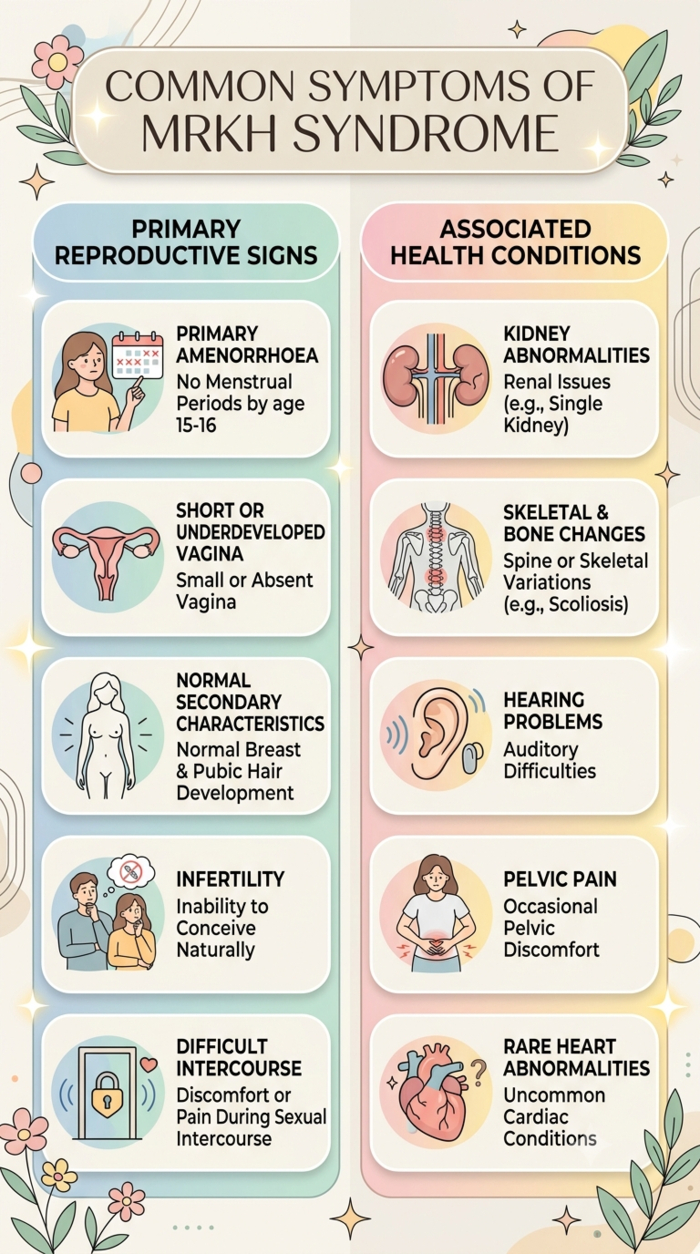
Common Symptoms of MRKH Syndrome
The symptoms of MRKH syndrome can vary, but the most common signs include:- No menstrual periods by the age of 15-16 years, called primary amenorrhoea
- Normal breast development and pubic hair
- A short or underdeveloped vagina
- Difficulty or discomfort during sexual intercourse
- Infertility
- Pelvic pain in some cases
- Kidney abnormalities
- Spine or bone changes
- Hearing problems
- Rare heart abnormalities
Diagnosis of MRKH Syndrome
MRKH syndrome is diagnosed through a combination of clinical evaluation and imaging tests, such as:- Medical history and physical examination
- Pelvic ultrasound
- MRI scan, if needed
- Hormone blood tests
- Chromosome (karyotype) testing
- Kidney and spine evaluation, if recommended
Fertility Potential in Women with MRKH Syndrome
Fertility in MRKH syndrome depends mainly on ovarian function rather than the uterus. Since the ovaries usually develop normally, many women continue to produce mature eggs each month.A study published in the Orphanet Journal of Rare Diseases reports that normal ovarian function is preserved in most women with MRKH syndrome, while ovarian abnormalities are seen in only about 5-10% of cases. This highlights the importance of an individual fertility evaluation before planning treatment.
Pregnancy and Family-Building Options for Women with MRKH Syndrome
Several options may help women with MRKH syndrome build a family, depending on their individual circumstances.- IVF with gestational surrogacy: Eggs are collected through IVF, fertilised in the laboratory, and the embryo is transferred to a gestational surrogate, where legally permitted.
- Uterus transplant: In selected cases, a transplanted uterus may allow a woman to carry a pregnancy. This procedure is available only at specialised centres.
- Adoption: Adoption offers another meaningful way to become a parent without fertility treatment.
Emotional Wellbeing with MRKH Syndrome
Being diagnosed with MRKH syndrome can bring many emotions, including sadness, confusion, or anxiety. With the right medical care, emotional support, and guidance from healthcare professionals, many women learn to cope with the condition and lead healthy, fulfilling lives. Speaking openly with loved ones, joining support groups, or seeking counselling can also help build confidence and emotional wellbeing.Learning that you have MRKH syndrome can feel overwhelming at first, but you do not have to face it alone. Understanding your condition, asking questions, and seeking care from the right specialists can help you make informed decisions about your health and future. With the right support, many women with MRKH syndrome go on to live confident, meaningful lives.
You’re not alone in your journey when trying to conceive. Join our supportive community to connect with others, share experiences, and find encouragement every step of the way.
FAQs on Can Women with MRKH Syndrome Get Pregnant? Understanding MRKH Syndrome
- Can women with MRKH syndrome experience menopause?
Yes. Because the ovaries usually function normally, women with MRKH syndrome generally go through menopause at a similar age as other women, although individual experiences may vary. - Can MRKH syndrome increase the risk of ovarian cancer?
Current evidence does not suggest that MRKH syndrome itself increases the risk of ovarian cancer. Women should continue routine gynaecological care and consult their doctor if they notice any unusual symptoms. - Does MRKH syndrome require lifelong treatment?
Not always. Treatment depends on individual needs. Some women may only need counselling and regular follow-up, while others may choose vaginal dilation, surgery, or fertility treatment.