What Is Recurrent Miscarriage?
Recurrent miscarriage refers to losing two or more pregnancies before 20 weeks of gestation. It affects around 1% to 2% of couples trying to conceive. In India, the prevalence of recurrent miscarriage is estimated at around 7.4%, higher than global averages, according to the Ministry of Health and Family Welfare's standard treatment guidelines.A miscarriage may happen because of a problem with the developing embryo, the mother's health, or sometimes for reasons that remain unknown. Even after three unexplained losses, studies show that about 65 in 100 women with unexplained recurrent pregnancy loss have a successful next pregnancy.
The FOGSI-affiliated ICOG has stated that a detailed evaluation is recommended after two consecutive miscarriages, especially if the woman is over 35 years of age or has other risk factors.
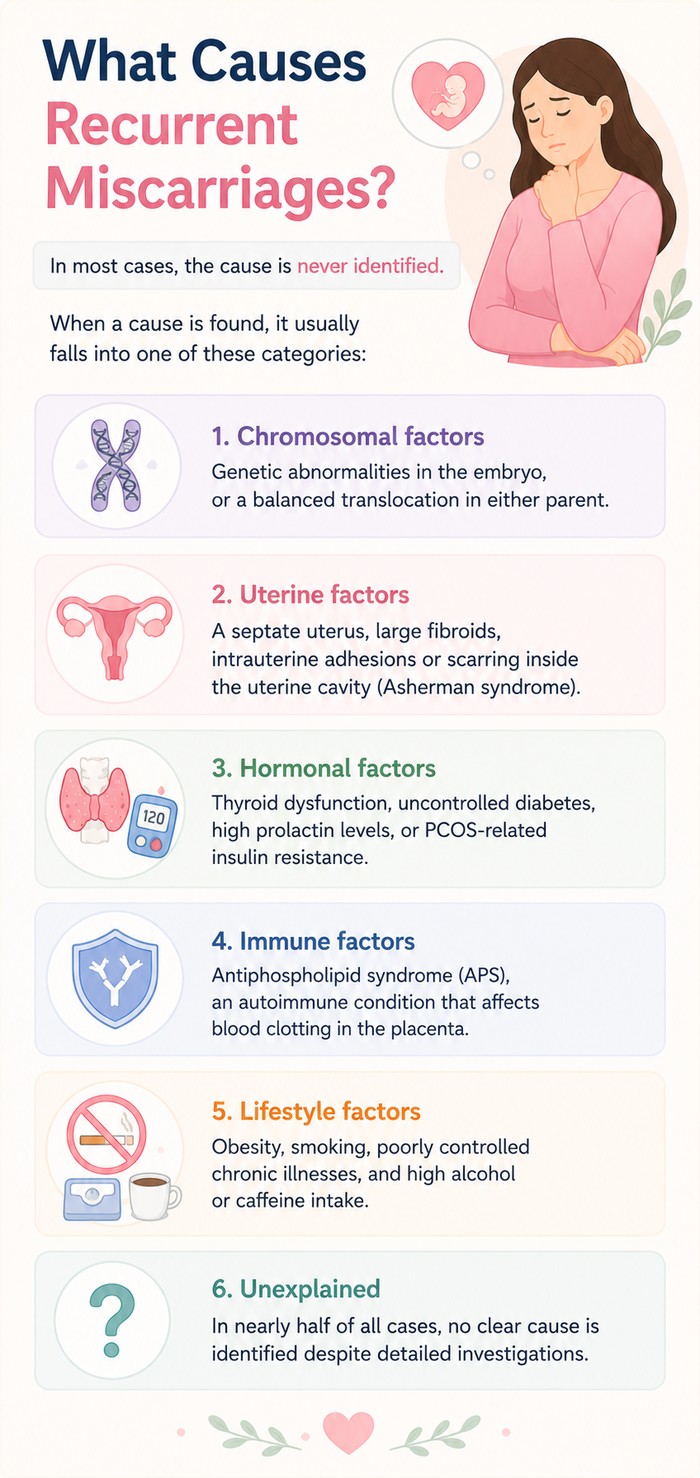
What Causes Recurrent Miscarriages?
In most cases, the cause is never identified. When a cause is found, it usually falls into one of these categories:- Chromosomal factors: Genetic abnormalities in the embryo, or a balanced translocation in either parent
- Uterine factors: A septate uterus, large fibroids, intrauterine adhesions or scarring inside the uterine cavity (Asherman syndrome)
- Hormonal factors: Thyroid dysfunction, uncontrolled diabetes, high prolactin levels, or PCOS-related insulin resistance
- Immune factors: Antiphospholipid syndrome (APS), an autoimmune condition that affects blood clotting in the placenta
- Lifestyle factors: Obesity, smoking, poorly controlled chronic illnesses, and high alcohol or caffeine intake
- Unexplained: In nearly half of all cases, no clear cause is identified despite detailed investigations.
What Are the Chances of a Healthy Pregnancy After Recurrent Miscarriages?
One miscarriage does not necessarily predict another. Even after recurrent miscarriages, the outlook is often encouraging.Studies show that many women with recurrent pregnancy loss eventually achieve a successful pregnancy, particularly when:
- An underlying condition is treated
- Pregnancy is planned after medical evaluation
- Prenatal care begins early
- Existing health conditions are well controlled
What Tests Are Recommended After Two or More Losses?
A standard recurrent miscarriage workup typically includes:- Pelvic ultrasound to check the shape of the uterus and ovaries
- Blood tests for antiphospholipid antibodies, done on two separate occasions
- Thyroid function tests (TSH and TPO antibodies)
- Parental karyotyping to rule out chromosomal translocations
- Blood sugar and HbA1c testing
- Testing of pregnancy tissue, if a loss occurs again, to check for chromosomal causes
What Can I Do to Improve the Chance of a Successful Pregnancy?
Once treatable causes are identified, targeted treatment can help:- Progesterone support in early pregnancy may increase the chances of a successful pregnancy by roughly 15% in women who have had three or more miscarriages and experience bleeding in a later pregnancy
- Correcting thyroid or blood sugar levels before conception
- Better blood sugar control for diabetes
- Surgical correction of a septate uterus or intrauterine scarring, where indicated
- Weight management, since higher BMI is linked to lower pregnancy success rates after fertility treatment
- Close early monitoring, including early scans and hormone tracking
How Does Age Affect the Outlook?
Age affects both the risk of miscarriage and the chance of a subsequent successful pregnancy. The risk of miscarriage is highest in couples where the woman is older than 35, and the man is older than 40.Women planning pregnancy after recurrent loss are advised to complete their workup promptly rather than delaying, since egg quality and chromosomal risk both change with age.
A recurrent miscarriage diagnosis is not a prediction of the next pregnancy's outcome. With a proper workup, correction of identifiable causes, and close monitoring, most women who have experienced repeated loss go on to carry a healthy pregnancy to term.
You’re not alone in your journey when trying to conceive. Join our supportive community to connect with others, share experiences, and find encouragement every step of the way.
FAQs on Can You Have a Healthy Pregnancy After Recurrent Miscarriages?
- How many miscarriages count as "recurrent"?
Two or more pregnancy losses before 20 weeks, whether consecutive or not, are classified as recurrent miscarriage. - Can I get pregnant naturally after recurrent miscarriages?
Yes. Many women conceive naturally and have healthy pregnancies, particularly after appropriate evaluation and treatment of any underlying condition. - Should I wait before trying to conceive again?
The right timing depends on your physical recovery, emotional readiness, and your doctor's advice. A preconception consultation is recommended before trying again.