In this article:
Why Do Sleep Patterns Change During Pregnancy?
There are many changes that occur during pregnancy, which can affect sleep behaviour. These changes can be attributed to hormonal fluctuations, physical discomfort, and emotional worries. According to Dr Mannan Gupta, sleep problems during pregnancy are normal and usually stem from these factors.Hormones like progesterone facilitate the body's methods of relaxation, but increase drowsiness simultaneously. Moreover, physical discomfort and emotional experience can impair sleep quality.
What Are Common Sleep Changes in Pregnancy?
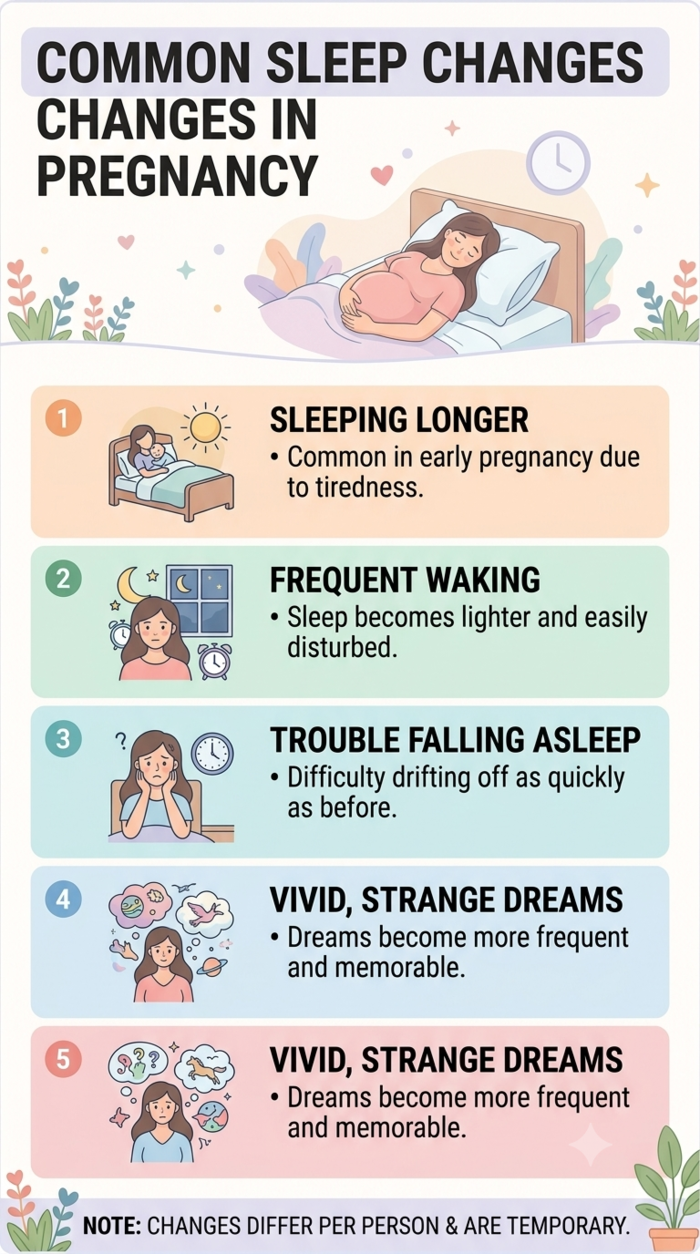
Women who are pregnant report experiencing similar alterations in their sleeping pattern. They include:- Sleeping longer: This is particularly seen in the early stages of pregnancy due to increased tiredness
- Waking up multiple times: This is especially at night when sleep becomes lighter and is easily disturbed
- Having difficulty falling asleep: Pregnant women might not be able to fall asleep as quickly as before
- Having strange dreams: Dreams during pregnancy turn out to be more vivid
“Changing sleep patterns are often the first gentle sign that a woman’s body is adjusting to the early stages of pregnancy”
- Dr Mannan Gupta, Chairman & HOD- Obstetrics & Gynecology, Elantis Healthcare, New Delhi
Understanding Sleep Changes Across Trimesters
Sleep patterns evolve as pregnancy progresses through each of its stages. Each trimester is accompanied by particular sleep disturbances.First Trimester: Extreme Sleepiness
In the first trimester, progesterone levels increase rapidly. The result is persistent sleepiness and the need for more hours of sleep.Women tend to:
- Be sleepy even when well rested
- Frequently take multiple naps
- Sleep poorly at night
Second Trimester: Get Good Rest
In the second trimester, women report less difficulty sleeping. At this stage, almost all women experience better functioning with fewer mood swings. However, some minor discomfort may still arise, interfering with sleep quality.Third Trimester: Interrupted Sleep
In the last months of pregnancy, women may face considerable sleeping issues. The growing fetus and the following physiological changes lead to discomfort:- Frequent need to urinate
- Back pain
- Burps and heartburn
- Cramps in the legs
- Baby movements
What Other Factors Can Affect Sleep?
Besides the physical and hormonal changes, some other factors can affect sleep, such as:- Stress and anxiety: Worries about delivery or parenting may cause sleep disruption
- Changes in body temperature: Pregnancy may make some women feel warmer than normal at night
- Changes in breathing: Mild discomfort during breathing is experienced by some women
Practical Tips to Improve Sleep
There are ways to improve sleep even though changes in sleep patterns are often experienced by pregnant women.- Stick to a routine: Go to bed and wake up at the same time daily
- Sleep on your left side: This position improves blood circulation to the baby
- Use pillows for extra comfort: You can put pillows beneath your belly and between your legs for extra comfort and ease
- Do not eat heavy meals: Refrain from eating heavy meals during bedtime to avoid heartburn during sleep
- Limit caffeine intake: Ensure you do not take more than 2 cups of caffeine throughout the day, and try to avoid it in late evenings
- Be active during the day: Gentle pregnancy-safe exercises can help you sleep better
- Have a peaceful environment: Keep the room dark, comfortable, and quiet to provide a relaxing and soothing place to sleep well
- Wear comfortable clothes: Since many pregnant women experience warmer temperatures at night, it is recommended to wear cool, light, and comfortable nightwear
When to Seek Medical Help
You should consult your doctor if you experience any of the following symptoms:- Severe insomnia lasting for a long time
- Loud snoring or difficulty breathing
- Continuous pain in your legs accompanied by swelling
- Extreme fatigue affecting your daily life
Whether you’re pregnant, a new mom, or navigating postpartum, you don’t have to do it alone. Join our support group to connect, share, and support one another.
FAQs on Strange Sleep Patterns During Pregnancy: Causes and Symptoms Explained
- Can less sleep harm my baby?
Occasional lack of sleep is unlikely to harm your baby directly. However, ongoing poor sleep patterns may affect your health by increasing stress, fatigue, and risk of complications like high blood pressure (pre-eclampsia), resulting in problems like preterm birth or low birth weight. - Can poor diet and hydration affect sleep during pregnancy?
Yes, poor diet and hydration can affect sleep during pregnancy. Heavy meals, caffeine, or dehydration may cause discomfort, heartburn or cramps, making it harder to fall asleep and stay asleep. - Can breathing changes affect sleep during pregnancy?
Yes, nasal congestion and mild breathlessness can disturb sleep and may lead to snoring or frequent waking during the night.