We spoke to Dr Mannan Gupta, Chairman & HOD, Obstetrics and Gynaecology, Elantis Healthcare, New Delhi, to understand this better and get you verified information.
How Do Digital Ovulation Tests Work?
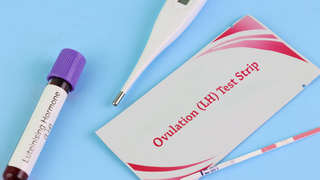
Throughout the menstrual cycle, the body produces small amounts of LH. Before ovulation, LH rises rapidly. This is called the LH surge.The test strip contains antibodies that bind to LH in urine. As LH rises before ovulation, the strip develops a coloured line. A digital sensor inside the device reads the line's intensity electronically and compares it against the person's own baseline LH level, rather than a fixed reference line. Once the reading crosses that threshold, the device shows a positive result. Ovulation typically follows within 24 to 36 hours.
Some advanced digital tests monitor both LH and an oestrogen metabolite called estrone-3-glucuronide (E3G). E3G can rise before the LH surge, allowing these tests to identify a broader fertile window.
How Accurate Are Digital Ovulation Tests?
Digital tests detect the LH surge with over 99% accuracy when compared to blood LH levels in laboratory studies. Accuracy in daily use depends on testing at the same time each day and avoiding excess fluid before testing, which dilutes urine and can mask a surge.A positive result confirms an LH surge, not ovulation itself. In a small number of cycles, an LH rise occurs without egg release, a condition called luteinised unruptured follicle syndrome.
Urinary LH testing provides indirect evidence of an approaching ovulation rather than confirmation that an egg has been released, and false-positive and false-negative results can occur, particularly later in the cycle or with repeated testing.
Digital ovulation testing devices produce fairly accurate results when used properly. While many can pinpoint the LH spike correctly, they cannot confirm ovulation itself.
When Should You Take a Digital Ovulation Test?
The ideal starting day depends on your menstrual cycle length and regularity. Most women should start testing 3 to 5 days before the expected date of ovulation.For a 28-day cycle, this typically means starting on day 11, counting from the first day of the last period. Shorter or longer cycles shift this starting point earlier or later.
Test kits with 20 sticks are more likely to capture the surge in cycles that run between 21 and 42 days than kits with 5 to 7 sticks. Testing at approximately the same time each day may also help maintain consistency.
Digital vs Traditional Ovulation Strip: Which One Should You Choose?
| Feature | Digital Ovulation Test | Traditional Ovulation Strip |
| Result display | Screen reading or electronic symbol (smiley face, Peak) | Coloured line compared against a control line |
| Interpretation | Fixed digital result; no visual comparison needed | Requires judging line darkness, which can be subjective |
| Accuracy of LH detection | Over 99% in laboratory studies | Comparable LH detection accuracy, but line-reading errors can affect real-world results |
| Cost per test | Higher | Lower |
| Reusability | Reader unit is reusable across cycles; only test sticks are replaced | Fully disposable; no reusable component |
| Storage sensitivity | Reader unaffected by humidity; sticks still need dry storage | Strip clarity can be affected by humidity |
| Best suited for | Those who want a clear, unambiguous result | Those testing on a lower budget |
Can Digital Ovulation Tests Be Wrong?
A digital ovulation test can give a result that does not perfectly match actual ovulation.Possible reasons include:
- PCOS: Some women with PCOS have persistently higher LH levels, which can interfere with urine LH testing and produce misleading results.
- Short LH surge: If testing is done only once a day, a brief surge may sometimes be missed.
- Irregular cycles: Ovulation may occur earlier or later than expected, making it harder to choose when to begin testing.
- Hormonal medicines: Certain fertility medicines can affect hormone levels and test results.
- Diluted urine: Drinking large amounts of fluid shortly before testing may reduce hormone concentration in urine.
- Anovulatory cycles: An LH rise does not always result in successful ovulation.
Digital ovulation tests offer a reliable, easy-to-read method for identifying the fertile window, provided they are used consistently and their limitations for irregular cycles are understood.
You’re not alone in your journey when trying to conceive. Join our supportive community to connect with others, share experiences, and find encouragement every step of the way.
FAQs on Digital Ovulation Tests: How They Work and How Accurate Are They?
- Can digital ovulation tests be used with irregular periods?
Yes, but timing the start of testing is harder without a predictable cycle length. Tracking cycle length for a few months beforehand improves accuracy. - Does a positive digital ovulation test guarantee pregnancy that cycle?
No. A positive result confirms an LH surge and likely ovulation within 24 to 36 hours, but conception depends on additional factors, including timing of intercourse and egg quality.