In this article:
Dr Swati Rai explains that the term vaginal enzymes can refer to different substances involved in maintaining vaginal health, immunity and fertility.
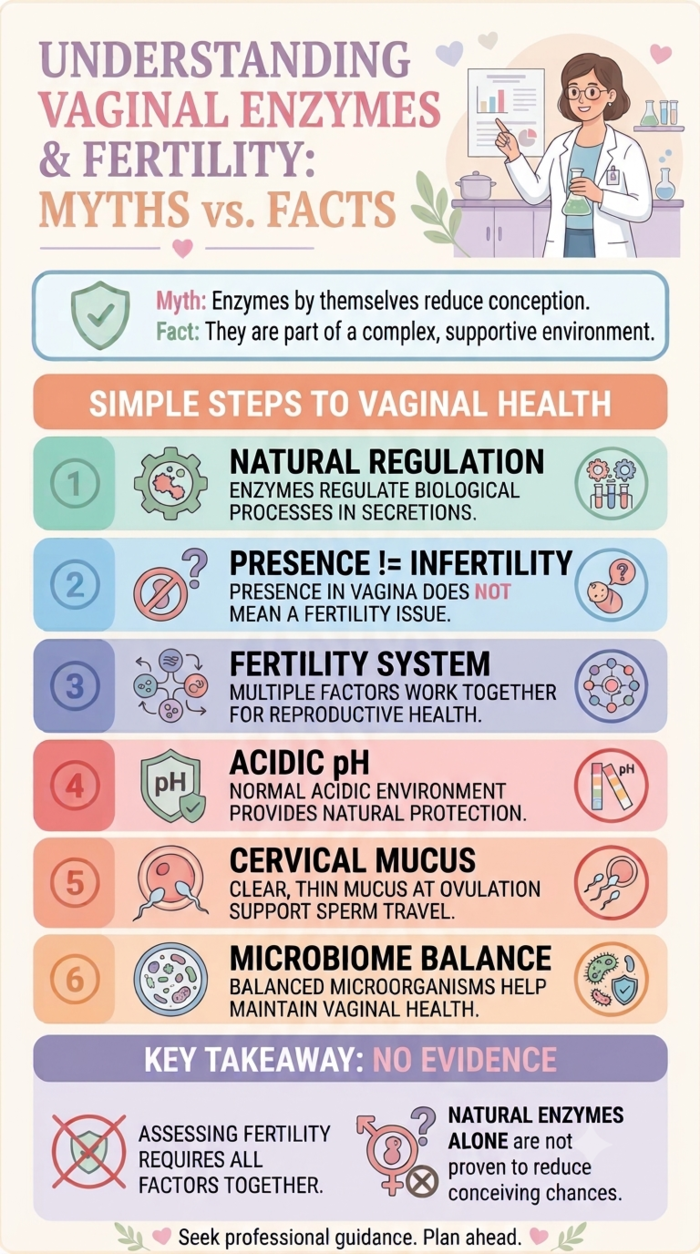
Enzymes naturally present in vaginal secretions help regulate biological processes, while cervical mucus supports sperm movement towards the uterus.
What Role Do Vaginal Enzymes Play in Fertility?
The vagina has a natural environment shaped by its- pH
- Temperature
- Resident microorganisms
Enzymes are naturally present in vaginal secretions. They help regulate biological processes. However, their presence does not automatically indicate a fertility problem.
Other factors also influence the vaginal environment:
- Vaginal pH: The vagina normally has an acidic environment. This helps protect against harmful microorganisms.
- Cervical mucus: Around ovulation, this mucus becomes clearer, thinner and more slippery. It creates favourable conditions for sperm to travel through the cervix towards the uterus.
- Vaginal microbiome: The balance of microorganisms helps maintain vaginal health and supports local immune defences.
There is also no established evidence that naturally occurring vaginal enzymes, by themselves, reduce your chances of conceiving.
Can Changes in Your Vaginal Environment Affect Conception?
Yes, certain changes may affect reproductive health. However, the underlying cause matters.| Factor | Possible effect on reproductive health |
| Changes in vaginal pH | May indicate an altered vaginal environment. |
| Vaginal infections | Certain infections can cause inflammation and affect reproductive health. |
| Altered vaginal microbiome | Some imbalances have been associated with reproductive difficulties, although their impact varies. |
| Changes in cervical mucus | May affect how easily sperm travel through the cervix. |
Research into the vaginal microbiome and fertility is ongoing. An association does not necessarily mean that a particular imbalance is causing infertility. Findings from IVF studies also cannot automatically be applied to natural conception.
If you notice unusual discharge, a strong or unpleasant smell, itching, soreness or pain while urinating, consult your gynaecologist. These symptoms may indicate an infection or another condition that needs treatment.
How Can You Maintain Vaginal Health While Trying to Conceive?
You do not need to clean the inside of your vagina or use special products to improve your fertility. Your vagina has natural mechanisms that help maintain its environment.Instead, follow these practical steps:
- Avoid vaginal douching. Washing inside the vagina may disturb its natural microbial balance.
- Skip unnecessary intimate washes. Scented products, deodorants and perfumed wipes may irritate sensitive skin.
- Avoid unprescribed vaginal products. Do not use enzyme-based products, antibiotics or antifungals without medical advice.
- Get symptoms checked. Your doctor can assess unusual discharge, irritation or pain and recommend appropriate treatment.
- Understand your fertile window. Having sex every two to three days throughout your cycle can help you avoid missing ovulation.
Understanding your vaginal health can help you make informed decisions while trying to conceive. Normal changes in vaginal secretions do not necessarily indicate a fertility problem.
FAQs on Do Vaginal Enzymes Affect Your Chances of Getting Pregnant?
- Can vaginal enzymes kill sperm?
There is no established evidence that naturally occurring vaginal enzymes, as a group, prevent pregnancy. Their effects depend on the specific substance and the surrounding environment. - Can vaginal pH affect my chances of getting pregnant?
Vaginal pH helps maintain the local environment, but it cannot tell you whether you are fertile. Cervical mucus, ovulation and other reproductive factors also matter. - When should I consult a doctor about fertility?
If you are under 35, seek a fertility assessment after 12 months of regular, unprotected sex without conception. If you are 35 or older, consult your doctor after six months. Seek advice sooner if you have irregular periods or a known reproductive condition.