
We spoke with Dr Shalu Gupta, Senior Clinical Director, Department of Fertility, Cloudnine Group of Hospitals, Gurgaon, to understand empty follicle syndrome, why no egg may be retrieved during IVF, how doctors evaluate the situation, and what it may mean for future fertility treatment.
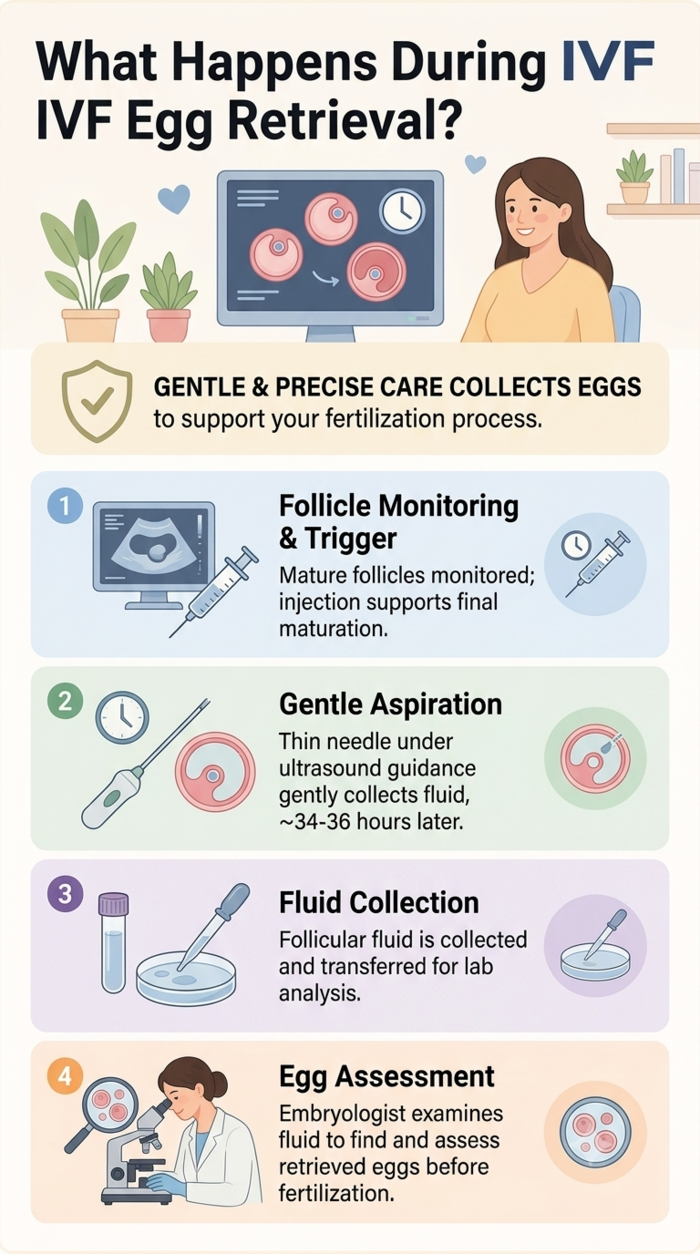
What Happens During IVF Egg Retrieval?
During IVF egg retrieval, the doctor collects fluid from your mature follicles; the process generally involves:- Mature follicles are monitored through ultrasound scans
- A trigger injection is given to support final egg maturation
- About 34-36 hours later, the follicles are gently aspirated using a thin needle under ultrasound guidance
- The collected follicular fluid is sent to the embryology laboratory
- The embryologist examines the fluid to find and assess the retrieved eggs before fertilisation
What Is Empty Follicle Syndrome in IVF?
Empty Follicle Syndrome describes an unexpected egg-retrieval outcome in which follicular fluid is collected, but an oocyte is not identified. The term specifically relates to the retrieval stage of IVF. It does not automatically indicate that the ovaries cannot produce eggs or that pregnancy will not be possible with appropriate fertility treatment.What Causes Empty Follicle Syndrome?
Possible reasons include:- Problems with the trigger injection, such as incorrect administration or dosage
- Retrieval occurring too early or too late after the trigger
- Inadequate absorption or response to the trigger medication
- Follicles that have not developed or matured as expected
- Biological factors that may affect egg maturation or release
- In some cases, no definite cause can be identified
Genuine vs False Empty Follicle Syndrome
Doctors may distinguish between genuine and false Empty Follicle Syndrome based on what happened during the IVF cycle.- False EFS: No egg is retrieved because of factors such as incorrect trigger administration, inadequate medication response, timing issues, or difficulties during retrieval.
- Genuine EFS: No egg is found despite appropriate trigger administration, correct timing, and a technically successful retrieval.
What Can Be Done in a Future IVF Cycle?
One unsuccessful retrieval does not necessarily mean that future IVF attempts will have the same outcome. The underlying cause and the individual ovarian response need to be evaluated before deciding on the next step.
After an unsuccessful retrieval, your fertility specialist may review the previous cycle to identify any factors that could be changed.
Depending on the findings, your specialist may:
- Review the previous stimulation and retrieval results
- Assess the response to the trigger medication
- Consider changes to the stimulation or retrieval approach
- Discuss whether additional monitoring or testing is appropriate
- Develop a treatment plan based on your individual IVF history
Does Empty Follicle Syndrome Mean Poor Egg Quality?
No. EFS does not indicate egg quality. Since an egg has not been recovered, its maturity or characteristics cannot be evaluated. Therefore, an unsuccessful retrieval alone cannot determine whether the eggs have good reproductive potential.Can You Still Get Pregnant After Empty Follicle Syndrome?
Yes, pregnancy may still be possible after EFS. Experiencing this outcome does not mean that conception is impossible. The outlook may depend on findings from the affected cycle and on the fertility factors of both partners.When Should You Speak to Your Fertility Specialist?
Consider speaking with your fertility specialist if:- No eggs were retrieved despite several mature follicles
- The trigger injection was missed, delayed, or administered incorrectly
- There are concerns about how your body responded to the trigger
- Follicles did not develop or mature as expected
- You want to review the retrieval report before planning another IVF cycle
FAQs on Empty Follicle Syndrome: What Happens When No Egg Is Retrieved During IVF?
- Can empty follicle syndrome be prevented?
EFS cannot always be prevented because its underlying cause may not be clear. However, careful planning of the IVF cycle may help identify and address factors that could contribute to an unsuccessful egg retrieval. - Can EFS happen after a normal previous IVF cycle?
Yes. A previous successful retrieval does not guarantee the same outcome every time. Differences between treatment cycles can affect how the ovaries respond and how many eggs are ultimately recovered. - Does having many follicles reduce the risk of EFS?
Having more follicles does not completely prevent EFS. The number of follicles, their maturity, ovarian response, trigger effectiveness, and retrieval technique can all influence the outcome. Having more follicles may provide more opportunities for egg collection, but it does not guarantee that an egg will be recovered from every follicle.