In this article:
Knowing how these factors affect folic acid recommendations can help you feel more prepared as you plan for a healthy pregnancy.
Standard vs High-Dose Folic Acid: Whats the Difference?
Although both forms provide the same nutrient, they are used for different purposes before pregnancy.Here is a quick comparison to help you understand how they differ:
| Standard Dose | High Dose |
| 400 mcg per day | 5 mg per day |
| Supports routine preconception care | Used when additional folate support is needed |
| Available over the counter | Usually requires a prescription |
| Included in many prenatal vitamins | Often taken as a separate tablet |
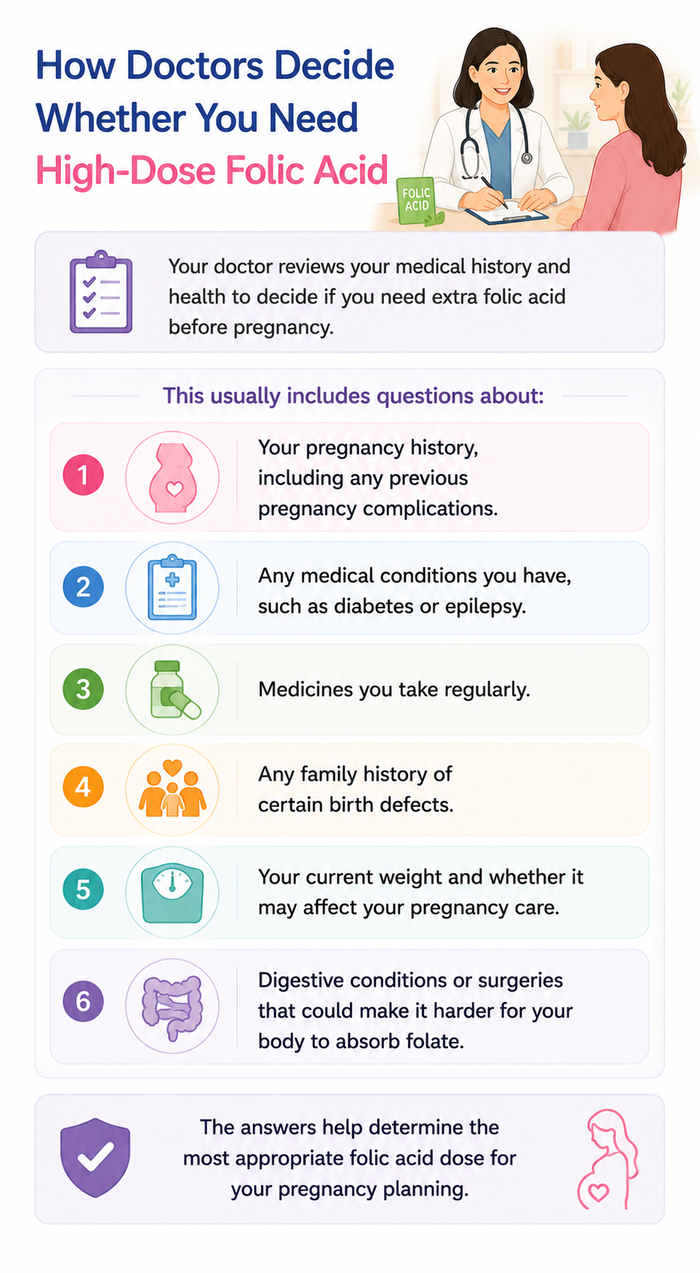
How Doctors Decide Whether You Need High-Dose Folic Acid
Before recommending a higher dose, your healthcare provider will review your medical history and overall health. A few simple questions can help determine whether the standard dose is enough or if you may need extra folic acid before pregnancy.This usually includes questions about:
- Your pregnancy history, including any previous pregnancy complications
- Any medical conditions you have, such as diabetes or epilepsy
- Medicines you take regularly
- Any family history of certain birth defects
- Your current weight and whether it may affect your pregnancy care
- Digestive conditions or surgeries that could make it harder for your body to absorb folate
Conditions That May Require High-Dose Folic Acid
Some health conditions can increase the body's need for folate or raise the risk of neural tube defects during pregnancy. In these situations, high-dose folic acid may be advised before conception.Previous Pregnancy with a Neural Tube Defect
If you have had a previous pregnancy affected by a neural tube defect, taking extra folic acid before your next pregnancy can help reduce the chance of it happening again.
Pre-existing Diabetes
Women with diabetes have a higher risk of certain birth defects, including neural tube defects. For this reason, additional folate support is often included in preconception care.
Anti-Seizure Medicines
Some anti-seizure medicines can reduce the body's folate levels, making it difficult to meet the increased nutritional needs before pregnancy. This may increase your body's folate needs before pregnancy.
Conditions That Reduce Folate Absorption
Conditions such as coeliac disease, inflammatory bowel disease (IBD), and previous bariatric surgery can reduce the body's ability to absorb folate. Extra folate support may be needed to maintain healthy folate levels.
Obesity
Obesity has been linked to an increased risk of neural tube defects. In some cases, additional folate support may be considered during pregnancy planning.
Certain Blood Disorders
Some blood disorders, such as sickle cell disease, can increase your body's need for folate because red blood cells are replaced more quickly. Extra folate may help meet these increased nutritional needs.
Can Taking High-Dose Folic Acid Without Medical Advice Be Harmful?
High-dose folic acid is not needed by every woman. Taking it without medical advice may not be the right choice.Possible concerns include:
- It may mask the signs of vitamin B12 deficiency, delaying proper treatment.
- It may interact with certain medicines, such as some anti-seizure medicines and methotrexate.
- Very high doses taken for a long time may leave unused folic acid in the bloodstream, although more research is needed to understand its effects.
You’re not alone in your journey when trying to conceive. Join our supportive community to connect with others, share experiences, and find encouragement every step of the way.
FAQs on High-Dose Folic Acid Before Pregnancy: Who Needs It and Why?
- Can PCOS alone mean I need a higher dose of folic acid?
Not necessarily. Most women with PCOS only need the standard dose. A higher dose is usually recommended only if you have additional medical conditions or other risk factors. - What if I forget to take high-dose folic acid for a day?
Take your next dose at the usual time. Do not take a double dose to make up for the missed one. If you frequently miss doses, speak to your healthcare provider. - Is high-dose folic acid safe during fertility treatment?
Yes, it may be recommended during fertility treatment in certain situations. However, not everyone needs a higher dose. Your fertility specialist will advise the most appropriate dose for you.