In this article:
We spoke to Dr Vinatha Puli, Senior Consultant – Gynaecologist and Obstetrician at Cloudnine Group of Hospitals, Hyderabad, about age-related changes in menstrual flow.
How Does Your Period Change at Different Ages?
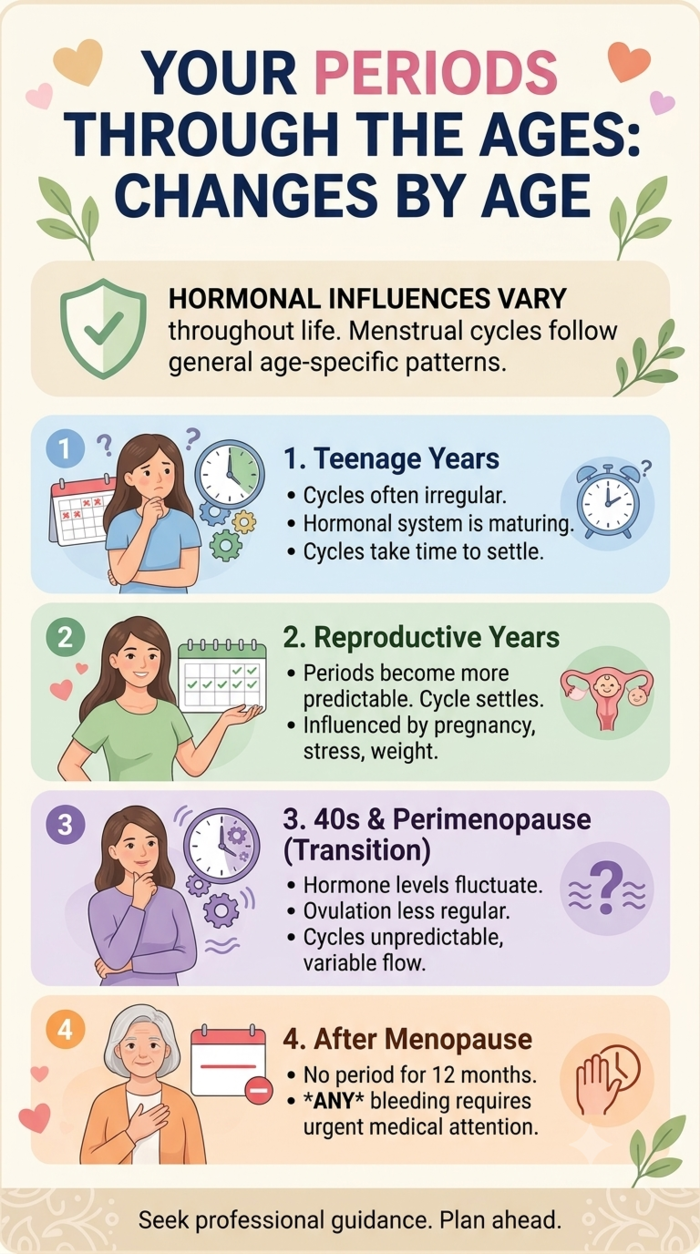
Your menstrual cycle responds to hormonal changes throughout your life. The pattern can vary from one person to another, but some changes are common at particular stages.1. During the teenage years
When you first start menstruating, your periods may be irregular. The hormonal system that controls ovulation and menstruation is still maturing, so cycles may take time to become more predictable.
2. During your reproductive years
Periods often become more predictable once your menstrual cycle settles. Even so, your flow may change from month to month.
Pregnancy, stress, substantial weight changes, medications and certain health conditions can affect your cycle.
The following conditions may cause bleeding fluctuations:
- Polycystic ovary syndrome (PCOS)
- Uterine Fibroids
3. During your 40s and perimenopause
Perimenopause is the transition leading up to menopause. During this stage, hormone levels fluctuate, and ovulation may become less regular.
As a result, your periods may become heavier or lighter, shorter or longer, or less predictable. You might also skip periods before menstruation stops completely.
These changes usually indicate a transitional phase to menopause.
Consult your doctor if you have
- Persistent heavy bleeding
- Sudden change in menstrual flow
- Fibroids
- Adenomyosis
- Thyroid disorders
Menopause is diagnosed after 12 consecutive months without a period if there is no other cause behind the absence of menstruation.
Any vaginal bleeding after menopause, even a light spotting, requires immediate medical attention.
When Should You Be Concerned About Menstrual Flow?
Some changes deserve more attention than others. Contact your healthcare professional if you experience:- Heavy bleeding
- Prolonged periods
- Bleeding between periods
- Severe menstrual pain
- Persistent cycle changes
- Bleeding after menopause
Heavy menstrual bleeding can also lead to iron-deficiency anaemia, which may cause
- Fatigue
- Weakness
- Shortness of breath
What Can Cause Changes in Menstrual Flow?
The following are the possible reasons behind changes in menstrual flow:| Underlying cause | Impact on menstrual flow |
| Hormonal imbalances | May cause irregular, lighter or heavier bleeding |
| PCOS | Can lead to irregular or infrequent periods |
| Uterine fibroids | May cause heavy or prolonged bleeding |
| Adenomyosis | May cause heavy periods and painful cramps |
| Thyroid disorders | Can affect menstrual regularity and flow |
How Can You Track Menstrual Changes?
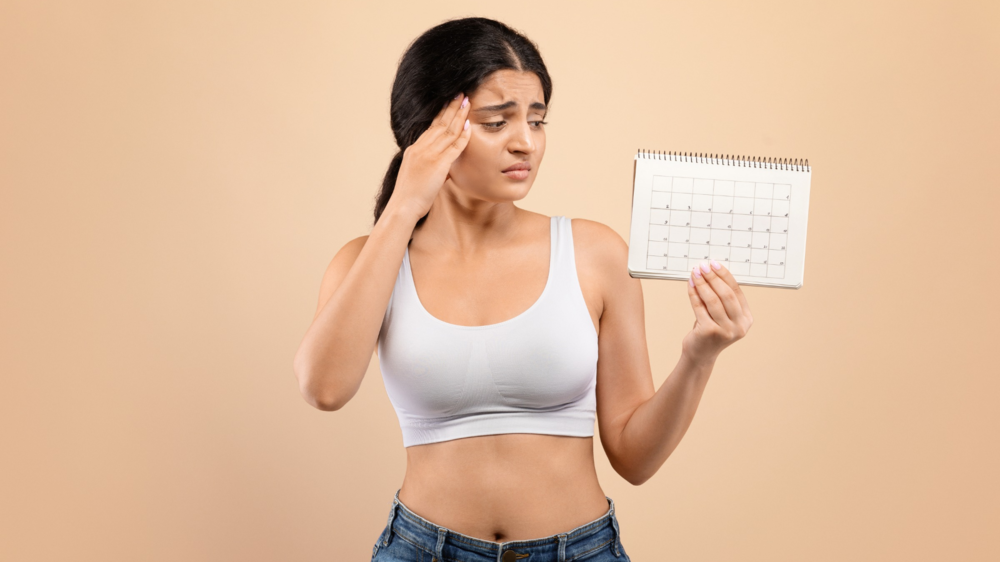
Keeping a simple record of your periods can help you recognise patterns over time. Note the first day of each period, how many days bleeding lasts, how heavy the flow is and whether you experience pain, clots or spotting between periods.You can use a calendar or a period-tracking app. Bring this information to your appointment if you are concerned about changes.
Tracking does not replace medical evaluation, but it can help your healthcare professional understand what has changed and when it began.
Your menstrual flow may change naturally with age, particularly during adolescence and perimenopause. However, heavy, persistent or unexpected bleeding should not be ignored. Tracking your periods and recognising warning signs can help you get the right assessment at the right time.
FAQs on How Does Your Menstrual Flow Change With Age? When Should You Be Concerned?
- Is it normal for periods to become heavier in your 40s?
Hormonal fluctuations during perimenopause can change menstrual flow, making periods heavier, lighter or less regular. However, persistent heavy bleeding or a sudden change should be assessed rather than automatically attributed to age. - When should you see a doctor about heavy periods?
Arrange a medical assessment if bleeding lasts longer than seven days, regularly disrupts daily activities or is accompanied by unusual tiredness. Bleeding that soaks through a pad every hour for two consecutive hours, especially with dizziness or weakness, needs urgent assessment. - Is bleeding after menopause normal?
No. Any vaginal bleeding after menopause requires prompt medical investigation, even if it is only spotting. Although the cause is not always serious, it is important to identify the reason.