
In this article:
To understand acquired hypogonadotropic hypogonadism in men, its causes, symptoms, and available treatment options, we spoke with Dr Ajit Gujela, Consultant Urologist at KIMS Hospitals, Thane.
What Is Acquired Hypogonadotropic Hypogonadism?
Acquired hypogonadotropic hypogonadism occurs when the brain does not send enough hormonal signals to the testes, leading to low testosterone and sometimes reduced sperm production.Acquired hypogonadotropic hypogonadism develops after birth and occurs when the hypothalamus or pituitary gland fails to release sufficient amounts of the hormones that regulate male reproductive function.
- GnRH from the hypothalamus signals the pituitary gland.
- LH helps the testes produce testosterone.
- FSH supports sperm production.
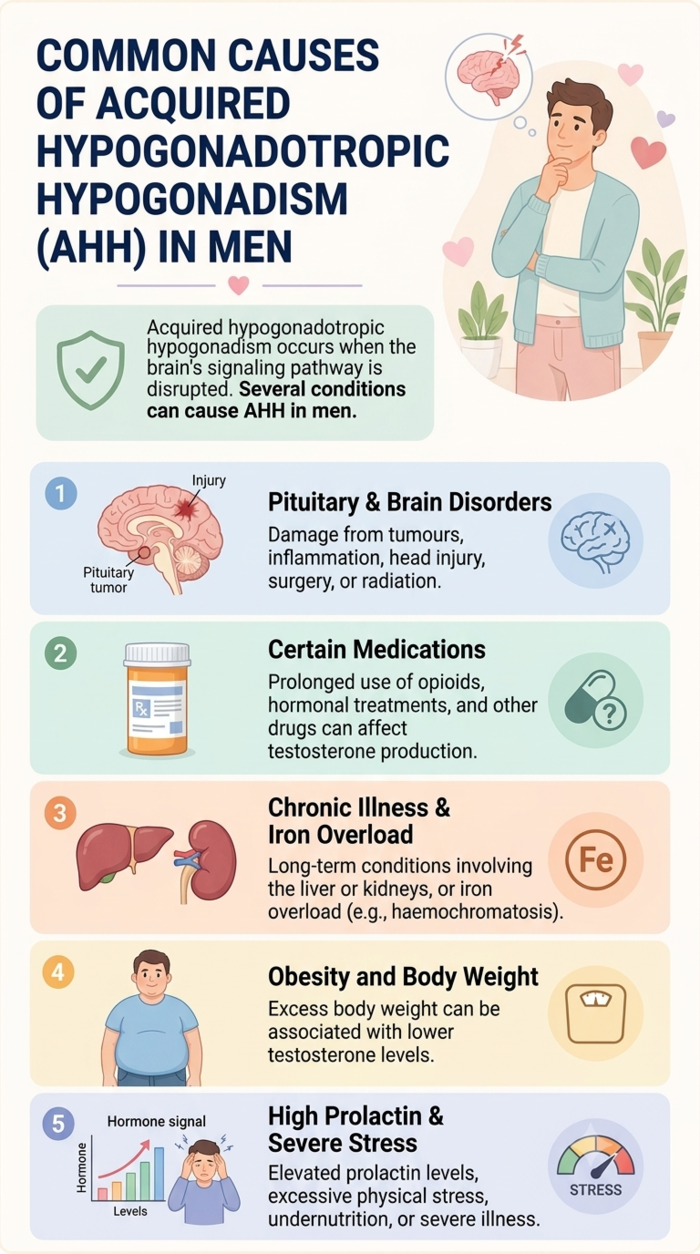
Common Causes of Acquired Hypogonadotropic Hypogonadism in Men
Possible causes include:- Pituitary disorders: A pituitary tumour, inflammation, injury, surgery, or radiation can affect hormone production.
- High prolactin levels: Increased prolactin can interfere with the reproductive hormone pathway.
- Certain medicines: Opioids, some medicines used for hormonal conditions, and other drugs can affect testosterone production.
- Obesity: Excess body weight can be associated with lower testosterone levels and changes in reproductive hormone signalling.
- Chronic illness: Severe or long-term illnesses involving the liver, kidneys, or other organs may affect hormone function.
- Brain injury: Trauma involving the head can sometimes damage the hypothalamus or pituitary gland.
- Iron overload: Conditions such as haemochromatosis can affect the pituitary or testes.
- Severe nutritional or physical stress: Significant illness, undernutrition, or excessive physical stress can temporarily disturb reproductive hormones.
Symptoms of Acquired Hypogonadotropic Hypogonadism
Common symptoms may include:- Reduced sexual desire
- Fewer spontaneous or morning erections
- Erectile difficulties
- Low energy or persistent tiredness
- Reduced muscle mass or strength
- Decreased body or facial hair
- Smaller testicles
- Mood changes or difficulty concentrating
- Reduced sperm production or infertility
- Hot flashes when testosterone levels are very low
How Is Acquired Hypogonadotropic Hypogonadism Diagnosed?
Doctors usually start with your medical history, physical examination, and blood tests. Testosterone is generally checked in the morning because levels are usually higher at this time.If the testosterone level is low, the doctor may repeat the test to confirm the result and check other hormones, such as:
- LH and FSH: To see how well the brain is signalling the testes
- Prolactin: To check for hormone changes that may affect testosterone production
- Thyroid hormones: To look for thyroid-related problems
- Other pituitary hormones: If a pituitary problem is suspected
- Iron levels: In some men, to check for iron overload
Can It Affect Male Fertility?
Yes, acquired hypogonadotropic hypogonadism can affect male fertility because low LH and FSH can interfere with sperm production.One important point is that testosterone therapy is not used to improve fertility. In fact, taking testosterone from outside the body can further reduce sperm production.
If a man wants to have children, treatment may instead aim to restore the hormones that support sperm production. Medicines such as gonadotropins may be used in some cases under a fertility specialist’s guidance.
How Is Acquired Hypogonadotropic Hypogonadism Treated?
Treatment depends on the underlying problem, testosterone levels, symptoms, and whether the man wants to have children.Doctors may consider:
- Treating the underlying cause: If a medicine, pituitary problem, or another health condition is affecting hormone production, treating or managing it may help.
- Fertility-focused treatment: Men who want children may need treatment that supports the hormonal signals required for sperm production rather than testosterone replacement.
- Testosterone replacement: This may be considered when fertility is not an immediate goal and low testosterone has been properly confirmed.
- Different forms of testosterone: Treatment may include injections, gels, patches, or other prescribed forms.
- Regular monitoring: Doctors may repeat hormone tests and monitor symptoms and overall health during treatment.
When Should a Man See a Doctor?
Consider seeing a doctor if you have:- Persistent changes in sexual desire or erections
- Unexplained tiredness or reduced muscle strength
- Difficulty conceiving
- Headaches or changes in vision
- Breast enlargement or tenderness
- Other unusual changes that may suggest a hormonal problem
You’re not alone in your journey when trying to conceive. Join our supportive community to connect with others, share experiences, and find encouragement every step of the way.
FAQs on Low Hormone Signals in Men: How Can They Affect Fertility?
- Can acquired hypogonadotropic hypogonadism be cured?
In some men, treating the underlying problem can improve hormone production. Others may need longer-term treatment and monitoring. - Is it the same as low testosterone?
Not exactly. Low testosterone describes the hormone level, while hypogonadotropic hypogonadism refers to reduced hormonal signals from the brain that normally stimulate the testes. - Does this condition affect sperm count?
It can. Reduced hormonal signals may lower sperm production and sperm count.