
In this article:
Cryptic Pregnancy Symptoms: What Can Be Missed?
Pregnancy symptoms vary widely from person to person. Some women may have:- Little or no nausea or vomiting
- Mild breast changes
- Minimal abdominal enlargement
- Fatigue that is attributed to work, stress, or another condition
- Irregular periods or occasional spotting
- Weight changes that do not immediately suggest pregnancy
- Foetal movements that are mistaken for gas or normal abdominal sensations
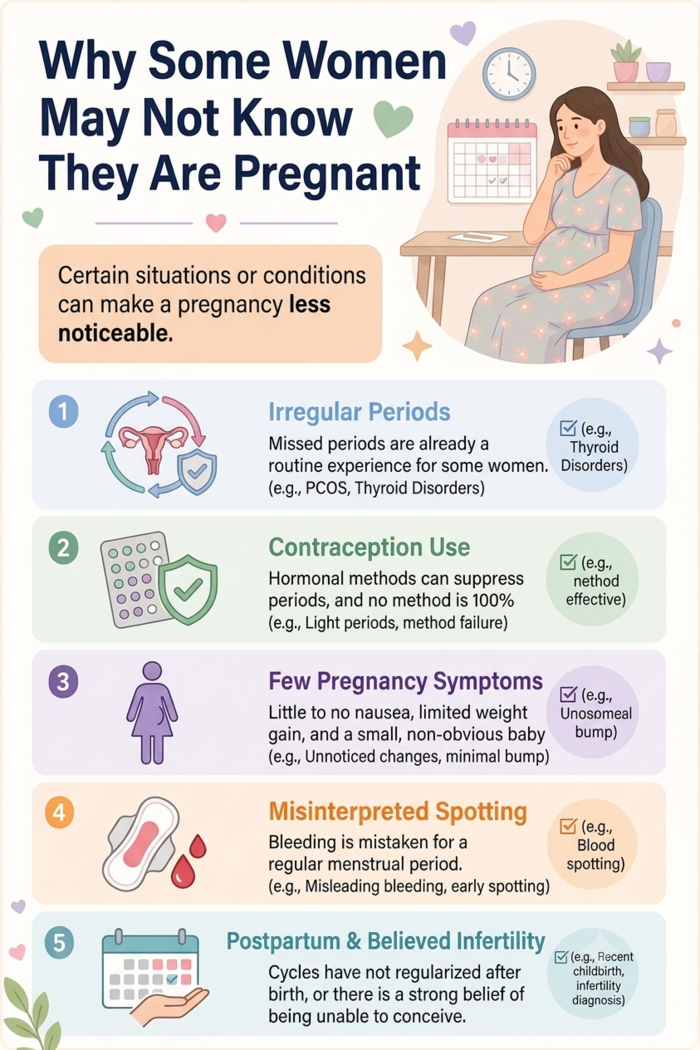
Why Do Some Women Not Know They Are Pregnant?
Several factors can make pregnancy harder to recognise. These include:- Irregular cycles: PCOS, thyroid disorders, and perimenopause make a missed period seem routine.
- Contraception: Some hormonal methods lighten or stop periods, and no method is 100% effective. In a study of pregnancy denial, 75% of cases occurred during contraceptive use.
- Recent childbirth or breastfeeding: Periods may not have returned, and hormone patterns are altered. Breastfeeding prevents pregnancy only when it is exclusive, the baby is under six months, and periods have not returned. Outside these conditions, ovulation can resume before the first period.
- Few symptoms: Some women have no nausea, gain little weight, or show a small bump.
- Spotting: Bleeding during pregnancy can sometimes be mistaken for a menstrual period.
- Belief that pregnancy is impossible: This is common after an infertility diagnosis or at an older age.
- Psychological denial: Stress, mental health conditions, or a socially unacceptable pregnancy can lead a person to dismiss the signs.
A cryptic pregnancy does not mean that pregnancy tests cannot detect pregnancy. Home urine pregnancy tests generally detect the hormone hCG, and medical testing can confirm pregnancy more accurately. An ultrasound can establish whether a pregnancy is present and determine gestational age.
Can a Pregnancy Test Be Negative During a Cryptic Pregnancy?
A properly performed pregnancy test is generally reliable, but a false-negative pregnancy test can occur, particularly when testing too early. Urine tests detect hCG, and levels increase after implantation. Testing before hCG has risen enough can produce a negative result despite pregnancy.If pregnancy is still suspected because of symptoms, missed periods or recent unprotected intercourse, repeating the test or having a healthcare professional perform a blood test and ultrasound can provide greater certainty.
For women who do not know when their next period is due, the NHS recommends taking a pregnancy test at least 21 days after the last episode of unprotected sex.
Risks of a Cryptic Pregnancy: Why Late Antenatal Care Matters
A cryptic pregnancy is not harmful in itself. The risks come from antenatal care that is missed or starts late:- Pre-eclampsia may go undetected: Routine blood pressure and urine checks pick up this complication early.
- Poor growth may be missed: Babies can be born small for gestational age or with low birth weight, and scans track growth.
- Folic acid starts late: It is recommended in early pregnancy to help prevent neural tube defects.
- Harmful habits may continue: Smoking, alcohol, or drug use may go on, and medicines unsafe in pregnancy may not be changed.
- Delivery may be unplanned: Giving birth without medical support carries risks for both mother and baby.
When Should You See a Doctor?
Seek medical advice if you have a missed or unusually light period along with a possibility of pregnancy, even if an initial home test is negative.Urgent medical assessment is particularly important if you have a possible pregnancy along with severe abdominal or pelvic pain, vaginal bleeding, dizziness or fainting, because these symptoms can occur with pregnancy complications that require prompt evaluation.
Early recognition of pregnancy allows appropriate antenatal care, including assessment of maternal health, foetal development, nutrition and medicines that may need to be changed.
A cryptic pregnancy is uncommon, but testing at the first doubt, followed by early antenatal care, keeps mother and baby safer.
Whether you’re pregnant, a new mom, or navigating postpartum, you don’t have to do it alone. Join our support group to connect, share, and support one another.
FAQs on Can You Be Pregnant and Not Know It? Understanding Cryptic Pregnancy
- Is a cryptic pregnancy dangerous for the baby?
The risk comes from missed antenatal care, not from the pregnancy itself. Check-ups detect problems such as pre-eclampsia and slow growth early. - Can stress cause a cryptic pregnancy?
Stress can disrupt periods and mask symptoms, which makes a pregnancy harder to recognise. - Can you have periods during a cryptic pregnancy?
A true period does not occur during pregnancy. Light bleeding or spotting can occur and is sometimes mistaken for a period.