In this article:
What Is Oocyte Degeneration During ICSI?
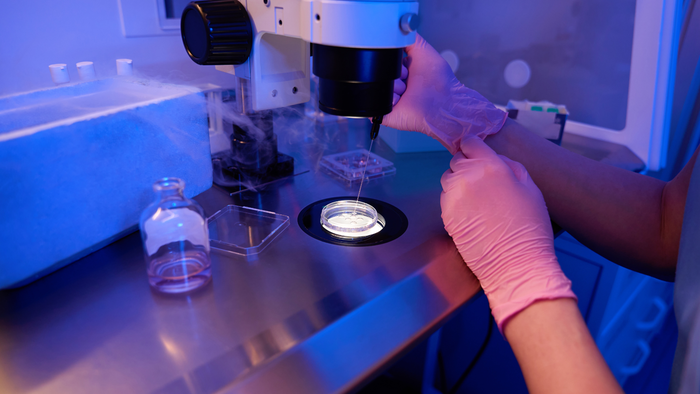
Oocyte degeneration during ICSI means that an egg becomes damaged and cannot continue developing after a sperm is injected into it. Instead of fertilising normally, the egg breaks down and is no longer suitable for embryo development. This can happen during the injection or soon afterwards.Your embryologist usually identifies degenerated eggs when checking fertilisation, typically about 16-18 hours after ICSI, although severe damage may sometimes be noticed immediately after the procedure.
How Common Is Oocyte Degeneration During ICSI?
According to a 2021 study published in Frontiers in Endocrinology, oocyte degeneration occurs in approximately 5-19% of eggs injected during ICSI, although the rate can vary depending on egg quality, laboratory conditions, and the ICSI technique used.Common Causes of Oocyte Degeneration During ICSI
Oocyte degeneration can happen for different reasons, and in many cases, there is no single cause. Sometimes, the egg is naturally fragile, while in other cases, the procedure or laboratory conditions may play a role.Here are some of the most common causes.
Poor Egg Quality
Eggs that are fragile or of poor quality are more likely to become damaged during ICSI. This is more common with increasing maternal age or reduced ovarian reserve.
Damage During Sperm Injection
During ICSI, the embryologist injects a single sperm into the egg using a very fine needle. Occasionally, this process can damage the egg, causing it to degenerate.
Egg Maturity Problems
Not all mature-looking eggs are fully ready for fertilisation. Eggs that are immature or overmature may not tolerate the ICSI procedure well.
Fragile Egg Membrane
Some eggs have a delicate outer membrane called oolemma that breaks easily during sperm injection, increasing the risk of degeneration.
Oxidative Stress
High levels of oxidative stress can damage the egg's internal structures, making it more vulnerable during ICSI.
Laboratory Factors
The way eggs are handled in the IVF laboratory also matters. Factors such as temperature changes, prolonged handling, or culture conditions may slightly increase the risk of egg degeneration.
Risk Factors That Increase the Chance of Oocyte Degeneration
Some women may have a higher chance of egg degeneration during ICSI.The following are certain risk factors that increase the chances of oocyte degeneration:
- Advanced maternal age: Egg quality naturally declines with age.
- Reduced ovarian reserve: Fewer healthy eggs may be available.
- Severe endometriosis: May affect egg quality in some women.
- Previous ICSI cycle with egg degeneration: May indicate an increased risk in future cycles.
- Certain genetic or egg-related abnormalities: Rarely, these can make eggs more fragile.
How Fertility Specialists Help Reduce Oocyte Degeneration
According to Dr Shanujeet Kaur, although it cannot always be prevented, the following steps may help reduce the risk of oocyte degeneration:- Optimise ovarian stimulation to support healthy egg development
- Retrieve eggs at the right time to avoid immature or overmature eggs
- Use careful ICSI techniques to minimise damage during sperm injection
- Maintain strict laboratory conditions to protect the eggs during handling
- Review previous IVF cycles to personalise future treatment if needed
Does Oocyte Degeneration Affect IVF Success?
Not necessarily. A higher rate of oocyte degeneration may leave fewer embryos available for transfer or freezing. However, the final outcome of an IVF cycle is influenced by several factors, not just the number of degenerated eggs.“The degeneration of one or more eggs does not necessarily mean the entire IVF cycle may fail. The overall number and quality of mature eggs and embryo development are more meaningful than one isolated event.”
- Dr Shanujeet Kaur, Associate Director, Department of Gynaecology and Fertility, Cloudnine Group of Hospitals, Chandigarh
When Should You Discuss It With Your Fertility Specialist?
You should speak with your fertility specialist if:- Many eggs degenerated during your ICSI cycle
- Egg degeneration happens repeatedly in more than one IVF cycle
- You have low fertilisation rates after ICSI
- You want to understand the possible cause and discuss ways to improve future treatment
You’re not alone in your journey when trying to conceive. Join our supportive community to connect with others, share experiences, and find encouragement every step of the way.
FAQs on Oocyte Degeneration During ICSI: Causes, Risk Factors, and Can It Be Prevented?
- Does sperm quality affect the risk of oocyte degeneration?
In most cases, egg-related and procedural factors play a bigger role. However, severe sperm abnormalities may sometimes influence fertilisation outcomes. - Can frozen eggs have a higher risk of degeneration during ICSI?
Frozen eggs can be more fragile after thawing, but modern freezing techniques have significantly improved their survival and fertilisation rates.