When Does Foetal Distress Happen?
Foetal distress falls into two categories, and the distinction affects how quickly doctors need to act.- Antepartum (before labour begins): Usually develops gradually, linked to placental ageing, restricted foetal growth, or a post-dated pregnancy. Picked up through routine antenatal monitoring such as NSTs or Doppler scans.
- Intrapartum (during labour): Develops suddenly, often from cord compression or uterine hyperstimulation, and is picked up in real time on the electronic foetal monitor. This type needs faster decision-making, since the baby is already under the physical stress of contractions.
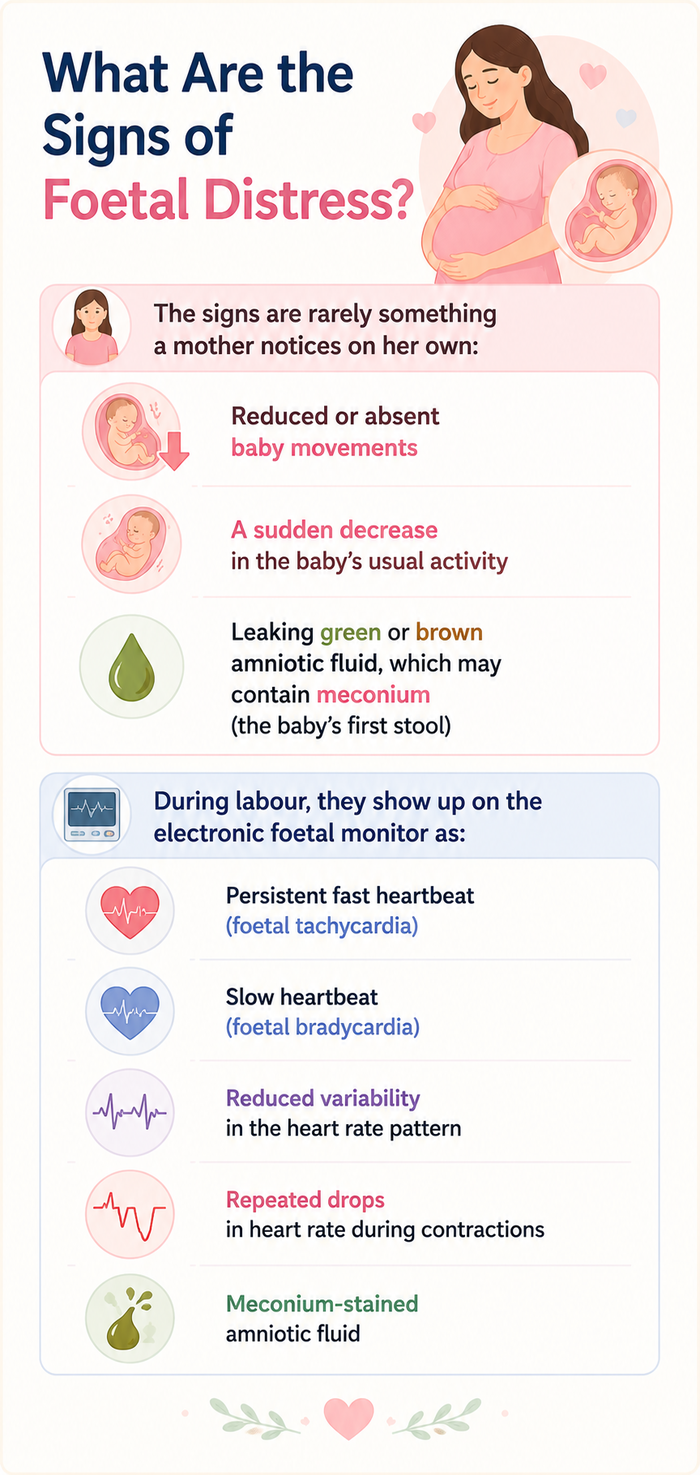
What Are the Signs of Foetal Distress?
The signs are rarely something a mother notices on her own:- Reduced or absent baby movements
- A sudden decrease in the baby's usual activity
- Leaking green or brown amniotic fluid, which may contain meconium (the baby's first stool)
- Persistent fast heartbeat (foetal tachycardia)
- Slow heartbeat (foetal bradycardia)
- Reduced variability in the heart rate pattern
- Repeated drops in heart rate during contractions
- Meconium-stained amniotic fluid
What Causes Foetal Distress During Pregnancy or Labour?
Common causes include:- Placental problems: Placental insufficiency, abruption, or a post-dated pregnancy where the placenta has aged (pregnancy extending beyond 41 weeks)
- Umbilical cord issues: Cord compression, a true knot, or the cord wrapping around the baby's neck
- Maternal conditions: Anaemia, pre-eclampsia, gestational diabetes, or low blood pressure during labour
- Reduced amniotic fluid (oligohydramnios): Low fluid levels around the baby increase the risk of cord compression during contractions and reduce the cushioning that protects against pressure on the umbilical cord, both of which can restrict oxygen supply.
- Labour-related factors: Prolonged labour, uterine hyperstimulation from labour-inducing drugs, or a rapid, intense labour
- Multiple pregnancy or foetal growth restriction: Both of which reduce the baby's oxygen reserve
How Is Foetal Distress Diagnosed?
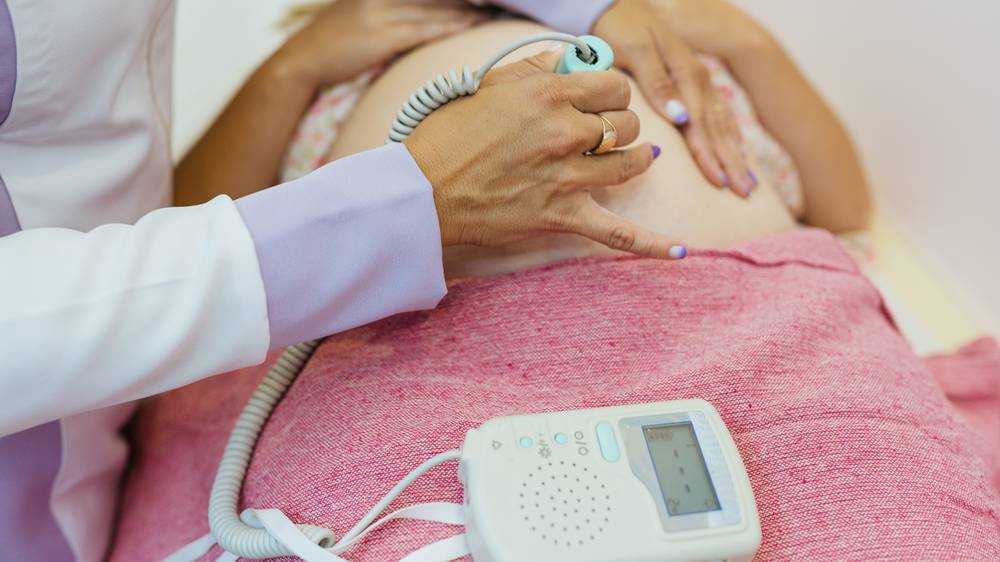
Diagnosis relies on monitoring and combining several methods:- Electronic foetal monitoring (EFM): Tracks the baby's heart rate continuously during labour.
- Non-stress test (NST): Used in the third trimester to check how the heart rate responds to the baby's own movements.
- Doppler ultrasound: To assess blood flow through the umbilical cord and placenta.
- Biophysical profile: Combining heart rate, movement, muscle tone, and amniotic fluid volume into one score.
What Happens After Foetal Distress Is Detected?
Treatment depends on the baby's condition, the stage of pregnancy, and whether labour has started.- Mild changes: Repositioning (usually to the left side), oxygen support, and stopping oxytocin if it is being used.
- Persistent or severe changes: An emergency C-section or, if the cervix is fully dilated, an assisted vaginal delivery with forceps or vacuum.
- After birth: The baby is assessed with an APGAR score, and a NICU team is kept on standby if distress was significant.
Can Foetal Distress Be Prevented?
Not every case can be prevented, but regular antenatal care reduces the risk of delayed diagnosis.Pregnant women can help by:
- Attending all antenatal check-ups
- Monitoring daily foetal movements in the third trimester
- Managing conditions such as diabetes and high blood pressure
- Avoiding smoking, alcohol, and recreational drugs
- Reporting leaking fluid, vaginal bleeding, or reduced baby movements immediately
Whether you’re pregnant, a new mom, or navigating postpartum, you don’t have to do it alone. Join our support group to connect, share, and support one another.
FAQs on Foetal Distress: Signs, Causes, and What Happens Next
- Can I feel foetal distress myself?
Not directly, but a noticeable drop in the baby's movements is the one sign a mother can track at home, and it should prompt an immediate check-up. - Does foetal distress always mean an emergency C-section?
No. Many cases resolve with repositioning, oxygen, or IV fluids. A C-section is done only when the heart rate pattern stays abnormal despite these measures. - Can a baby recover from foetal distress?
Yes. Many babies recover completely when the cause is treated quickly, or delivery is carried out at the right time.