In this article:
Physiological Changes During Natural Childbirth
The physical changes your body endures during a vaginal delivery are immense, involving stretched pelvic tissues and abdominal muscles. There are certain bone-related shifts as well, such as the spinal curve to support the enlarged belly. All these alterations reverse over time.Thus, rushing into high-impact routines too quickly is not recommended, as they may impair your internal recovery or strain your pelvic floor. However, initiating low-impact, specialised movements early on can actually accelerate the healing process, boost circulation and improve energy levels. By focusing on a few regular, low-stress exercises, you can support your body's natural recovery even while handling the physical demands of newborn care.
How Postpartum Exercise Boosts Healing
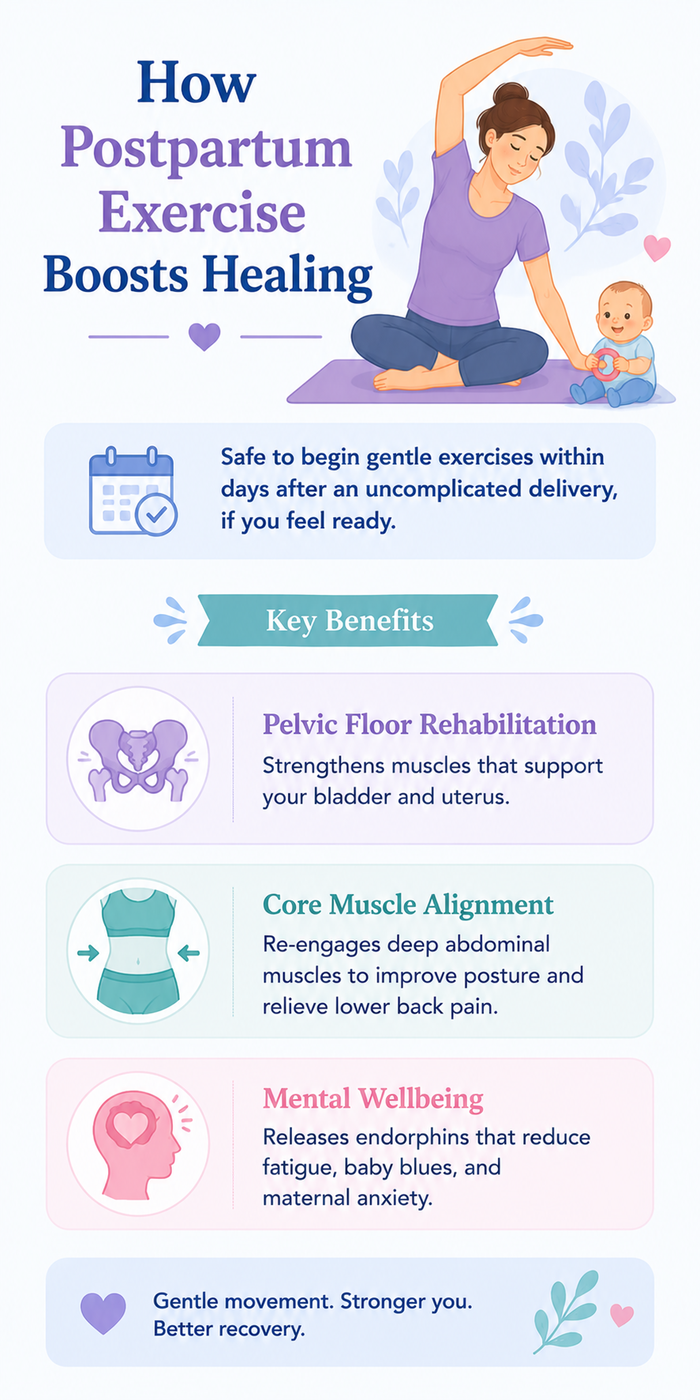
Postpartum exercise during the initial weeks focuses entirely on restorative movement, rather than calorie burning. After uncomplicated natural deliveries, medical bodies confirm you can often begin gentle exercises within days of giving birth, if you feel ready. In fact, early physical transition offers specific wellness benefits, such as:- Pelvic Floor Rehabilitation: Strengthening the muscles that support your bladder and uterus, which are deeply stretched during childbirth.
- Core Muscle Alignment: Gently re-engaging the deep abdominal wall to improve posture and relieve lower back pain.
- Mental Wellbeing: Releasing endorphins that help alleviate postpartum exhaustion, baby blues and maternal anxiety.
It is always safe to start exercising with the obstetrician's advice. Usually, it is safe to begin low-impact exercises like deep breathing and Kegels a week after a natural childbirth.
- Prioritise Pelvic Floor Contractions (Kegels)
- Practise Deep Abdominal Breathing (Diaphragmatic Breathing)
- Begin Brief Walks
- Perform Gentle Shoulder Rolls and Chest Stretches
- Try Pelvic Tilts
When to Pause?
While gentle movement supports recovery, your body will tell you if you are pushing too hard. Please stop exercising and seek immediate medical or obstetric advice if you notice these symptoms:
- A sudden increase in vaginal bleeding or heavy, bright-red postpartum bleeding.
- Severe, persistent pelvic pain, abdominal cramping or swelling.
- Shortness of breath, chest pain, dizziness or extreme fatigue.
- Pain, redness or swelling in your calves.
Just like immunity, everybody’s body heals at its own pace. If an exercise feels uncomfortable or causes a dull ache, pause immediately and give your body another week of rest before you restart.
Discuss your physical activity during your routine postnatal check-ups. When your doctor understands your daily routine, they can safely guide you toward advanced postnatal yoga or light cardio.
Whether you’re pregnant, a new mom, or navigating postpartum, you don’t have to do it alone. Join our support group to connect, share, and support one another.
FAQs on When Can I Begin Exercising After Natural Birth?
- How soon can I return to high-impact gym workouts or running?
It is highly recommended to wait at least six to eight weeks and obtain clinical clearance from your gynaecologist before resuming running, heavy weightlifting or high-intensity interval training (HIIT). - Can starting light exercise affect my breastmilk supply?
No. Light to moderate activity, combined with proper hydration and balanced nutrition, does not impact your milk volume or quality.