In this article:
Nutrition counselling during pregnancy is personalised guidance to help you make healthy food choices for you and your baby. It helps you understand your nutritional needs, answer food-related questions, and make eating decisions that fit your pregnancy and lifestyle.
This guidance may be provided by your doctor, a dietitian, a nutritionist, or another healthcare professional involved in your prenatal care.
Importance of Good Nutrition During Pregnancy
The following are some of the key reasons why good nutrition matters during pregnancy:
Supporting Baby’s Growth and Development
Eating a balanced diet provides vitamins, minerals, protein, and other nutrients that support your baby’s brain, bones, organs, and overall development.Meeting Increased Nutritional Needs
During pregnancy, your body needs more nutrients than usual. Nutrients such as iron, folic acid, calcium, and protein help support your changing needs and your baby’s growth.Maintaining Maternal Health
Eating well can help you maintain your energy levels and support healthy weight gain. Good nutrition may also help you feel better as your body goes through many changes during pregnancy.Supporting Placental Development
The placenta carries oxygen and nutrients from your body to your baby. Getting enough nutrients can support healthy placental development and help your baby receive the nourishment needed to grow.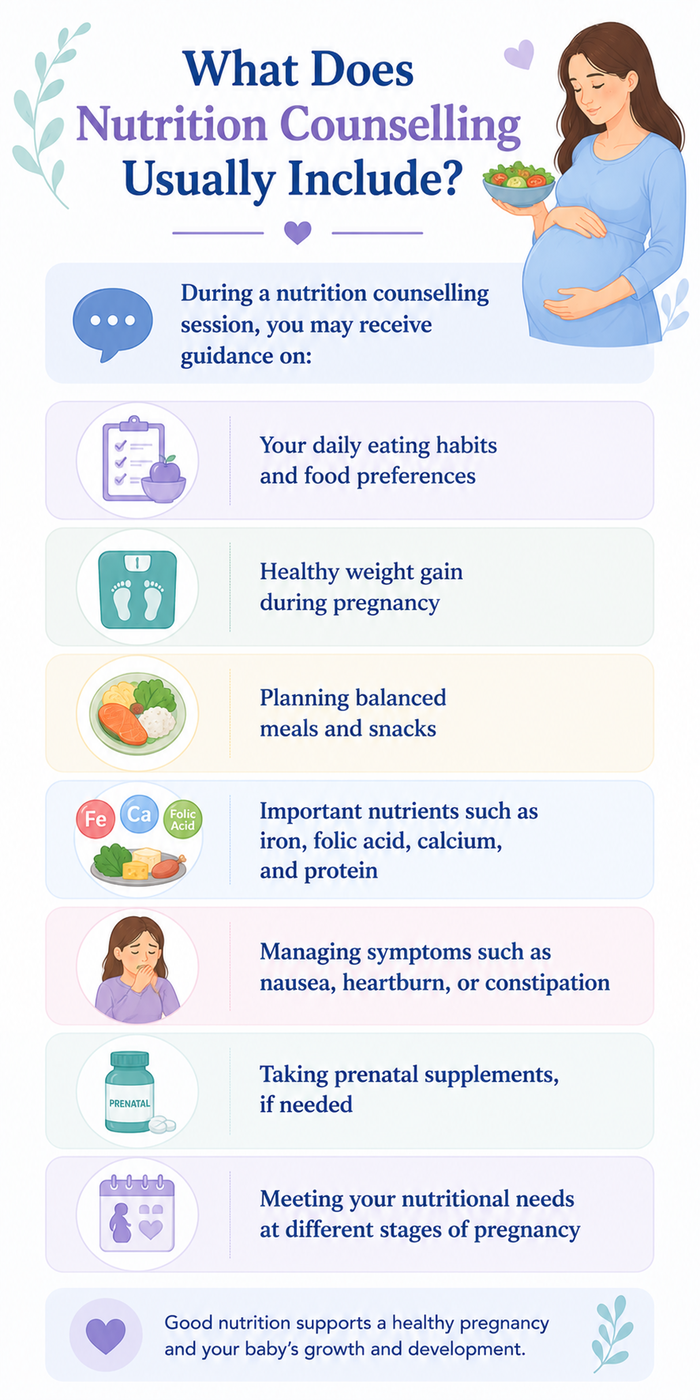
What Does Nutrition Counselling Usually Include?
During a nutrition counselling session, you may receive guidance on:- Your daily eating habits and food preferences
- Healthy weight gain during pregnancy
- Planning balanced meals and snacks
- Important nutrients such as iron, folic acid, calcium, and protein
- Managing symptoms such as nausea, heartburn, or constipation
- Taking prenatal supplements, if needed
- Meeting your nutritional needs at different stages of pregnancy
Possible Benefits of Nutrition Counselling During Pregnancy
According to the World Health Organisation (WHO), nutrition counselling can support your health and your baby's development throughout pregnancy in the following ways:- It may support healthy weight gain during pregnancy
- It can help improve your nutrient intake
- It may support your baby's growth and development
- It can help manage conditions such as gestational diabetes and others
- It may reduce the risk of nutritional deficiencies
- It can encourage healthy eating habits throughout pregnancy
Which Pregnant Women May Benefit the Most?
Every pregnancy is different, and nutritional needs can vary from one woman to another. While nutrition counselling can benefit many pregnant women, some may need additional guidance to help meet their changing needs.- Women with gestational diabetes or high blood sugar levels
- Women who are underweight or overweight before pregnancy
- Women carrying twins or multiple babies
- Women with anaemia or other nutritional deficiencies
- Women experiencing severe nausea, vomiting, or poor appetite
- Women following vegetarian, vegan, or restrictive diets
- Women with food allergies or certain medical conditions
Tips for Following Healthy Eating Advice During Pregnancy
Healthy eating during pregnancy does not have to be complicated. Small changes in your daily routine can make it easier to meet your nutritional needs and support your baby's growth.- Try to eat regular meals instead of skipping them
- Include fruits, vegetables, whole grains, and protein-rich foods in your diet
- Keep healthy snacks nearby when you feel hungry between meals
- Drink enough water throughout the day to stay hydrated
- Listen to your body's hunger and fullness signals
- Take prenatal supplements only if they are recommended by your doctor
- Do not worry about eating perfectly every day. Focus on making balanced choices most of the time
When Should You Speak to a Healthcare Professional?
Certain situations during pregnancy may require additional nutritional support. If you have:- Severe nausea or vomiting that affects your eating
- Weight loss or difficulty gaining enough weight
- Gestational diabetes, anaemia, or other medical conditions
- Following a vegetarian, vegan, or restrictive diet
- Food allergies or dietary restrictions
- Questions about foods, supplements, or nutrition during pregnancy
- Concerns about your baby's growth or your nutritional intake
Whether you’re pregnant, a new mom, or navigating postpartum, you don’t have to do it alone. Join our support group to connect, share, and support one another.
FAQs on How Nutrition Counselling During Pregnancy May Benefit You and Your Baby
- Is nutrition counselling necessary for every pregnant woman?
Many women can benefit from nutritional guidance, especially if they have dietary concerns or medical conditions. - Can nutrition counselling help prevent gestational diabetes?
Healthy eating advice may help manage blood sugar levels and support overall pregnancy health. - When should nutrition counselling begin during pregnancy?
Ideally, counselling can begin before conception or during the first trimester, but it may be helpful at any stage of pregnancy.