
In this article:
What Is a Blocked Milk Duct?
A blocked milk duct occurs when a tiny duct that carries breast milk to the nipple becomes blocked. The milk backs up and forms a painful little lump on your breast. It is also called a plugged duct or clogged duct.
This common issue while breastfeeding is usually nothing serious as long as you recognise it early. It can occur due to missed feedings, long breaks between feedings, or your baby latching on incorrectly.
Common Signs of a Blocked Milk Duct
A blocked milk duct typically shows up slowly, usually affecting just one part of your breast. You may first notice it during a feed or while getting changed.
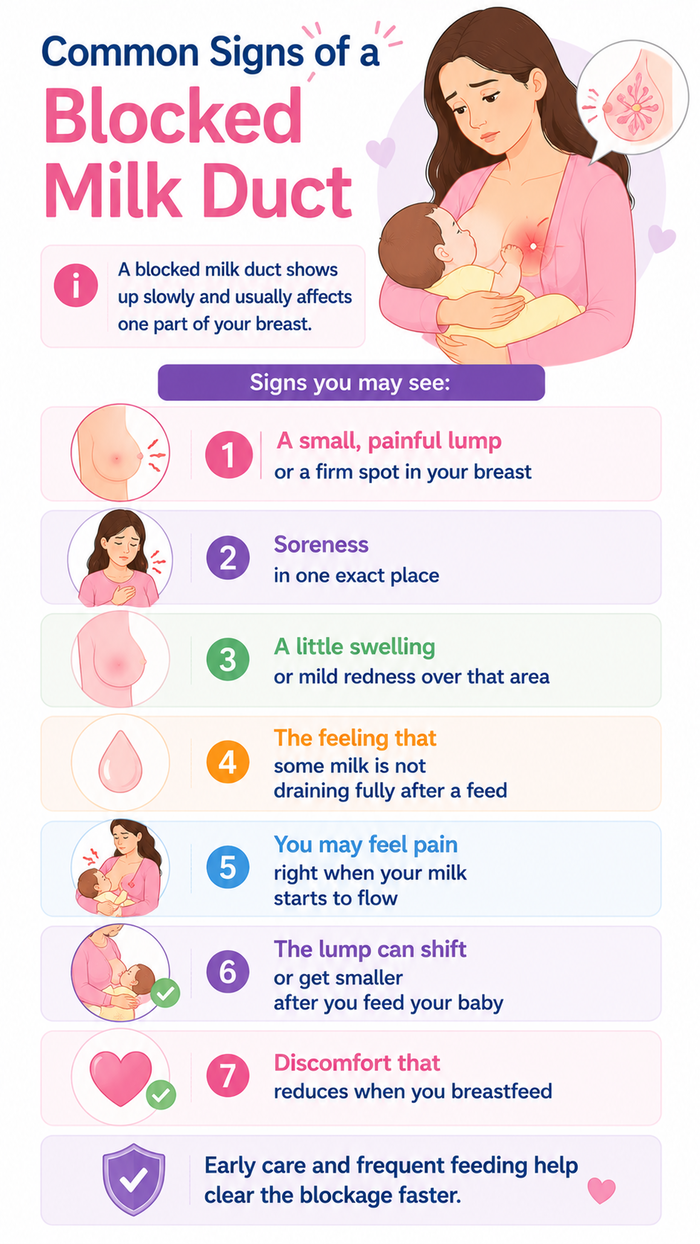
Signs you may see:
- A small, painful lump or a firm spot in your breast
- Soreness in one exact place
- A little swelling or mild redness over that area
- The feeling that some milk is not draining fully after a feed
- You may feel pain right when your milk starts to flow
- The lump can shift or get smaller after you feed your baby
- Discomfort that reduces when you breastfeed
What Is the Difference Between a Blocked Milk Duct and Mastitis?
Both a blocked milk duct and mastitis are common in breastfeeding and have almost the same symptoms. But there are key differences that can help you recognise which condition you may have.
| Feature | Blocked Milk Duct | Mastitis |
| Breast changes | Small, tender lump or firm area | Swollen, painful area that may feel hot |
| Pain | Usually mild to moderate and localised | Often more intense and widespread |
| Redness | Mild redness may be present | Redness is usually more noticeable |
| Fever | Usually absent | Common, often above 38°C (100.4°F) |
| Breastfeeding | Symptoms may improve after feeding or pumping | Feeding may be painful, but breastfeeding is usually still encouraged |
| Medical care | Often improves with early self-care | May need medical evaluation and treatment |
If you develop fever, chills, or worsening breast pain, or if the lump does not improve, it is important to speak with your doctor to rule out mastitis or other breast conditions
Can a Blocked Milk Duct Affect Your Baby?
When you have a blocked milk duct, it does not usually stop your body from making milk. It just makes it harder for milk to flow from one particular breast. Your breast may feel fuller there after feeding, and your baby may need to work a little harder to get milk from that side.
In most cases, your milk supply remains normal, and frequent breastfeeding can help clear the blockage. Usually, once the blockage clears, everything returns to normal.
How Long Does a Blocked Milk Duct Usually Last?
A blocked milk duct usually gets better in 24 to 48 hours, as long as milk keeps flowing through your breast. Most mothers notice that the lump and tenderness reduce as the blockage clears. However, the recovery time can vary from person to person.When Should You Seek Medical Help?
You should seek medical advice if you have:- The lump does not improve after 24 to 48 hours
- Breastfeeding becomes increasingly difficult
- You develop a fever or feel unwell
- A noticeable drop in milk supply
- The affected area becomes more painful over time
- You are unsure whether it is a blocked duct or another breast condition
Whether you’re pregnant, a new mom, or navigating postpartum, you don’t have to do it alone. Join our support group to connect, share, and support one another.
FAQs on Blocked Milk Duct: Signs Every Breastfeeding Mum Should Know
- Can sleeping position affect a blocked milk duct?
Yes. Pressure on the breast from some sleeping positions may affect your milk flow and could contribute to a blocked duct in some mothers. - Can a blocked milk duct happen weeks or months after giving birth?
Yes. It can develop at any stage of breastfeeding, not just during the early weeks. - Can a blocked milk duct come back?
Yes, a blocked milk duct can come back. Some breastfeeding mothers may experience more than one episode, especially if the normal flow of milk is interrupted repeatedly.