In this article:
Dr Chetna Jain explains that women who have their first full-term pregnancy at a younger age generally have a lower lifetime risk of breast cancer compared with women who have their first full-term pregnancy later or remain nulliparous.
However, this does not mean that having children earlier should be considered a strategy for preventing breast cancer.
Why May Earlier Pregnancy Be Linked to Lower Breast Cancer Risk?
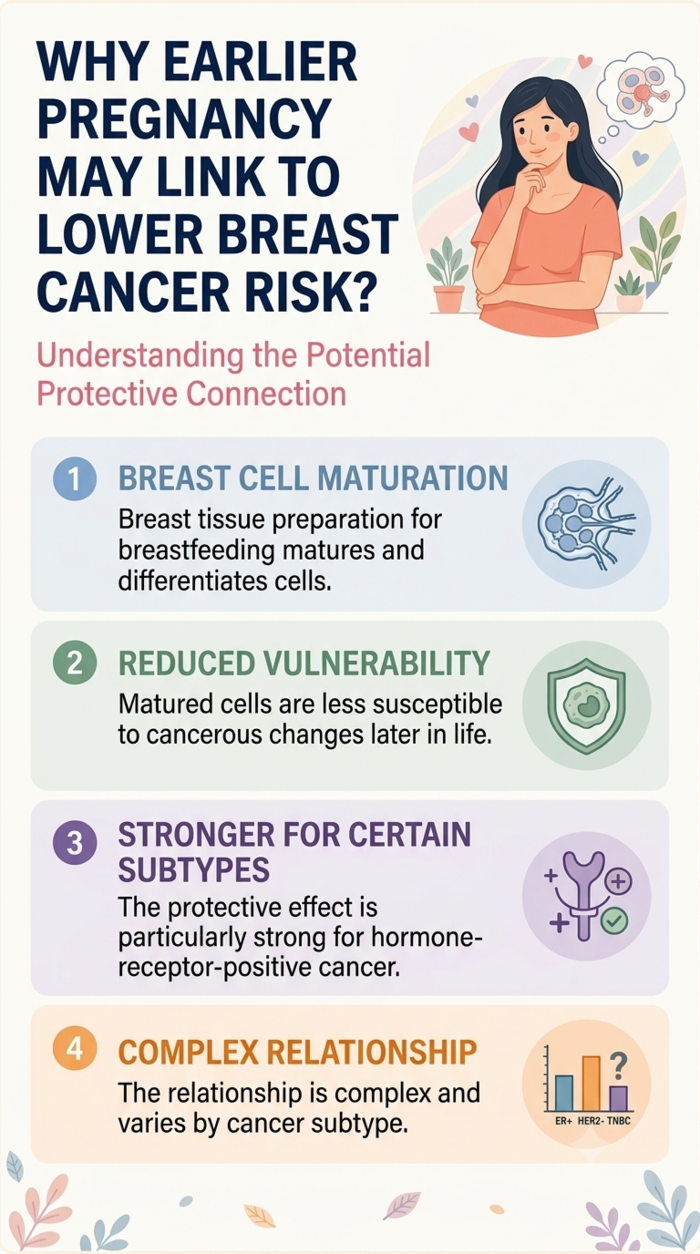
One possible explanation relates to the effect of pregnancy on breast tissue.During pregnancy, breast cells undergo maturation and differentiation as the breasts prepare for breastfeeding. Dr Chetna Jain explains that this process may make some breast cells less susceptible to becoming cancerous later in life.
The protective effect is particularly well established for hormone-receptor-positive breast cancer. However, the relationship is complex and can vary depending on the breast cancer subtype.
Therefore, the association between earlier pregnancy and lower breast cancer risk does not apply in exactly the same way to every type of breast cancer.
Should You Have Children Earlier to Lower Breast Cancer Risk?
Having children earlier should not be viewed as a way to prevent breast cancer.Dr Chetna Jain emphasises that women should not have children early specifically to prevent breast cancer. Decisions about pregnancy should instead be based on personal, reproductive, medical and social circumstances.
Breast cancer risk is influenced by many other factors, including:
- Genetics and family history
- Age
- Body weight
- Alcohol consumption
- Physical activity
- Reproductive history
- Hormonal exposures
Does Having a Child Earlier Prevent Breast Cancer?
No. Having a child earlier may contribute to a lower statistical risk, but it does not eliminate the possibility of developing breast cancer.Similarly, having your first child later does not mean that you will develop breast cancer.
According to Dr Chetna Jain, reproductive history should be considered as only one part of an individual's overall risk profile. She recommends focusing on modifiable risk factors, knowing your family history and following appropriate breast-health and screening recommendations according to your age and individual risk level.
This broader approach is important because breast cancer risk cannot be determined by reproductive history alone.
Having your first full-term pregnancy earlier is associated with a lower statistical risk of breast cancer, but it does not guarantee protection. Your overall risk depends on several genetic, reproductive and lifestyle factors.
Whether you’re pregnant, a new mom, or navigating postpartum, you don’t have to do it alone. Join our support group to connect, share, and support one another.
FAQs on Does Having Your First Child Earlier Lower Breast Cancer Risk?
- Does having your first child earlier reduce breast cancer risk?
Having your first full-term pregnancy at a younger age is generally associated with a lower lifetime risk of breast cancer. However, it does not eliminate the possibility of developing breast cancer. - Why might an earlier pregnancy lower breast cancer risk?
Pregnancy causes maturation and differentiation of breast cells. This may make some cells less susceptible to becoming cancerous later in life. The relationship can vary by breast cancer subtype. - Should I have children earlier to prevent breast cancer?
No. Pregnancy decisions should be based on your personal, reproductive, medical and social circumstances. Having children earlier should not be considered a specific strategy for breast cancer prevention.