In this article:
What Is a Normal Heart Rate During Pregnancy?
Heart rate can vary according to the stage of pregnancy, activity, body position, temperature, hydration, and individual health. Doctors compare the current reading against a woman's own baseline rather than a single cut-off.A resting pulse commonly rises by about 10 to 20 beats per minute during pregnancy. For example, a woman whose resting pulse was 70 beats per minute before pregnancy may have a resting pulse closer to 80–90 beats per minute during pregnancy without this necessarily indicating a heart problem.
How Does Pregnancy Affect Your Heart Rate?
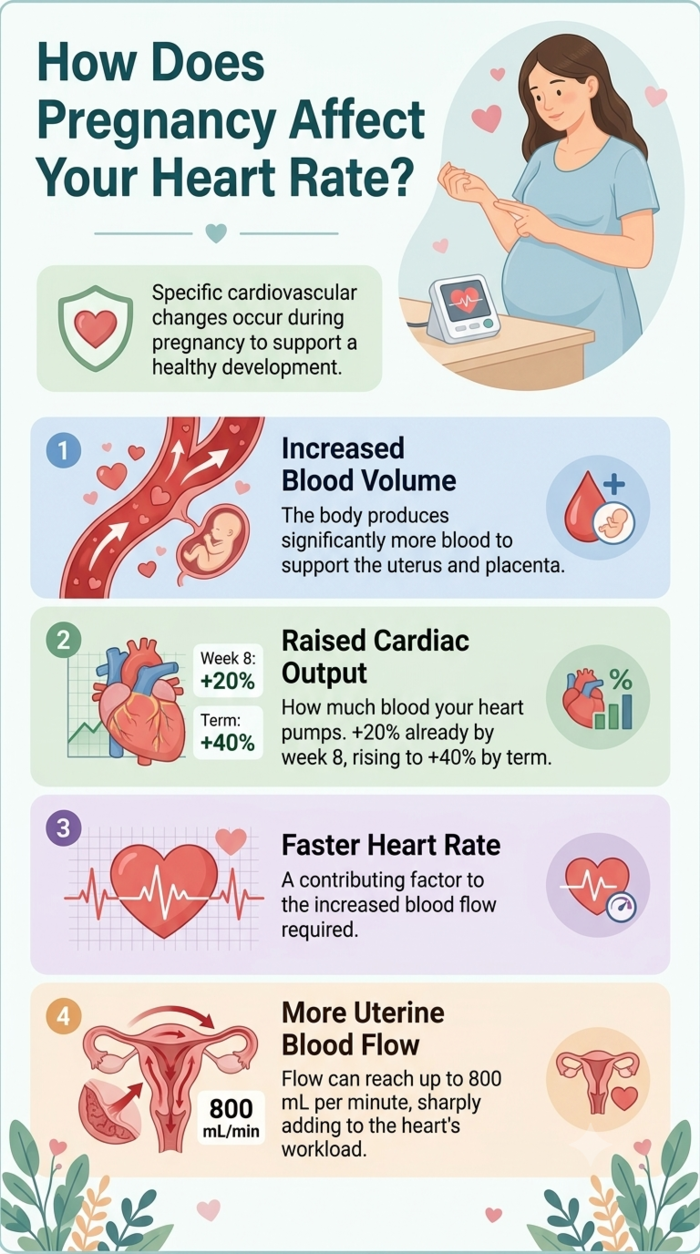
Several measurable changes take place in the cardiovascular system:- Blood volume increases: The body produces more blood to support the uterus and placenta.
- Cardiac output rises: By eight weeks of pregnancy, cardiac output has already increased by around 20%, rising to about 40% by term compared with the pre-pregnancy level.
- Heart rate increases: A faster pulse contributes to the increased blood flow, though this accounts for a smaller share of the rise than stroke volume.
- Uterine blood flow rises sharply: By late pregnancy, uterine blood flow can reach up to 800 mL per minute, adding to the heart's workload.
Dr Keerti Khetan, Director, Obs & Gyn, CK Birla Hospital
Why Does Heart Rate Increase During Pregnancy?
The rise begins with hormonal changes. Rising oestrogen levels relax and widen blood vessels, which lowers blood pressure. To keep blood flowing efficiently to the uterus, placenta and other organs, the heart compensates by beating faster and pumping more blood per beat.Iron-deficiency anaemia is common among pregnant women in India, and anaemia makes the heart work harder to deliver the same amount of oxygen, adding to the pregnancy-related rise in heart rate. India's high summer temperatures and humidity can also cause additional dehydration, which further raises heart rate.
When Is a Fast Heartbeat During Pregnancy a Concern?
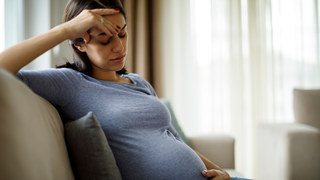
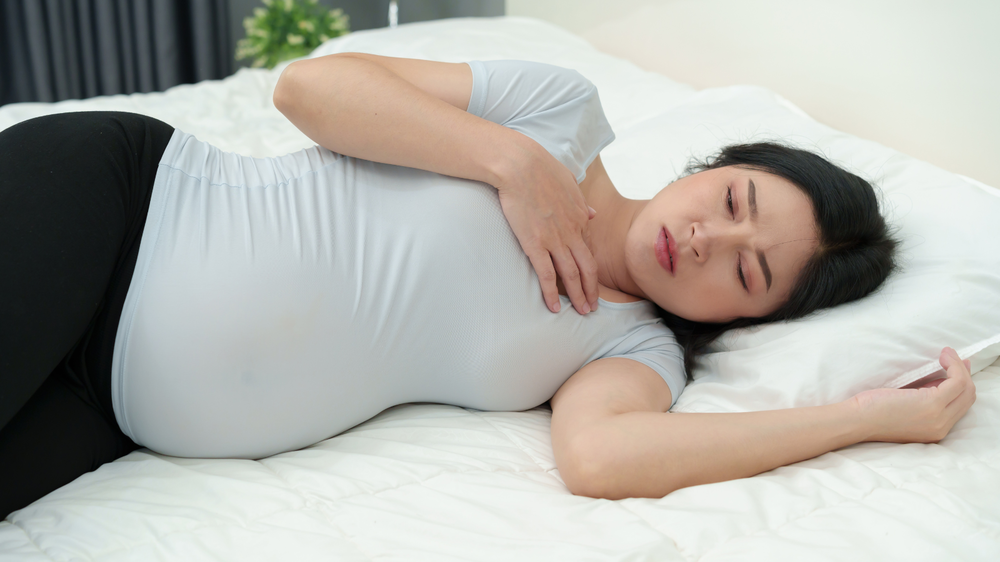
An occasional awareness of your heartbeat can occur during pregnancy. You may notice your heart racing, pounding, fluttering, or beating irregularly. Palpitations can have harmless causes, but recurrent or prolonged episodes should be discussed with a doctor.Seek urgent medical attention if a fast or irregular heartbeat occurs with:
- Chest pain or pressure
- Shortness of breath, particularly if it is sudden or severe
- Dizziness or feeling faint
- Fainting
- Breathlessness that does not ease with rest
- Persistent racing or abnormal heartbeat
- Other symptoms that are new or worsening
A faster heart rate during pregnancy usually reflects the increased demand on the cardiovascular system, but persistent or symptomatic palpitations should always be evaluated by a healthcare professional.
Whether you’re pregnant, a new mom, or navigating postpartum, you don’t have to do it alone. Join our support group to connect, share, and support one another.
FAQs on Why Does Your Heart Rate Increase During Pregnancy?
- Can anxiety raise heart rate during pregnancy?
Yes. Stress and anxiety trigger the body's fight-or-flight response, which increases heart rate on top of the pregnancy-related rise. - Does heart rate return to normal after delivery?
Cardiac output falls sharply in the days after birth and returns close to pre-pregnancy levels within about two weeks, with full recovery by six weeks. - Can pregnancy cause heart palpitations?
Yes. Changes in blood volume and heart rate can make the heartbeat more noticeable. Recurrent, prolonged, or symptomatic palpitations should be assessed.