
In this article:
We spoke to Dr Seema Sharma, Senior Consultant – Obstetrician and Gynaecologist at Cloudnine Group of Hospitals, Vikaspuri, about the relationship between breastfeeding and breast cancer risk.
Dr Seema Sharma explains that the reduction in risk is associated with the biological changes that occur during breastfeeding. These include changes in menstrual cycles, reproductive hormone exposure and breast tissue.
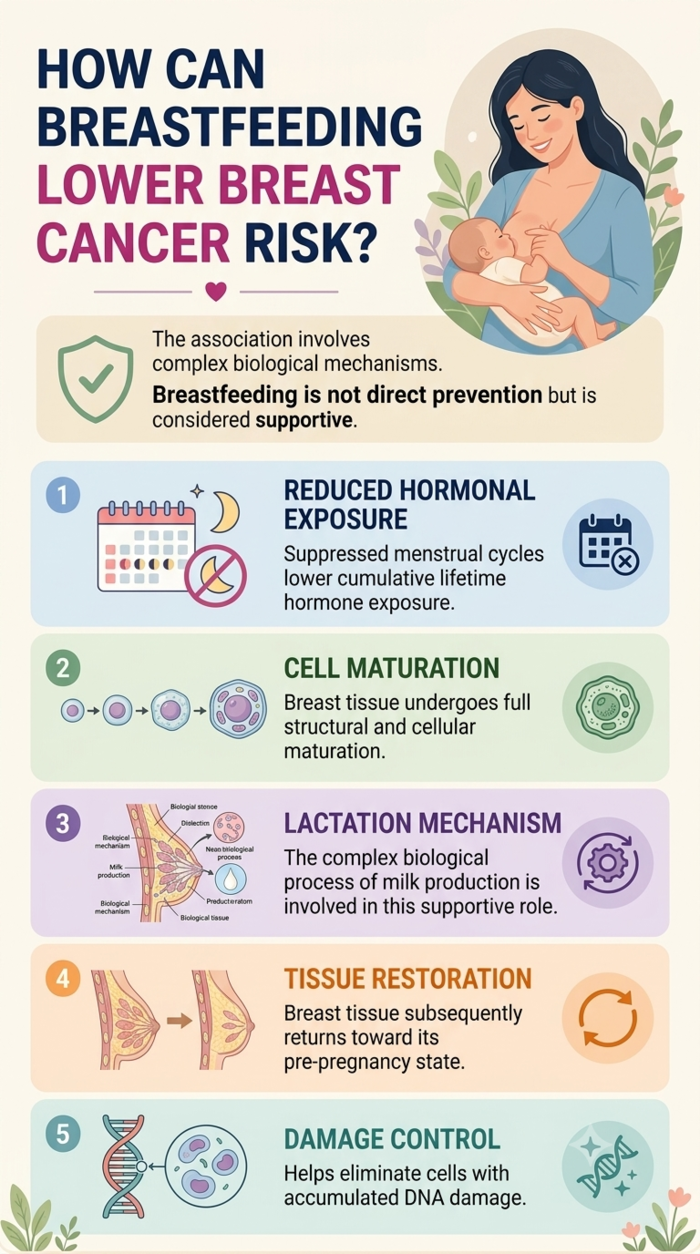
How Can Breastfeeding Lower Breast Cancer Risk?
The protective association between breastfeeding and breast cancer is considered to involve several biological mechanisms.During breastfeeding, menstrual cycles are reduced or temporarily suppressed in many women. This can result in lower cumulative exposure to certain reproductive hormones over a woman's lifetime.
Breast tissue also undergoes further maturation during pregnancy and lactation. These cellular changes may contribute to the association between breastfeeding and a lower risk of breast cancer.
Another proposed mechanism relates to the process of milk production and the subsequent return of breast tissue towards its pre-pregnancy state. This process may help eliminate breast cells that have accumulated DNA damage.
The exact mechanisms are complex, and breastfeeding should not be considered a direct way of preventing breast cancer.
Does the Duration of Breastfeeding Matter?
Yes. Research suggests that the association with lower breast cancer risk becomes stronger with a greater total duration of breastfeeding across all pregnancies.| Breastfeeding history | Association with breast cancer risk |
| Breastfeeding for a shorter duration | May provide a modest reduction in lifetime risk |
| Longer cumulative duration | Greater protective association has been observed |
| Breastfeeding does not prevent cancer | Breast cancer can still develop |
Similarly, women who do not breastfeed may never develop breast cancer. Breastfeeding is therefore one factor among several that can influence long-term breast cancer risk.
Are There Other Ways to Reduce Breast Cancer Risk?
Yes. Breastfeeding should be considered alongside other measures that support long-term health.Women can also reduce modifiable breast cancer risk factors by:
- Maintaining a healthy weight
- Staying physically active
- Limiting alcohol consumption
- Avoiding tobacco
- Following age- and risk-appropriate breast screening recommendations
Breastfeeding Benefits Extend Beyond Breast Cancer Risk
The potential association between breastfeeding and lower maternal breast cancer risk is only one aspect of breastfeeding.Breastfeeding also provides important nutritional and immune benefits for babies. It is recommended when medically and personally feasible.
Therefore, breastfeeding decisions should consider the health and circumstances of both mother and baby rather than being based solely on breast cancer prevention.
Concluding our discussion, Dr Seema Sharma explains that breastfeeding should be viewed as one of several factors that may contribute to long-term health, rather than as a guarantee against breast cancer. Other preventive measures and appropriate breast screening remain important, particularly for women with additional risk factors.
Breastfeeding is associated with a modest reduction in long-term breast cancer risk and may offer greater benefit with longer cumulative breastfeeding duration. However, it should be considered alongside other lifestyle measures and appropriate breast screening.
Whether you’re pregnant, a new mom, or navigating postpartum, you don’t have to do it alone. Join our support group to connect, share, and support one another.
FAQs on How Does Breastfeeding Affect Breast Cancer Risk?
- Does breastfeeding reduce the risk of breast cancer?
Yes. Breastfeeding is associated with a modest reduction in a woman's lifetime risk of breast cancer. The association may become stronger with a longer total duration of breastfeeding across pregnancies. - Does breastfeeding completely prevent breast cancer?
No. Breastfeeding does not eliminate breast cancer risk. Women who breastfeed can still develop breast cancer, while women who do not breastfeed may never develop the disease. - What else can help reduce breast cancer risk?
Maintaining a healthy weight, staying physically active, limiting alcohol consumption, avoiding tobacco and following age- and risk-appropriate breast screening recommendations can contribute to breast cancer risk reduction. Women with a strong family history or genetic risk may require a personalised screening strategy.