In this article:
What Causes Acute Fatty Liver of Pregnancy?
The exact cause of AFLP is not fully understood, but researchers link it to a problem in how the body breaks down fatty acids during pregnancy.In many cases, the condition is connected to a foetal enzyme deficiency called long-chain 3-hydroxyacyl-CoA dehydrogenase (LCHAD) deficiency. However, not every woman with AFLP or every affected baby has an identifiable genetic problem.
When the foetus cannot properly process fatty acids, these byproducts pass into the mother's bloodstream and accumulate in her liver, causing fatty infiltration and eventual dysfunction.
Other suggested factors include excess oestrogen and mitochondrial dysfunction during pregnancy.
What Are the Risk Factors for AFLP in Pregnancy?
Certain factors raise the likelihood of developing AFLP:- Carrying twins or multiples
- First pregnancy (nulliparity)
- Carrying a male foetus
- Foetal fatty acid oxidation disorders
- Obesity or pre-existing metabolic conditions such as diabetes
- Other pregnancy-related liver conditions, such as intrahepatic cholestasis of pregnancy
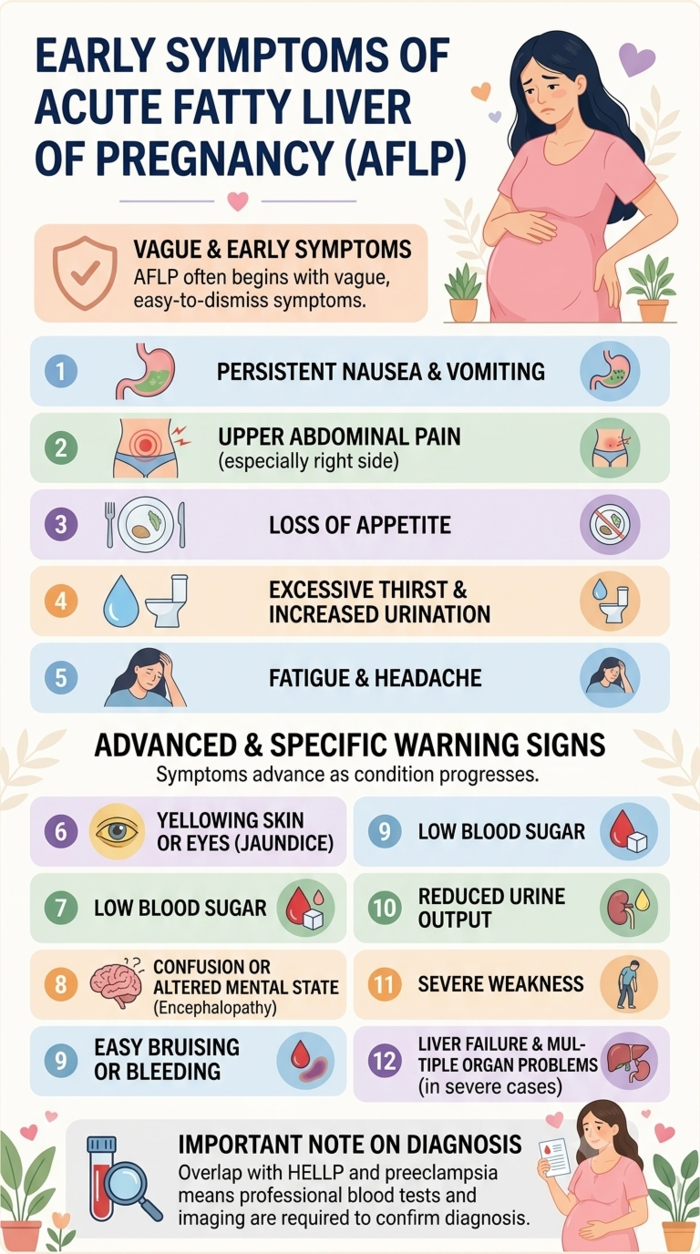
What Are the Early Symptoms of Acute Fatty Liver of Pregnancy?
AFLP often begins with vague, easy-to-dismiss symptoms:- Persistent nausea and vomiting
- Pain in the upper abdomen, especially the right side
- Loss of appetite
- Excessive thirst and increased urination
- Fatigue and headache
- Yellowing of the skin or eyes (jaundice)
- Low blood sugar
- Confusion or altered mental state, indicating encephalopathy
- Easy bruising or bleeding, pointing to clotting problems
- Reduced urine output
- Severe weakness
- In severe cases, liver failure and problems with multiple organs
How Is AFLP Diagnosed?
Doctors usually combine symptoms, examination findings, and blood tests while ruling out other causes of liver dysfunction.Blood tests may check:
- Liver enzymes
- Bilirubin levels
- Blood glucose
- Kidney function and creatinine
- Blood clotting
- Complete blood count
- Ammonia levels
Doctors use criteria such as the Swansea Diagnostic Criteria to identify AFLP. These criteria use a combination of clinical symptoms, blood-test abnormalities and imaging findings. Six or more criteria, when there is no better alternative explanation, can support a diagnosis of AFLP.
AFLP Treatment: Why Delivery Is Usually Needed
The only definitive treatment for AFLP is prompt delivery of the baby, regardless of gestational age, once the mother is stabilised. Delivery halts the disease process, and most mothers show improvement in liver function within one to two weeks after birth. The method of delivery depends on the mother's condition, the baby's condition, the stage of labour and other clinical factors.Supportive care in an intensive care setting is usually required to manage blood sugar, clotting abnormalities, and fluid balance.
Can AFLP Affect the Baby?
Yes. AFLP can cause complications for the baby because severe maternal illness can affect the placenta and foetal well-being. The baby may need monitoring for low blood sugar and, in some cases, disorders involving fatty-acid metabolism.FIGO recommends assessment of babies born after a maternal diagnosis of AFLP for possible fatty-acid oxidation disorders.
AFLP is rare, but recognising its early signs and seeking urgent medical care can be the difference between a full recovery and a life-threatening emergency.
Whether you’re pregnant, a new mom, or navigating postpartum, you don’t have to do it alone. Join our support group to connect, share, and support one another.
FAQs on What Is Acute Fatty Liver of Pregnancy? Signs Every Expectant Mother Should Know
- Can AFLP be prevented?
There is no known way to prevent AFLP, as its exact cause is not fully understood. Regular antenatal check-ups and prompt reporting of symptoms allow early detection and treatment. - Does AFLP affect future pregnancies?
Recurrence is uncommon but possible, especially if the foetus has a confirmed fatty acid oxidation disorder such as LCHAD deficiency. Doctors typically recommend closer monitoring and genetic counselling in subsequent pregnancies. - How soon after delivery does the liver recover in AFLP?
Most mothers see liver function begin improving within a few days and return to near-normal within one to two weeks after delivery, provided treatment starts promptly.