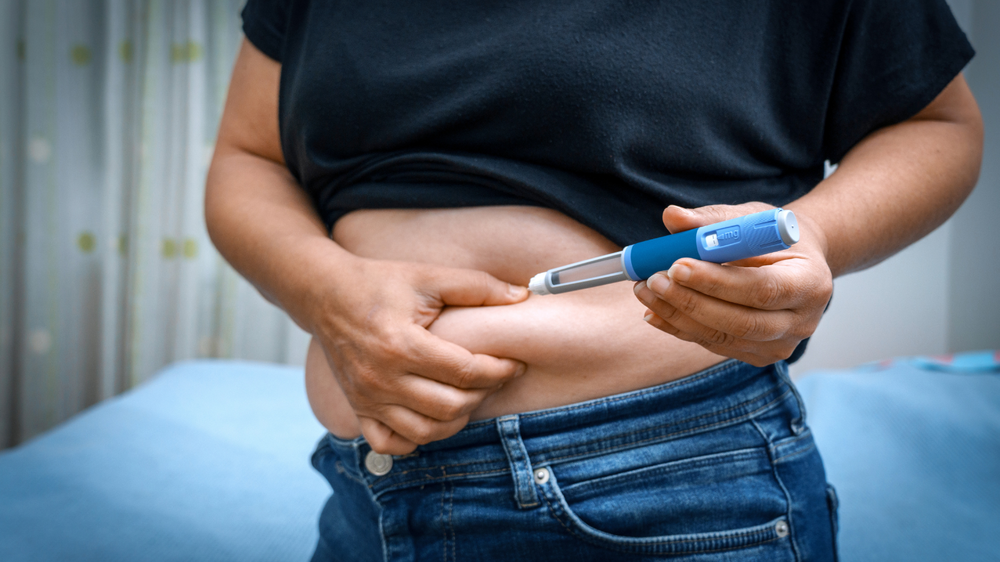
What Are GLP-1 Medications?
GLP-1 (glucagon-like peptide-1) medications mimic a natural hormone released by the gut after eating. They help:- Reduce appetite
- Slow stomach emptying
- Improve blood sugar control
- Increase feelings of fullness
- Support gradual weight loss
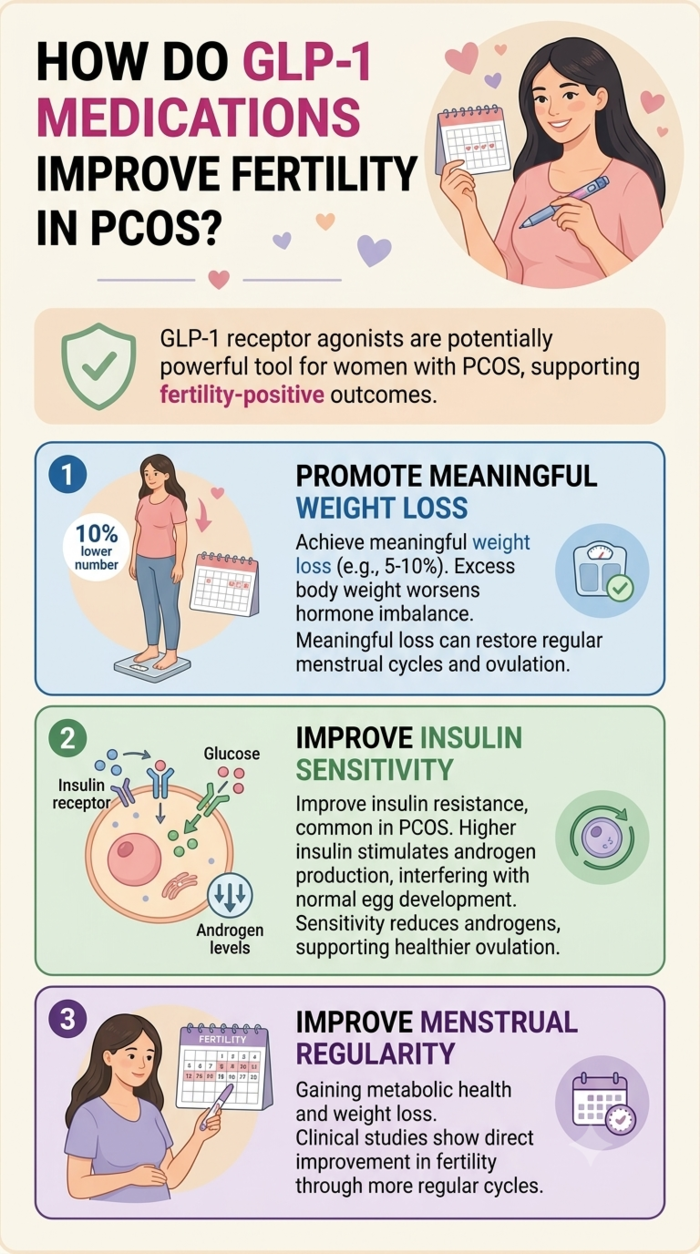
How Do GLP-1 Medications Improve Fertility in PCOS?
GLP-1 receptor agonists might help through:- Weight loss improves ovulation: Excess body weight can worsen hormone imbalance in PCOS. Losing just 5-10% of body weight has been shown to improve ovulation in many women. GLP-1 medications help many people achieve meaningful weight loss, which may restore more regular menstrual cycles and ovulation.
- They reduce insulin resistance: Insulin resistance is common in PCOS. High insulin levels stimulate the ovaries to produce more androgens, which interfere with normal egg development. By improving insulin sensitivity, GLP-1 medications may help lower androgen levels and support healthier ovulation.
- They may improve menstrual regularity: Several clinical studies have found that women taking GLP-1 medications experience more regular menstrual cycles after weight loss and improved metabolic health.
Can GLP-1 Medications Replace Fertility Treatment?
GLP-1 medications are not fertility medicines. If infertility is caused by blocked fallopian tubes, male factor infertility, advanced age, or other reproductive conditions, these medicines alone will not help achieve pregnancy.Women who do not ovulate even after weight loss may still require ovulation induction medicines or assisted reproductive techniques such as IVF.
What Is the "GLP-1 Baby" Phenomenon?
As fertility returns, some women on GLP-1 medications conceive unexpectedly, including those who had been trying to conceive for years without success. This is why doctors stress reliable contraception while on these drugs unless pregnancy is intended.Current safety data on accidental early pregnancy exposure is limited but has not shown a clear increase in major birth defects. Even so, the standard advice is to stop GLP-1 medication 2–3 months before actively trying to conceive, since long-term data in pregnancy is still lacking.
Are GLP-1 Medications Suitable For Every Woman With PCOS?
Not always. They may be considered for women who:- Have PCOS with overweight or obesity
- Have insulin resistance
- Have difficulty losing weight with lifestyle changes alone
- Have type 2 diabetes along with PCOS
What Lifestyle Changes Still Matter?
Even when GLP-1 medications are prescribed, lifestyle changes remain the foundation of PCOS management.Women should aim to:
- Eat a balanced, high-fibre diet
- Include regular physical activity
- Get adequate sleep
- Manage stress
- Maintain a healthy weight
- Attend regular medical follow-up
Are GLP-1 Medications For PCOS Available in India?
India has one of the highest numbers of women living with PCOS. Urban lifestyles, increasing obesity, insulin resistance, and sedentary habits have contributed to rising cases.Semaglutide and tirzepatide are both available in India, prescribed off-label for PCOS-related insulin resistance and weight management, generally under an endocrinologist's or gynaecologist's supervision.
Generic semaglutide is more accessible than branded versions. These medications are not first-line PCOS treatment in India; lifestyle changes and metformin remain the initial approach recommended by most fertility specialists, with GLP-1 drugs considered for women who do not respond adequately or who have significant obesity.
GLP-1 medications can meaningfully improve fertility in PCOS by treating the underlying insulin resistance, but they require medical supervision and are not yet an approved PCOS treatment in India.
You’re not alone in your journey when trying to conceive. Join our supportive community to connect with others, share experiences, and find encouragement every step of the way.
FAQs on GLP-1 Medications for PCOS: Do They Really Boost Fertility?
- Do GLP-1 medications directly treat PCOS?
No. They are not approved for PCOS. They are prescribed off-label for the insulin resistance and weight gain associated with PCOS, which indirectly improves fertility. - Can GLP-1 medications cure PCOS?
No. They do not cure PCOS. They help manage symptoms such as excess weight, insulin resistance, and irregular ovulation while treatment continues. - Are GLP-1 medications safe during pregnancy?
No. They are not approved for use in pregnancy. Doctors advise stopping these medications 2–3 months before conception.