Why Do You Need Nursing Clothes?
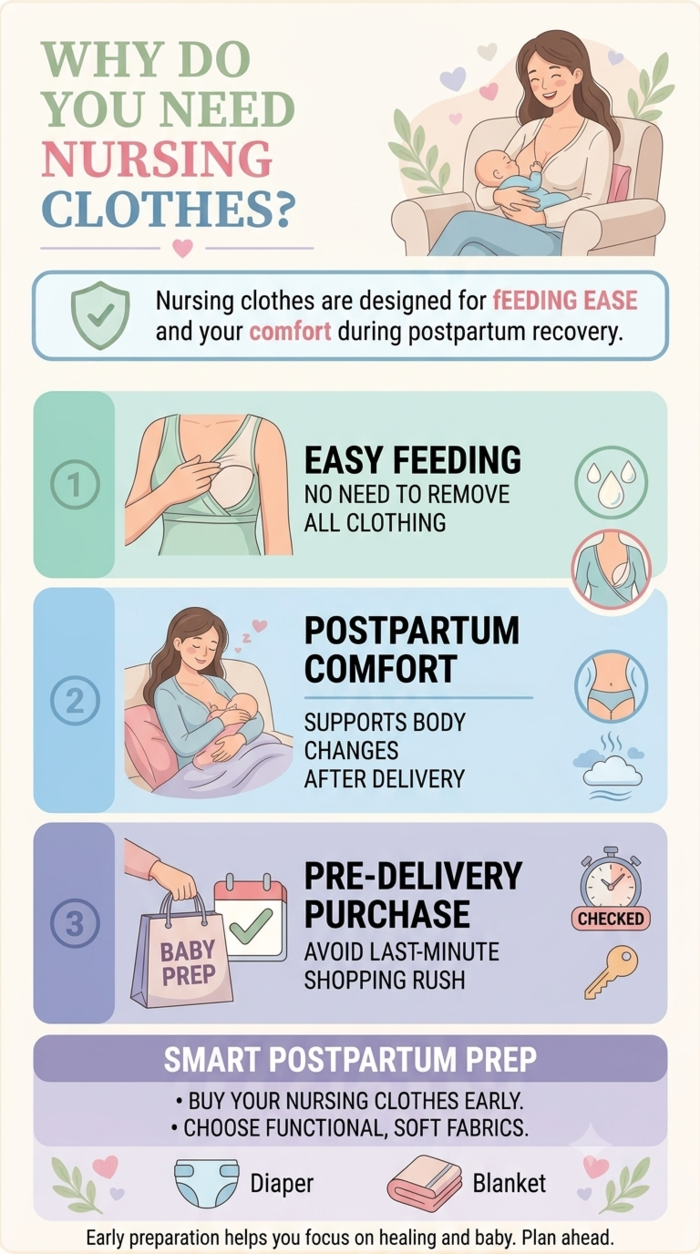
According to Dr Chaudhary, preparation for having a baby involves purchasing small clothes, diapers, blankets, and feeding supplies for babies; however, there is a need for comfortable clothes for yourself during the postpartum period. Nursing clothes have two functions as follows:- Feeding is easy, as you do not have to take off all your clothing.
- It keeps you comfortable since your body experiences many changes post-delivery.
- It will be useful for you to have these clothes before delivery to avoid any rush during shopping.
What Kind of Nursing Clothes to Look For
Dr Chaudhary suggests these considerations:- Ease of access: Feeding without having to remove the entire clothing.
- Comfortable fabric: Soft, breathable, and stretchable fabric.
- Fit: Loose-fitting or adjustable clothes.
Which Designs Make It Easy to Access the Breast?
Look for tops and dresses which provide an option to get access without removing the entire dress. Useful designs include:
- Discreet openings: Slits or panels that are difficult to see
- Wrap dresses: Very easy to open and close
- Buttons: Easy to unbutton from above
- Zips: Quick to use for one-handed access
Which Fabric Is Most Comfortable After Delivery?
At this point, comfort should be your priority. Dr Chaudhary recommends soft, breathable, and stretchable fabric that is most useful. According to Dr Chaudhary, you may prefer breathable materials such as cotton. Here is how they can assist you:
- Soft material: Is gentle on your sensitive skin
- Breathable material: Keeps you comfortable and dry
- Stretchable material: Moves with you without exerting any pressure on you
- Washable material: Is easy to clean of any spillage
Why Should You Not Wear Fitted Clothes?
As your body changes post-delivery, Dr Chaudhary suggests that you not wear too many fitted clothes. This is because adjustable or loose-fitting clothes offer more comfort. Here are some pieces that fit this category:
- Loose kurtas/kaftans: Easy to wear and easy to nurse in
- Wrap tops and dresses: Adjust as per your growing body
- Nightwear that opens in the front: Easy access to nipples during night-time nursing
- Soft stretchy bottoms: Waistbands of loose clothes make the recovery process easy
Do You Need Nursing Bras?
Yes, you will need nursing bras too. According to Dr Chaudhary, these bras should be comfortable and adjustable and offer support without being too tight. The features to consider when choosing an appropriate nursing bra include:- Adjustable straps/bands: Your body keeps changing; this helps you adjust easily
- Breathable soft fabric: Good for the skin
- Easily accessible clips or openings: One-hand convenience
- Nothing too tight: Not uncomfortable anywhere
The idea is not to build a whole new wardrobe, but rather select items which make feeding, resting and looking after the baby easier.Dr Payal Chaudhary, Senior Consultant, Department of Obstetrics & Gynaecology, Rosewalk Healthcare at Rainbow Hospital.
How Many Pieces Should You Buy?
Just a few practical and comfortable pieces should be adequate for the time being. You could start with:- Tops or dresses: About 3 to 4 nursing-friendly items
- Nursing bras: 2 to 3 comfortable items
- Nightwear: 2 items of soft and loose clothing
- Bottoms: 1 or 2 stretchy items
- A shawl: Useful for cooler rooms
When Should You Consult Your Doctor?
However, dressing alone will not be able to address all issues. Consult your doctor if:- Redness, itching or soreness due to bras or clothing
- Pain that occurs during and after breastfeeding and does not resolve
- A hard, red or warm spot on the breast
- Feeding seems difficult, or the baby is having trouble attaching itself
- Fever or chills are accompanied by pain and tiredness
Whether you’re pregnant, a new mom, or navigating postpartum, you don’t have to do it alone. Join our support group to connect, share, and support one another.
FAQs on Nursing-Friendly Clothing to Buy Before Baby Arrives
- When is it appropriate to purchase nursing wear?
Pregnant women usually purchase clothing in the final weeks of pregnancy. At that point, you have a good idea about what your body shape will be. - Is it compulsory to purchase nursing clothing?
Not necessarily. Nursing clothing may be made from any loose, front-opening or wrap-around clothing in your closet. - Should you purchase nursing bras before delivery?
Having a couple of nursing bras is a good idea. Because your body is still changing after delivery, purchasing a couple and gradually building up is better.