In this article:
What Position Should Baby Be in at 36 Weeks?
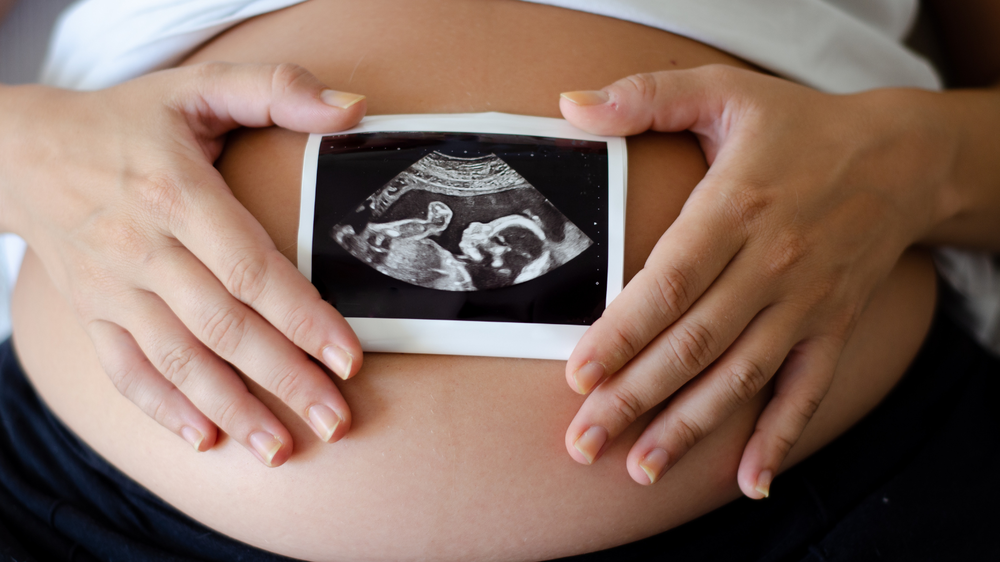
At 36 weeks, your doctor will either feel your abdomen (Leopold's manoeuvre) or use an ultrasound to confirm your baby's position.
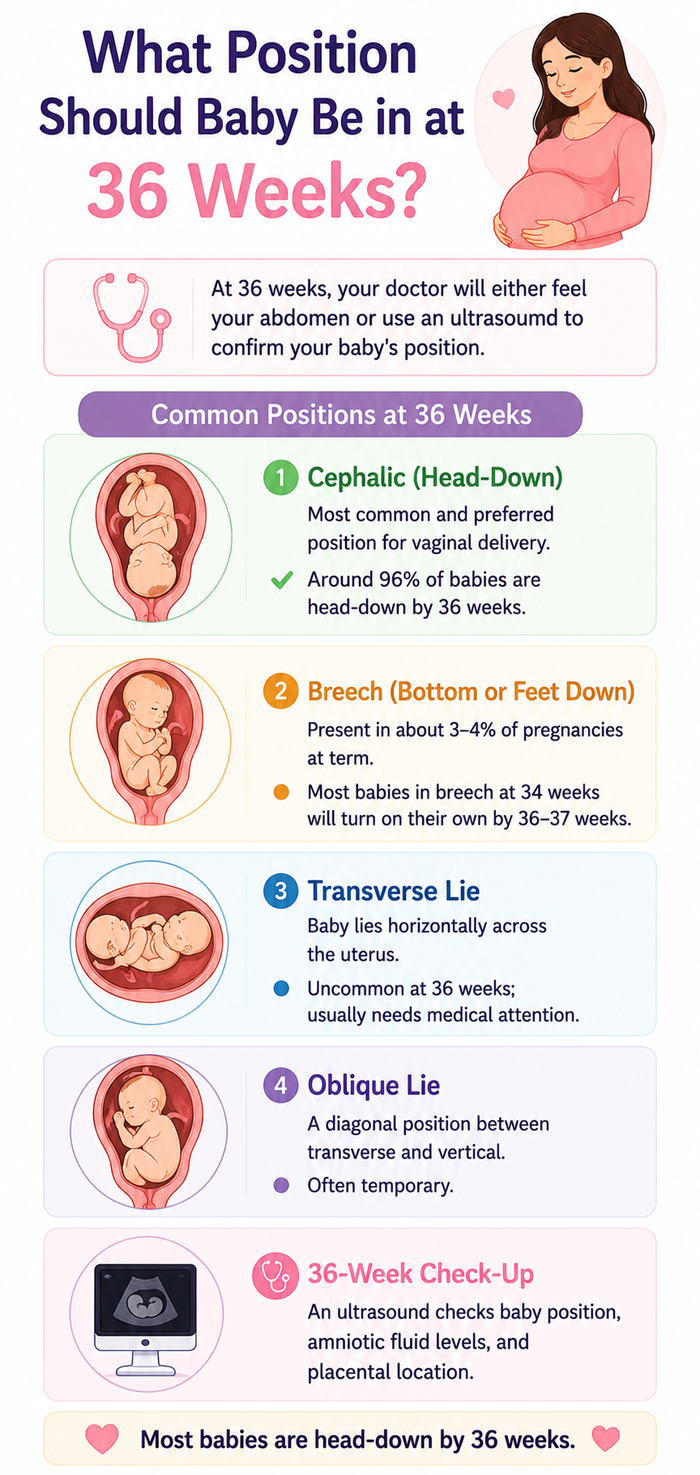
Common positions at 36 weeks:
- Cephalic (head-down): The most common and preferred position for vaginal delivery. Around 96% of babies settle head-down by 36 weeks.
- Breech (bottom or feet down): Present in about 3–4% of pregnancies at term. Most babies in breech at 34 weeks will turn on their own by 36–37 weeks.
- Transverse lie: Baby lies horizontally across the uterus. This is uncommon at 36 weeks and usually requires medical attention.
- Oblique lie: A diagonal position between transverse and vertical. Often temporary.
A 36-week antenatal visit typically includes an ultrasound to confirm position, amniotic fluid levels, and placental location.
Does a Head-Down Baby at 36 Weeks Mean Labour Is Near?
Not necessarily. A cephalic position is encouraging, but it does not mean labour will start soon. What it does mean is that your body and baby are aligning for a vaginal delivery, which is a positive sign.
"Engagement" (when the baby's head drops into the pelvis) is a separate event from position. In first-time mothers (primigravidas), engagement can happen 2–4 weeks before labour. In women who have delivered before (multigravidas), engagement often only happens once active labour begins.
Signs Labour May Be Approaching
- Increased pelvic pressure or "lightening" (baby dropping lower)
- Loss of the mucus plug
- Braxton Hicks contractions becoming more regular
- Cervical changes (dilation and effacement) noted by your doctor
What If a Baby Is Still Breech at 36 Weeks?
If your baby is breech at 36 weeks, your doctor will discuss options. The most common medical intervention is an External Cephalic Version (ECV), a procedure done between 36 and 38 weeks, where a doctor manually guides the baby into a head-down position using their hands on your abdomen. ECV has a success rate ranging from 50% to 60%.
If ECV is not successful or not recommended (due to low amniotic fluid, placenta previa, or a previous caesarean), a planned caesarean section is typically scheduled around 39 weeks.
Can a Baby's Position Change After 36 Weeks?
Yes. While most babies settle into their final position by 36–37 weeks, position changes can still occur, particularly in women with excess amniotic fluid (polyhydramnios) or those who have had multiple pregnancies (the uterine muscles may be more relaxed).At 36 weeks, a breech baby still has a reasonable chance of turning spontaneously. By 38–39 weeks, the space inside the uterus reduces significantly, making spontaneous turning less likely but not impossible.
This is why most doctors schedule a repeat position check at 37–38 weeks before finalising the birth plan.
What Baby's Position Cannot Tell You
Baby's position at 36 weeks cannot tell you:- Your exact labour date
- Whether labour will be fast or slow
- Whether you will need a caesarean (position is one factor among many)
- Whether you are at risk for complications
Whether you’re pregnant, a new mom, or navigating postpartum, you don’t have to do it alone. Join our support group to connect, share, and support one another.
FAQs on Can You Predict Labour Date from Baby's Position at 36 Weeks?
- If my baby is head-down at 36 weeks, will I definitely have a normal delivery?
A head-down position is a necessary condition for vaginal delivery, but not a guarantee. Other factors, including cervical dilation, baby's size, placental position, and your pelvis shape, also determine the mode of delivery. - My baby was head-down at 32 weeks but is breech at 36 weeks. Is this serious?
Babies can change position multiple times before 36 weeks. A breech position confirmed at 36 weeks needs attention, but it is not an emergency. Your doctor can plan an ECV or discuss a caesarean section if needed. - How do doctors check the baby's position at 36 weeks without an ultrasound?
Doctors use a hands-on technique called Leopold's Manoeuvre: four steps of gentle pressing on the abdomen to identify the baby's head, back, and bottom. It takes only a few minutes and is done at most antenatal visits.