Why Breakfast Matters More During Pregnancy
A structured pregnancy diet needs to meet elevated demands for energy (an additional 300–500 kcal per day), protein (1.1 g/kg body weight), iron (27 mg), calcium (1,000 mg), and folic acid (600 mcg) daily. Breakfast is the first opportunity to address these needs.
Eating at short intervals is the best way to maximise nutritional intake during pregnancy. Skipping breakfast increases the risk of low blood sugar, fatigue, and worsening nausea, particularly in the first trimester.
Best Breakfast Foods for Pregnant Women
Idli and Sambar: A Classic That Works Hard
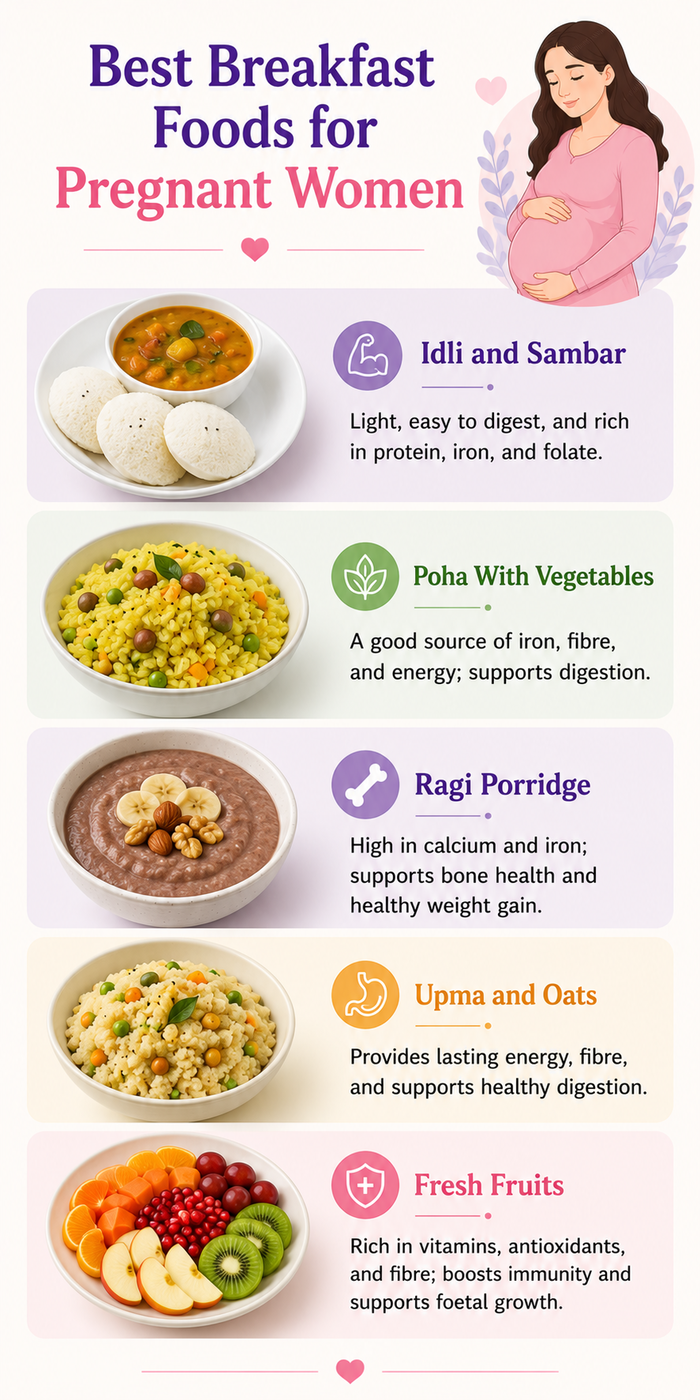
The fermented rice and lentils in idlis provide carbohydrates and protein. The traditional sides of sambar and coconut chutney add fibre and vitamins. Fermentation improves the bioavailability of iron and B vitamins. Idlis with sambar make a balanced, easy-to-digest morning meal across all three trimesters.
Poha With Vegetables: Iron and Fibre in One Bowl
Poha tossed with green peas, carrots, and peanuts, garnished with fresh coriander and a squeeze of lemon juice, is a strong breakfast choice for pregnant women. It is packed with fibre, iron, and Vitamin B, and supports digestion, helps prevent anaemia, and supports the baby's brain development. The addition of lemon juice increases iron absorption significantly. Peanuts add protein and healthy fats, making this a nutritionally complete plate.
Moong Dal Chilla: High Protein Breakfast for the Second Trimester
Moong dal chilla with mint chutney is a recommended breakfast option during pregnancy, particularly in the second trimester when calorie and protein needs increase. Moong dal is rich in folate, protein, and iron. The batter can be enhanced with grated carrots, spinach, or onions for added micronutrients.
Ragi Porridge: Calcium-Rich Breakfast for Bone Development
Ragi is one of the richest plant-based sources of calcium available in Indian kitchens. Ragi and sesame seeds are both strong sources of calcium, making ragi-based breakfast options especially useful throughout all three trimesters. Ragi porridge prepared with milk, a small amount of jaggery, and a handful of nuts provides calcium, iron, and slow-release energy. It is particularly useful in the second and third trimesters, when the baby's bone and teeth development accelerates.
Upma and Oats: Easy to Digest, Easy to Make
Semolina or oats upma with vegetables is a light yet filling breakfast. Oats are high in soluble fibre, which helps manage gestational constipation. Vegetable oats upma with a glass of milk forms a balanced pregnancy breakfast, covering fibre, protein, and calcium in one meal. Adding vegetables such as carrots, peas, or spinach increases the folate content.
Fresh Fruit: A Simple Add-On to Any Breakfast
A banana, papaya, or a handful of pomegranate seeds alongside any breakfast adds natural sugars, potassium, and folate. Fully ripe papaya is safe during pregnancy and supports digestion. Citrus fruits such as sweet lime or orange provide Vitamin C, which improves iron absorption from the rest of the meal.
In the first trimester, the focus is on folate and managing morning sickness. Dry, bland, easy-to-digest meals work best. Eating small amounts before getting out of bed, such as a plain khakhra or dry toast, can help settle the stomach. Ginger tea or ajwain water before breakfast may also reduce nausea.
Breakfast Foods to Avoid During Pregnancy
Some foods you must avoid during pregnancy:
- Raw or undercooked eggs
- Unpasteurised milk or cream used in smoothies or porridge
- Spicy or heavily oiled parathas, especially in the first trimester
- Processed cereals (high in sugar)
- Raw or unripe papaya
- Tea with a full cup of milk as the only breakfast (low in nutrients, high in caffeine)
Caffeine should be limited to 200 mg per day during pregnancy. One cup of masala chai contains approximately 40–60 mg of caffeine, but using it to replace a proper breakfast is not advisable.
A balanced breakfast during pregnancy does not require elaborate cooking; it requires choosing the right ingredients from the foods already present in most kitchens.
Whether you’re pregnant, a new mom, or navigating postpartum, you don’t have to do it alone. Join our support group to connect, share, and support one another.
FAQs on Best Indian Breakfast Ideas for Pregnant Women
- How soon after waking should a pregnant woman eat breakfast?
Pregnant women are advised to eat breakfast within a couple of hours of waking. This helps prevent nausea while restoring energy levels. If morning sickness makes this difficult, start with a dry cracker or plain biscuit, then move to a full meal once the nausea eases. - Can a pregnant woman eat paratha every day for breakfast?
Whole wheat paratha with a small amount of ghee is nutritionally acceptable in moderation. Stuffed parathas with paneer, methi, or spinach add protein and iron. Avoid deep-frying or excess butter, and pair with curd for calcium and probiotics. - Is it safe to eat eggs for breakfast during pregnancy?
Yes, fully cooked eggs are safe during pregnancy and provide protein, choline, and Vitamin D. Choline supports foetal brain development. Scrambled or boiled eggs with vegetables are suitable breakfast options. Avoid raw or undercooked eggs during pregnancy.