In this article:
What Is Antepartum Haemorrhage (APH)?
Antepartum haemorrhage (APH) is the medical term used for bleeding that occurs after 24 weeks of pregnancy and before the birth of the baby. It affects approximately 2% to 5% of pregnancies. The amount of bleeding can vary, and the underlying cause may not always be identified.Research suggests that about 15% of women with unexplained APH may go into labour within two weeks of the first episode of bleeding. For this reason, healthcare providers usually recommend careful assessment and follow-up when APH occurs.
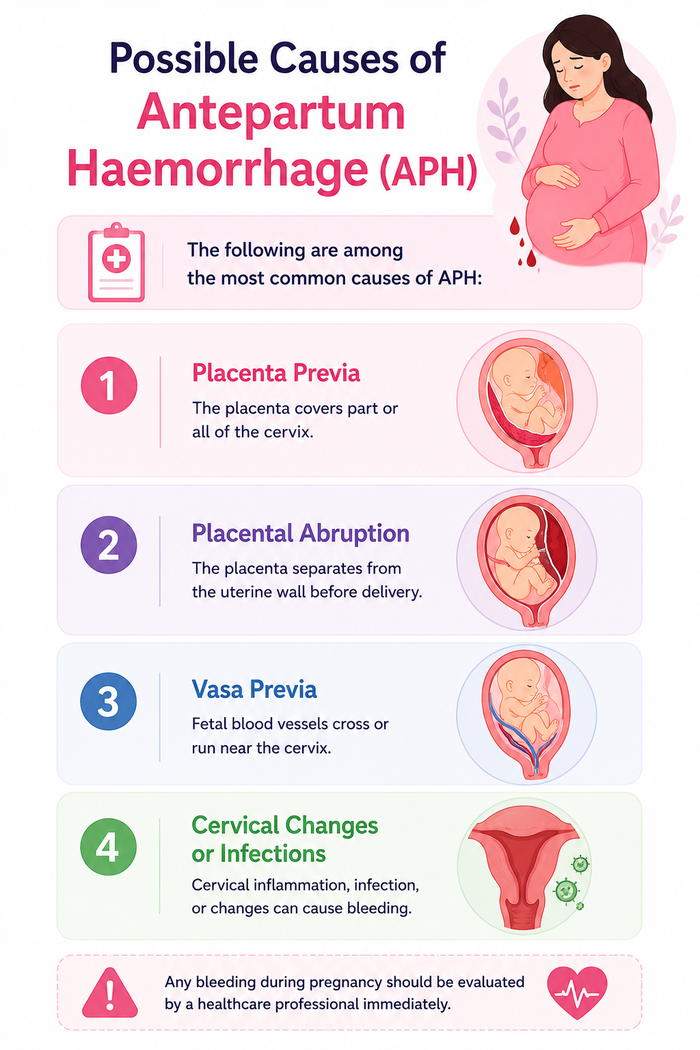
Possible Causes of Antepartum Haemorrhage (APH)
The following are among the most common causes of APH:Placenta Previa
Placenta previa happens when your placenta lies low in the uterus and partly or completely covers the opening of the cervix. Placenta previa affects about 1 in 200 pregnancies. As your pregnancy progresses, this can lead to bleeding, especially during the third trimester. You may notice sudden, painless bleeding, and the amount can vary from light spotting to heavier bleeding.Placental Abruption
Placental abruption occurs when your placenta separates from the wall of the uterus before your baby is born. Along with bleeding, you may also experience abdominal pain, back pain, or contractions. In some cases, the bleeding may be mild even though the condition is serious.Vasa Previa
Vasa previa is a rare condition in which some of your baby's blood vessels lie close to the cervix without the protection of the umbilical cord or placenta. If these vessels tear, bleeding can occur. Vasa previa affects approximately 1 in 2,500 pregnancies.Cervical Changes or Infections
Sometimes, the bleeding may come from your cervix rather than the placenta. During pregnancy, your cervix receives more blood supply and becomes more sensitive. Because of this, you may notice light bleeding after intercourse, a pelvic examination, or due to an infection.What Symptoms May Occur Along With Bleeding?
You may experience the following symptoms along with vaginal bleeding:- Abdominal pain or cramping
- Back pain
- Uterine contractions
- Dizziness or feeling faint
- Reduced or absent fetal movements
- Pelvic pressure
- Weakness or fatigue
- Passing blood clots
Tips to Manage APH During Pregnancy
These simple steps may help you manage your pregnancy more safely:- Follow all scheduled prenatal appointments and scans
- Contact your healthcare provider immediately if the bleeding increases or returns
- Pay attention to your baby's movements and report any decrease in movement
- Avoid self-medication unless recommended by your doctor
- Take prescribed medicines exactly as advised
- Rest as recommended by your healthcare provider
When Should You Contact Your Doctor Immediately?
Contact your healthcare provider or visit the nearest hospital immediately if you experience:- Heavy vaginal bleeding or passing large blood clots
- Severe abdominal pain or persistent back pain
- Regular contractions or signs of preterm labour
- Dizziness, fainting, or feeling extremely weak
- Reduced or no fetal movements
- Bleeding after your water breaks
- Sudden worsening of the bleeding
- Any bleeding accompanied by fever or feeling unwell
Can APH Affect the Baby?
Yes, APH can sometimes affect your baby, depending on the cause and the severity of the bleeding. In some cases, it may increase the risk of preterm birth, low birth weight, or reduced oxygen supply to the baby. Heavy bleeding can also affect the baby's growth and overall health. However, the effects can vary, and not every pregnancy with APH leads to complications.Emotional Impact of Bleeding During Pregnancy
Experiencing bleeding during pregnancy can be emotionally difficult and may leave you feeling worried or uncertain about your baby's well-being.Talking openly with your partner, family members, or healthcare provider may help you feel more supported. Remember that seeking medical advice and understanding your condition can help you feel more informed and reassured during this time.
Antepartum haemorrhage (APH) can be a concerning experience; it does not always lead to serious complications. The effects can vary depending on the cause and the stage of pregnancy. Paying attention to changes in your symptoms and seeking medical advice when needed can help you make informed decisions and receive appropriate care during this stage of pregnancy.
Whether you’re pregnant, a new mom, or navigating postpartum, you don’t have to do it alone. Join our support group to connect, share, and support one another.
FAQs on Bleeding in Late Pregnancy: What Is Antepartum Haemorrhage (APH)?
- Will I always need a C-section if I have APH?
No. The need for a C-section depends on the cause of the bleeding, the amount of blood loss, and your baby's condition. Some women may have a vaginal birth, while others may require a cesarean delivery for safety reasons. - Can the pregnancy continue normally after an APH episode?
Yes, in some cases, the pregnancy may continue normally after an episode of APH, especially if the bleeding is mild and the cause is not serious. Regular follow-up and monitoring may be recommended. - Can APH happen more than once during pregnancy?
Yes, some women may experience more than one episode of bleeding during the same pregnancy. Any new or repeated bleeding should be reported to your healthcare provider.