In this article:
What Is Household Air Pollution?
Household air pollution refers to harmful particles, smoke, gases, or chemicals present inside the home. When these substances build up indoors, they may reduce air quality and affect breathing and overall health.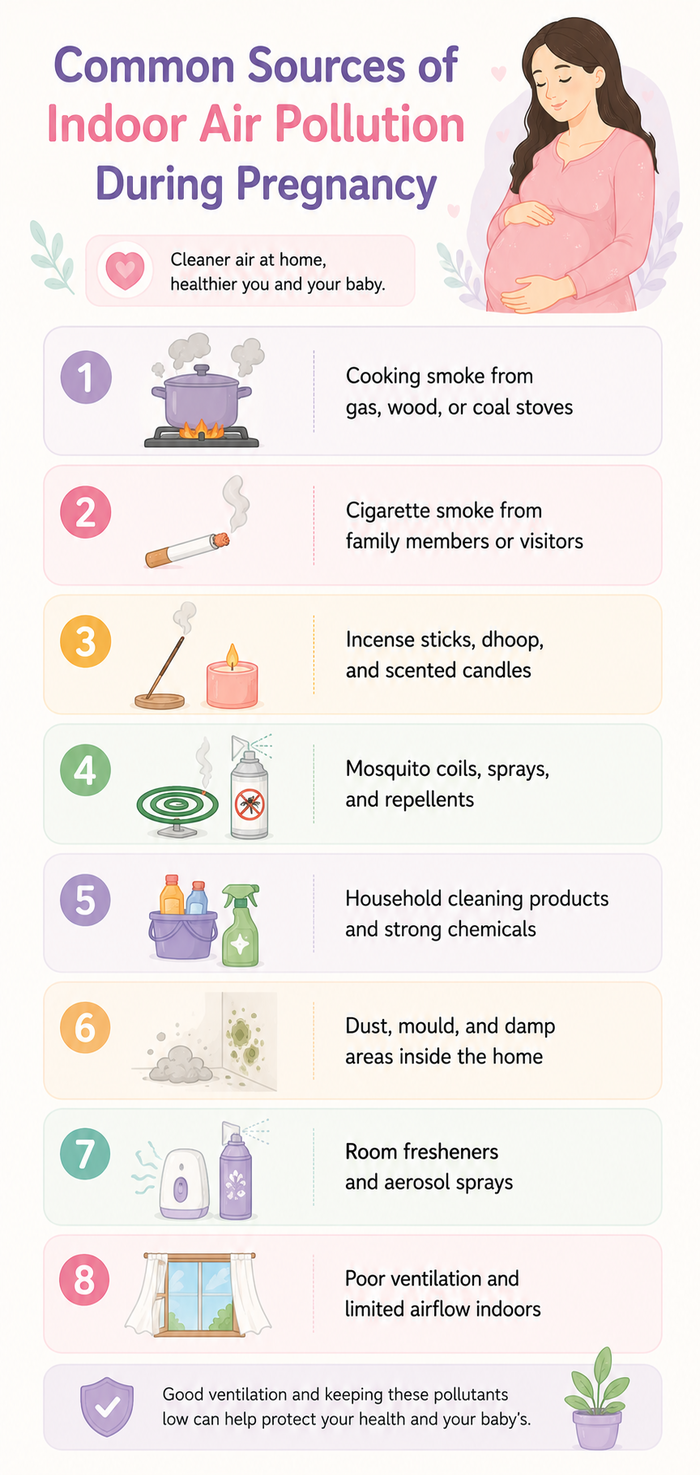
Common Sources of Indoor Air Pollution During Pregnancy
The following are some common sources of indoor air pollution that pregnant women may encounter at home:- Cooking smoke from gas, wood, or coal stoves
- Cigarette smoke from family members or visitors
- Incense sticks, dhoop, and scented candles
- Mosquito coils, sprays, and repellents
- Household cleaning products and strong chemicals
- Dust, mould, and damp areas inside the home
- Room fresheners and aerosol sprays
- Poor ventilation and limited airflow indoors
How Does Indoor Air Pollution Affect Your Baby During Pregnancy?
When you breathe in smoke, dust, or harmful particles inside your home, some of these pollutants may enter your lungs and bloodstream. During pregnancy, your baby depends on you for oxygen and nutrients through the placenta. Long-term exposure to poor indoor air quality may affect this supply and could influence your baby's growth and development.Can Household Air Pollution Affect Your Baby's Growth?
Household air pollution during pregnancy has been associated with several pregnancy and newborn health concerns, including:- Low birth weight
- Slower foetal growth
- Increased risk of preterm birth
- Reduced oxygen supply to the baby
- Possible effects on placental function
Symptoms You May Experience Due to Poor Indoor Air Quality
Exposure to poor indoor air quality may cause mild symptoms in some pregnant women. These symptoms can vary depending on the type of pollutant and the amount of exposure. You may experience:- Frequent headaches
- Coughing or throat irritation
- Sneezing or a runny nose
- Watery or itchy eyes
- Shortness of breath
- Dizziness or tiredness
- Feeling uncomfortable in smoky or poorly ventilated rooms
Simple Ways to Improve Indoor Air Quality During Pregnancy
Small changes at home may help improve indoor air quality during pregnancy. Consider the following tips:- Keep windows and doors open to improve ventilation
- Use an exhaust fan while cooking, if available
- Avoid smoking inside the house
- Limit the use of incense sticks, dhoop, and scented candles
- Keep your home free from dust and dampness
- Clean fans, curtains, and air vents regularly
- Store cleaning products and chemicals in well-ventilated areas
- Choose mild or fragrance-free household products when possible
- Spend time outdoors in fresh air when the air quality is good
When Should You Pay Extra Attention to Indoor Air Quality?
Improving indoor air quality may become especially important in the following situations:- During the first trimester, when your baby's organs are developing
- If you spend most of your day indoors
- During winter, when windows often remain closed
- If your home has limited ventilation
- During home renovations or painting work
- If family members smoke inside the house
- When using strong cleaning products regularly
When Should You Speak With Your Doctor?
Consider speaking with your doctor if you experience any of the following during pregnancy:- Persistent cough or breathing difficulties
- Frequent headaches or dizziness while indoors
- Worsening asthma or allergy symptoms
- Ongoing exposure to cigarette smoke or household smoke
- Irritation of the eyes, nose, or throat that does not improve
- Concerns about chemical or pollutant exposure at home
- Reduced fetal movements or any unusual pregnancy symptoms
Whether you’re pregnant, a new mom, or navigating postpartum, you don’t have to do it alone. Join our support group to connect, share, and support one another.
FAQs on Can Household Air Pollution During Pregnancy Affect Your Baby's Growth?
- Can using an air conditioner affect indoor air quality during pregnancy?
Air conditioners do not usually cause indoor pollution, but dirty filters may collect dust, mould, and allergens. Regular cleaning and maintenance can help keep indoor air cleaner. - Is it safe to stay in a freshly painted room during pregnancy?
Fresh paint may release strong fumes for several days. It is generally advisable to keep rooms well-ventilated and to avoid prolonged exposure to paint odours during pregnancy. - Can pets contribute to indoor air pollution?
Pet hair, dander, and dust carried by pets may affect indoor air quality, especially in people with allergies. Regular cleaning can help reduce exposure.