1. Drink More Water
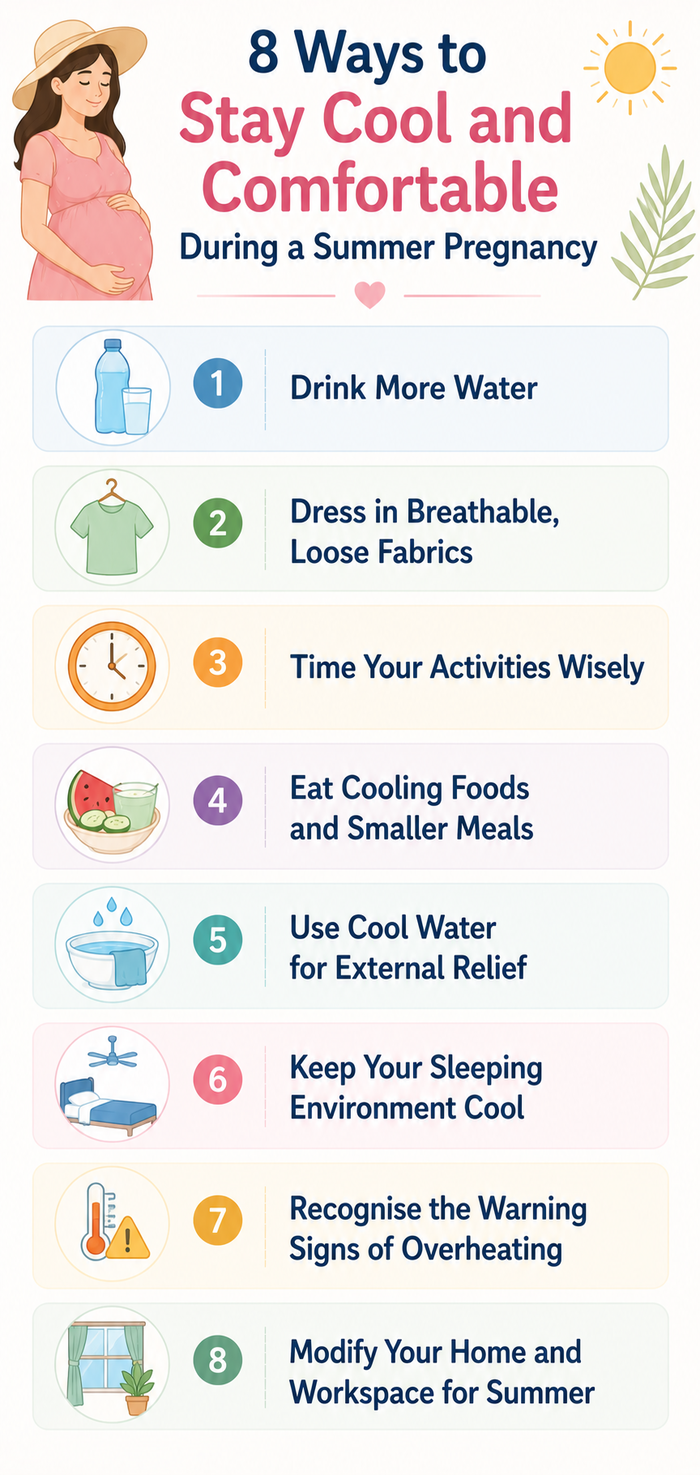
Pregnant women need at least 2.5–3 litres of water daily. In summer, this goes up. Dehydration during pregnancy can trigger Braxton Hicks contractions, dizziness, and, in severe cases, preterm labour.Practical tips:
- Carry a large water bottle everywhere
- Add slices of lemon, cucumber, or mint to make plain water easier to drink
- Include coconut water in your diet daily
- Eat water-dense foods like watermelon, cucumber, and curd
Avoid sugary drinks, sodas, and packaged juices; these do not hydrate effectively and add unnecessary sugar.
2. Dress in Breathable, Loose Fabrics
Clothing choice directly affects how well your body can regulate temperature. Tight or synthetic fabrics trap heat and moisture, which increases discomfort and the risk of heat rash.Choose:
- Cotton, absorbs sweat and allows airflow
- Linen, light and breathable, especially for home wear
- Light colours, reflect heat instead of absorbing it
3. Time Your Activities Wisely
Between 11 AM and 4 PM, outdoor temperatures often exceed 38–42°C.- Schedule walks and appointments before 9 AM or after 6 PM
- If you attend hospital check-ups during the day, pre-cool your car, and carry cold water
- Use public transport or AC cabs instead of two-wheelers in peak heat
- Work from home or rest during the hottest part of the day if possible
4. Eat Cooling Foods and Smaller Meals
Large meals generate internal body heat during digestion. Smaller, more frequent meals reduce this effect. Indian kitchens are full of naturally cooling foods that have been used for generations.Include:
- Raw mango drink, good for electrolytes, but consume in moderation
- Buttermilk cools the digestive system
- Sattu sherbet, rich in protein and cooling effect
- Ridge gourd, bottle gourd, and ash gourd, low-calorie, high-water vegetables ideal for summer meals
Avoid heavily spiced food, deep-fried snacks, and excess salt, which increase thirst and bloating.
5. Use Cool Water for External Relief
You don't need expensive products to bring your body temperature down. Water is effective.- Take lukewarm (not cold) showers; sudden cold water can cause a shock response
- Use a damp cloth on your neck, wrists, and forehead; these pulse points cool quickly
- Soak your feet in cool water for 10–15 minutes, useful when swelling is also a concern
- Use a spray bottle with chilled water for quick relief when outdoors
6. Keep Your Sleeping Environment Cool
Body temperature naturally rises at night during pregnancy, and poor sleep compounds fatigue.- Use a ceiling fan along with a light AC setting (24–26°C)
- Sleep on cotton sheets, avoid microfiber or synthetic bedding
- Place a thin cold pack wrapped in a cloth near your feet or neck if you wake up hot
- Stay well-hydrated before bed, but reduce fluids an hour before sleep to avoid frequent waking
- Elevate your feet slightly to reduce heat-related swelling in the lower legs
7. Recognise the Warning Signs of Overheating
Seek immediate medical attention if you experience:- Body temperature above 38.5°C (101.3°F )
- Persistent dizziness or fainting
- A rapid heartbeat that does not settle with rest
- No urination for more than 6–8 hours, or dark urine
- Severe headache that does not resolve
- Reduced or absent foetal movement
8. Modify Your Home and Workspace for Summer
Air conditioning is not always accessible; there are practical, low-cost ways to cool your environment.- Use Vetiver curtains, a traditional cooling method
- Keep windows open at night and closed during the day to trap cooler air
- Use ceramic or clay pots to store and drink water, which naturally cools the water without refrigeration
- Position a fan facing away from an open window to draw hot air out of the room
- Reduce heat from cooking: avoid open-flame cooking in enclosed spaces during peak afternoon heat
With these tips, you will be able to have a much easier pregnancy during summer.
Whether you’re pregnant, a new mom, or navigating postpartum, you don’t have to do it alone. Join our support group to connect, share, and support one another.
FAQs on 8 Ways to Stay Cool and Comfortable During a Summer Pregnancy
- Is it safe to use air conditioning during pregnancy?
Yes, it is safe. Set the temperature between 24–26°C to avoid being too cold, which can cause muscle cramps. Ensure the AC filter is clean to prevent exposure to dust and allergens. - Which trimester is most affected by summer heat?
The first trimester carries the highest risk of overheating due to organ development in the foetus. However, the third trimester is when physical discomfort peaks; swelling, back pain, and shortness of breath are worsened by heat. - Can overheating during pregnancy harm the baby?
Yes. Sustained high body temperature, especially above 39°C (102.2°F), in the first trimester has been associated with neural tube defects. In later pregnancy, overheating can cause dehydration, reduced amniotic fluid, and early labour.