In this article:
Which Household Items Are Poisonous to Toddlers?
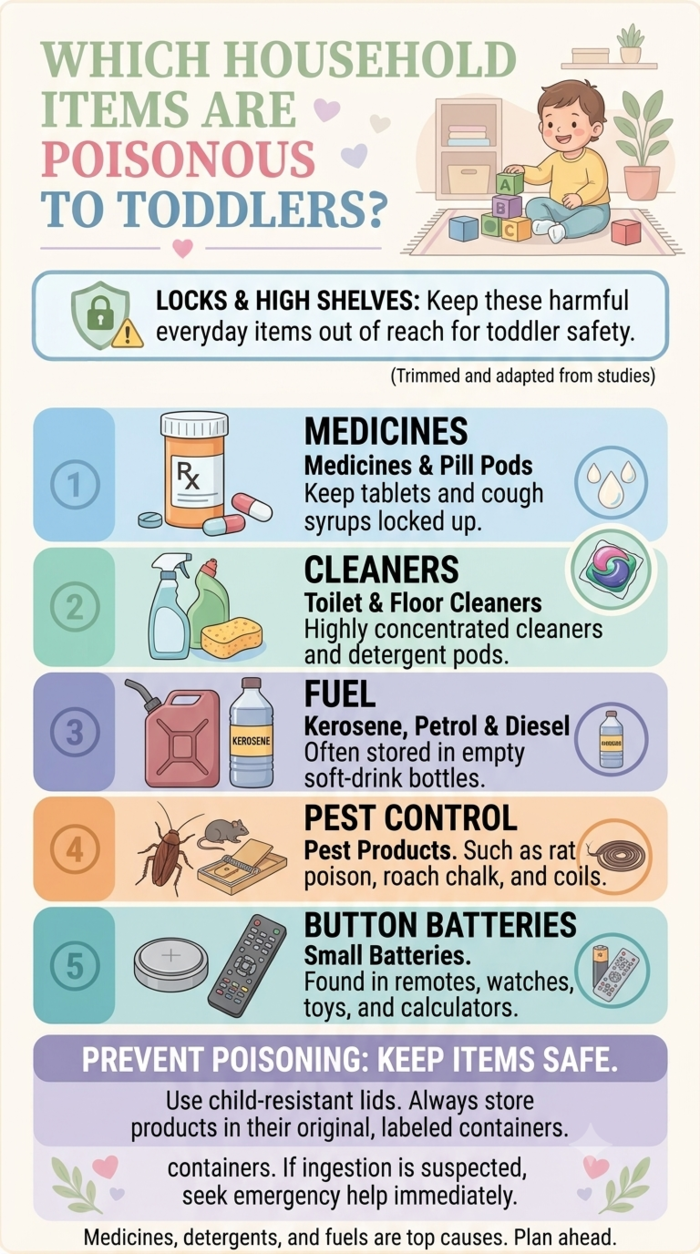
Common household poisons include:- Medicines: Tablets and cough syrups
- Kerosene, petrol and diesel: Often stored in empty soft-drink bottles
- Cleaners: Toilet cleaners, floor cleaners, bleach, drain cleaners and washing powder
- Laundry and dishwashing liquids: Especially brightly coloured pods and capsules
- Pest products: Rat poison, cockroach chalk, mosquito coils and liquid repellents
- Button batteries: Found in remotes, watches, toys, calculators and greeting cards
- Personal care items: Nail polish remover, perfume, mouthwash and camphor
- Plants and seeds: Such as oleander and datura
Why Are Toddlers at Higher Risk of Poisoning?
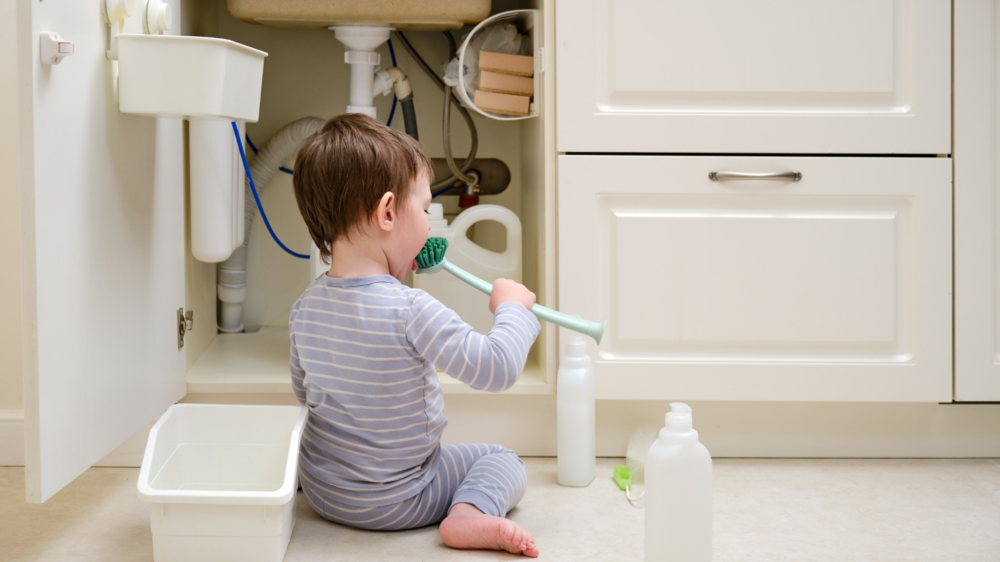
Toddlers climb, open boxes, and taste unfamiliar things. They are attracted to bright colours and small objects. They cannot read labels or judge risk, and a small amount of a product can harm their small body.Storage habits add to the risk. Kerosene in drink bottles looks like a beverage, and medicines kept in handbags or on bedside tables are within reach. The number of medicines in a household also tends to rise over time, which gives toddlers more chances to find them.
Signs of Poisoning in a Toddler
Symptoms depend on the substance and may appear late. Watch for:- Vomiting, drooling, or refusal to swallow
- Burns, redness, or sores around the mouth
- Coughing, choking, or fast breathing
- A chemical or kerosene smell on the breath or clothes
- Unusual sleepiness, confusion, or floppiness
- Seizures
- Stomach pain or crying that does not settle
If you suspect your toddler has swallowed or been exposed to a poisonous substance, seek immediate advice from emergency medical services or a poison information centre. Quick action can prevent serious complications. A child-safe home, careful storage and close supervision remain essential safeguards during the toddler years.
What to Do If a Toddler Swallows a Poison
Take these steps straight away, even if your toddler looks well, as symptoms can be delayed.- Stay calm and keep the product out of your child’s reach.
- Go straight to the nearest hospital if the child is drowsy, breathless, or fitting.
- Wipe or rinse the mouth if any product remains in it.
- Rinse skin or eyes with plenty of running water if the product has touched them.
- Carry the container, label, or tablet strip to the hospital.
- Note the child’s weight, the product, and the time of exposure.
- Make the child vomit. Vomiting can cause kerosene to enter the lungs and can burn the food pipe a second time with corrosives.
- Give salt water, milk, ghee, coconut water, or any home remedy unless a doctor advises it.
- Wait for symptoms to appear.
How to Poison-Proof Your Home
Safe storage and a few household habits can prevent most accidental poisonings.- Store medicines, cleaners, and pesticides in a high, locked cupboard.
- Keep products in their original labelled containers. Never refill soft-drink or water bottles with kerosene or chemicals.
- Choose child-resistant caps and buy medicines in small quantities.
- Keep handbags, pill organisers and visitors’ bags out of reach.
- Avoid products with exposed button batteries: tape or secure battery compartments.
- Dispose of expired medicines safely.
- Keep the helpline number on the fridge and saved on every family phone.
- Check that LPG and kerosene stoves are in well-ventilated spaces.
Whether you’re pregnant, a new mom, or navigating postpartum, you don’t have to do it alone. Join our support group to connect, share, and support one another.
FAQs on Common Household Poisons and Toddlers
- What should I do if my toddler drinks a household cleaner?
Seek urgent medical advice. Do not make the child vomit or give home remedies unless instructed by a healthcare professional. Keep the product container or label for identification. - Which household item most commonly poisons toddlers?
Medicines, kerosene, and detergents or corrosive cleaners lead the list in Indian hospital studies. - Is a swallowed button battery an emergency?
Yes. It can burn the food pipe within hours, even without symptoms. Go to hospital immediately.