In this article:
What is Food Allergy?
A food allergy occurs when the immune system reacts to a protein in a particular food. The body mistakenly identifies the food as harmful and produces an immune response. This can lead to symptoms affecting the skin, digestive system, or breathing.Food allergy is different from food intolerance. Food intolerance mainly causes digestive symptoms and does not involve the same immune response. A paediatrician can help determine whether a toddler's symptoms are linked to an allergy or another food-related condition.
“Early recognition, proper guidance and a clear care plan can help toddlers stay safe while enjoying a healthy, varied diet.”
- Dr Harshit Kumar
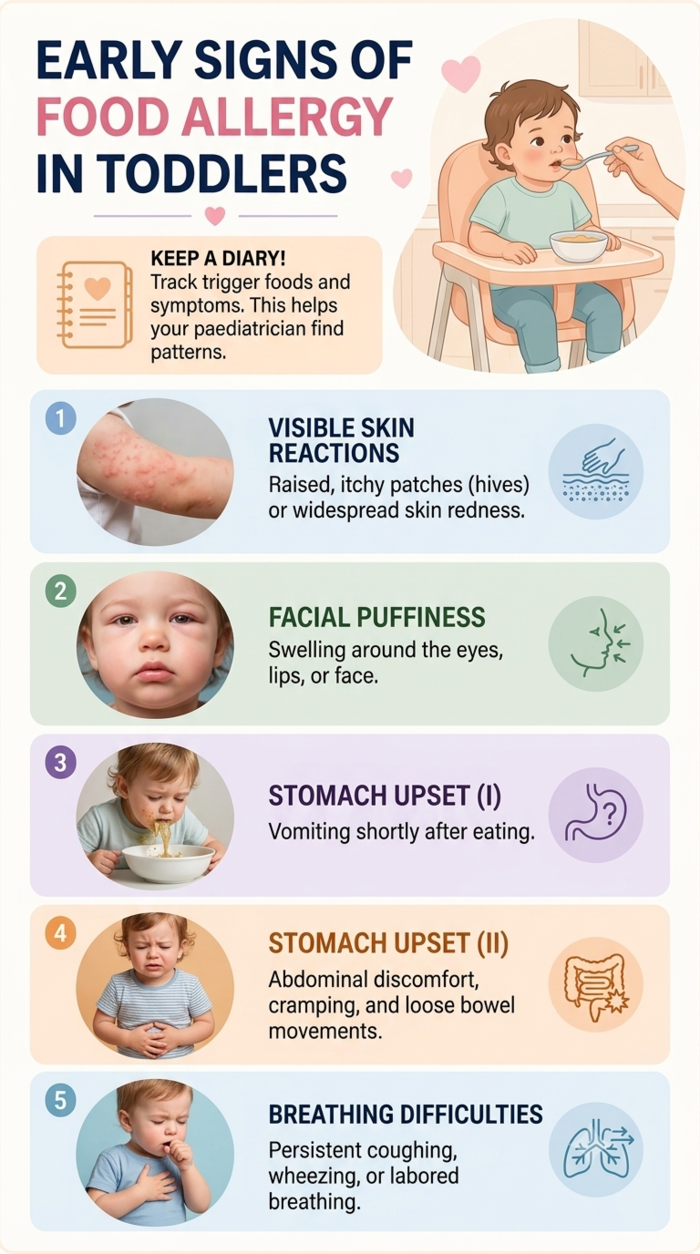
Early Signs of Food Allergy in Toddlers
Food allergy symptoms can vary from child to child. They may affect one or more areas of the body. Common signs include the following:- Hives or raised, itchy patches on the skin
- Redness or swelling of the skin
- Itching
- Swelling around the lips, face, or eyes
- Vomiting
- Abdominal discomfort
- Diarrhoea
- Coughing
- Wheezing
- Breathing difficulty
Which Foods Commonly Cause Allergies?
Some foods are more likely to cause allergic reactions than others. Common food allergens include:- Cow's milk
- Eggs
- Peanuts
- Tree nuts
- Wheat
- Soy
- Fish
- Shellfish
What Should Parents Do After a Mild Reaction?
If a toddler develops mild symptoms after eating a particular food, parents should stop offering the suspected food and speak with the child's paediatrician.Dr Harshit Kumar advises parents not to remove several foods from their child's diet without professional guidance. Toddlers need a variety of nutrients for healthy growth, and unnecessary food restrictions can make it harder to provide a balanced diet.
Parents can maintain a simple food diary. Record the food eaten, approximate amount, time of eating, and symptoms noticed. Sharing this information during a medical consultation can help the doctor assess the situation. Depending on the child's symptoms and medical history, the paediatrician may recommend allergy testing or other assessments.
When Does Food Allergy Need Emergency Care?
Certain symptoms require immediate medical attention. Parents should seek emergency care if a child develops:- Breathing difficulty or wheezing
- Swelling of the tongue or throat
- Severe weakness
- Repeated vomiting
- Fainting or signs of collapse
How Can Parents Manage Food Allergy?
When your child is diagnosed with a food allergy, you can take the following measures to protect the child from any allergens in their food.- Identify the food that causes the allergy in the child
- Study the food labels properly
- Look at the ingredient list before feeding any packaged food to children
- Inform the grandparents, babysitters, and preschool staff
- Keep emergency medicines on hand as prescribed
- Follow the medical action plan advised by the doctor
- Provide healthy options to the affected child
Whether you’re pregnant, a new mom, or navigating postpartum, you don’t have to do it alone. Join our support group to connect, share, and support one another.
FAQs on Food Allergy in Toddlers: Early Signs and Care
- Is it possible for the food allergy symptoms to recur after eating the same food many times?
Yes, a child may have recurring symptoms if they are exposed to the same food that caused the allergy several times. Keeping a record of what the child eats and the symptoms may help the doctor detect some patterns. - Can a toddler stop being allergic to certain foods?
Some allergies that are present during childhood may safely disappear over time, while others can continue for longer periods of time. It is up to the child's paediatrician and/or allergist to monitor the child's condition as well as to identify the right timing for reassessment when necessary. - Is it safe to give medication for allergy to your child without the doctor's consent?
No, it's not safe to medicate a child without the doctor's consent. Parents should always follow the doctor's recommendations and give their kids medications according to the treatment plan provided. If the child's symptoms indicate that they have a severe allergic reaction, they should receive medical treatment immediately.