We consulted Dr Soumya Lakshmi T V, Senior Consultant – Obstetrics & Gynaecology, Aster CMI Hospital, Bangalore, to understand the risks associated with twin pregnancies.
What Makes a Twin Pregnancy High-Risk?
A twin pregnancy is classified as high-risk mainly because of the physical space and resources two babies require. The uterus expands beyond its usual capacity, increasing pressure on the cervix and raising the chance of early labour.The placenta (or placentas) must supply nutrients and oxygen to two babies at once, which strains the mother's cardiovascular and metabolic systems. Monitoring also covers the twins' positions, whether they share a placenta, and each baby's growth relative to the other.
What Are the Common Risks of Carrying Twins?
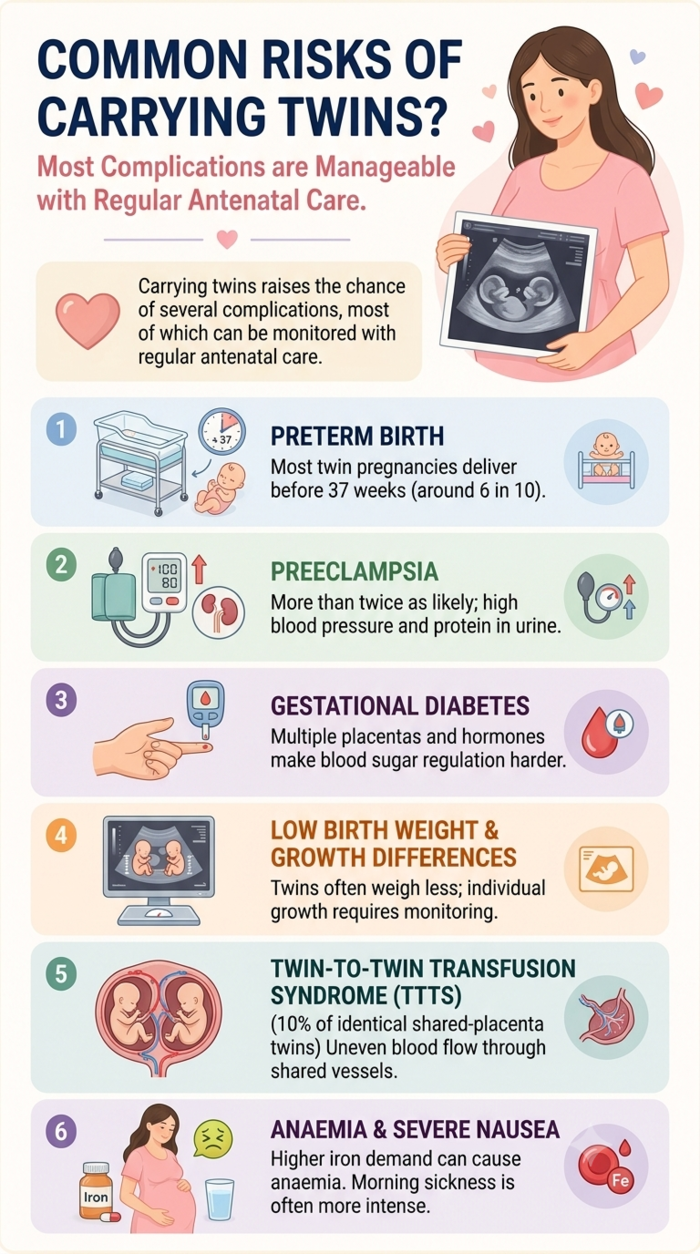
Carrying twins raises the chance of several complications, most of which doctors can monitor and manage with regular antenatal care.- Preterm birth: Most twin pregnancies deliver before 37 weeks. The stretched uterus often triggers labour earlier than in a singleton pregnancy. NHS guidance reports that around 6 in 10 twin pregnancies result in birth before 37 weeks.
- Preeclampsia: Women carrying twins are more than twice as likely to develop preeclampsia, a condition marked by high blood pressure and protein in the urine. If untreated, it can deprive the babies of oxygen and nutrients and damage the mother's organs. A study on twin pregnancies with preeclampsia found the preterm birth rate in that group was nearly double that of twin pregnancies without preeclampsia, with a preterm delivery frequency of 61.9% versus 33.6%.
- Gestational diabetes: Blood sugar regulation is harder to maintain with two placentas releasing pregnancy hormones. Gestational diabetes is more frequent in twin pregnancies than in singleton ones.
- Low birth weight and growth differences: Twins often weigh less at birth than single babies of the same gestational age. One twin may also grow slower than the other, a condition doctors monitor through regular growth scans.
- Twin-to-twin transfusion syndrome (TTTS): This affects identical twins who share a single placenta, occurring in about 10% of identical twins who share a placenta. Blood flows unevenly between the babies through connected vessels; one twin receives too little blood and the other too much. Laser surgery or amniotic fluid drainage can treat it when caught in time.
- Anaemia and severe nausea: Iron demand is higher with two babies. Morning sickness also tends to be more intense in the first trimester.
Dr Soumya Lakshmi, Sr. Consultant, Obs & Gyn, Aster CMI Hospital
Why Does Sharing a Placenta Increase Twin Pregnancy Risks?
Twins may have:- Dichorionic diamniotic (two placentas and two amniotic sacs): Each baby has its own placenta and sac.
- Monochorionic diamniotic (one placenta and two amniotic sacs): The babies share a placenta but have separate sacs.
- Monochorionic monoamniotic (one placenta and one amniotic sac): Both babies share the placenta and the same amniotic sac.
What Monitoring Is Needed During a Twin Pregnancy?
The first ultrasound is important because it helps determine how many placentas and amniotic sacs the babies have.Depending on the type of twins and individual risk factors, monitoring may include:
- Regular blood pressure and urine checks
- Blood tests to check for anaemia
- Ultrasound scans to monitor foetal growth
- Assessment of the cervix when indicated
- Monitoring for complications involving a shared placenta
- Additional foetal medicine consultations when required
Whether you’re pregnant, a new mom, or navigating postpartum, you don’t have to do it alone. Join our support group to connect, share, and support one another.
FAQs on Why Are Twin Pregnancies Considered Higher Risk?
- At what week are twins usually delivered?
Most twin pregnancies deliver between 36 and 37 weeks, earlier than the 40-week average for a single baby. - Are twins more likely to have low birth weight?
Yes. Twins have a higher risk of being born prematurely and having lower birth weight. Foetal growth is therefore monitored regularly during pregnancy. - Do twin pregnancies need extra scans?
Yes. Twin pregnancies require more frequent ultrasounds to track each baby's growth and detect complications such as TTTS or growth differences early.