
In fact, while milk has numerous benefits, it constitutes only a small part of your child's diet and should not be overused in any case.
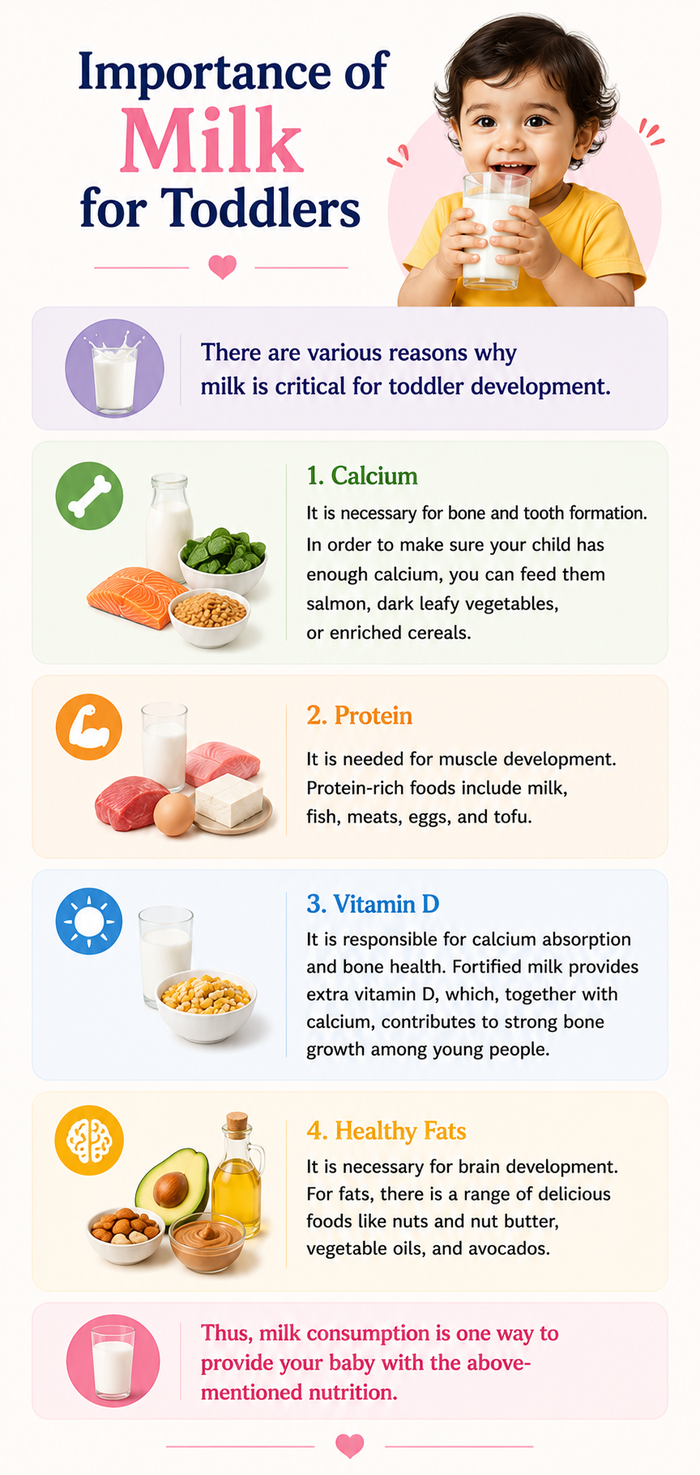
Importance of Milk for Toddlers
There are various reasons why milk is critical for toddler development.
- Calcium: It is necessary for bone and tooth formation. In order to make sure your child has enough calcium, you can feed them salmon, dark leafy vegetables, or enriched cereals.
- Protein: It is needed for muscle development. Protein-rich foods include milk, fish, meats, eggs, and tofu.
- Vitamin D: It is responsible for calcium absorption and bone health. Fortified milk provides extra vitamin D, which, together with calcium, contributes to strong bone growth among young people.
- Healthy Fats: It is necessary for brain development. For fats, there is a range of delicious foods like nuts and nut butter, vegetable oils, and avocados.
Thus, milk consumption is one way to provide your baby with the above-mentioned nutrition.
Recommended Milk Intake for Toddlers
The American Academy of Paediatrics (AAP) stipulates that there are two best drinks for young kids. The AAP suggests that toddlers between 12 and 24 months old should take 2 to 3 cups of whole milk daily, while kids between 2 and 5 years old should take 2 to 2.5 cups of low-fat milk or skim milk daily.
This quantity is enough to ensure that you get enough nutrients, and it will not affect your desire to eat solid food. To know how much milk you should consume, take into account your daily dietary routine and physical activity.
Is Drinking Too Much Milk Harmful For Toddlers?
Even though milk is rich in various nutrients, excessive consumption of milk may present some problems.
- Decreased appetite for solids: They may become satiated and eat fewer food types.
- Iron deficiency risk: Consuming too much milk prevents iron absorption.
- Digestive problems: The children might suffer from digestive problems such as bloating and constipation.
Drinking milk with other types of foods ensures balanced nutrition.
Effects of Low Milk Consumption in Toddlers
Some toddlers may develop a disinterest in milk consumption, leading to drinking less than enough.
- Calcium deficiency: Since calcium can impact bone formation, a lack of it can be compensated for with other foods.
- Nutrient deficiency: Particularly protein and vitamin D deficiency.
- Food items that offer the required nutrients: Dairy items and fortified foods.
When Is It Advisable To Consult a Doctor?
In case you are unsure about the right quantity of milk for your child, it is wise to speak to an expert. There may be changes in appetite in small quantities, but there are some aspects which require more scrutiny.
When Your Child Has Too Much or Too Little Milk Consumption
When your child has more or less milk consumption than other kids, you must seek medical help. Increased consumption beyond the recommended amount decreases appetite during meals, while reduced consumption of milk negatively impacts nutrition, particularly vitamins D and C.
Improper Growth
If your child does not grow or gain weight as much as others, then there might be a problem with how he or she drinks milk.
Persistent Digestive Disorders
Any digestive disorder, including constipation, bloating, diarrhoea, or digestion problems associated with milk consumption, may point towards the presence of an issue regarding how your child tolerates milk.
Restrictions Within Diet: If your child tends to only consume some specific variety of foods or avoids many food types altogether, their diet might suffer due to these restrictions. Consulting with a health expert will help create a better and healthier diet for your child.
Health expert recommendations are tailored based on the needs of your child specifically.
Milk is important for your child's growth, but there must be some control when consuming it. Offering the daily allowance will ensure that your child develops strong bones and receives sufficient nutrients without affecting his or her appetite.
So long as your child is balanced in all aspects, everything will be okay. The key here is to find the balance between everything.
Whether you’re pregnant, a new mom, or navigating postpartum, you don’t have to do it alone. Join our support group to connect, share, and support one another.
FAQs on How Much Milk Should a Toddler Drink Every Day
- What is the daily milk requirement for toddlers?
Milk should be limited to 2 cups daily. This would ensure that the toddlers get the right nutrition from milk without reducing their appetite for other food items. - Is it bad to have excess milk for toddlers?
Excess consumption of milk can lead to reduced appetite towards other food items and may also cause iron deficiency. This should always be taken into consideration. - Will there be any problem if I don’t give milk to my toddler daily?
No, but you should ensure that your toddler gets adequate amounts of calcium, protein, and vitamin D through other foods such as yoghurt, cheese, cereals, and green vegetables.