In this article:
Why Fruit Juice Is Not Recommended for Newborns
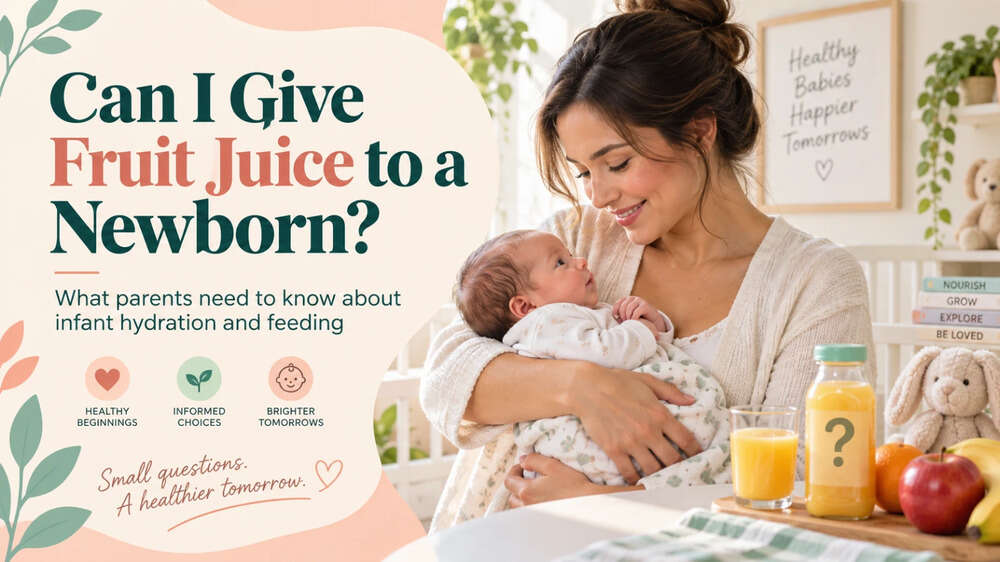
According to Dr Rashmi Jeenakeri, Consultant Neonatologist & Paediatrician, Apollo Hospitals, Sheshadripuram, “You should not give fruit juice to a newborn baby under 12 months of age.” It offers no nutritional benefit for infants under one and may replace breast milk or infant formula, reducing intake of important nutrients.Dr Jeenakeri explains, “Juices have no additional nutritional value [for babies] and are loaded with sugar without the beneficial fibre that is found in whole fruits.”
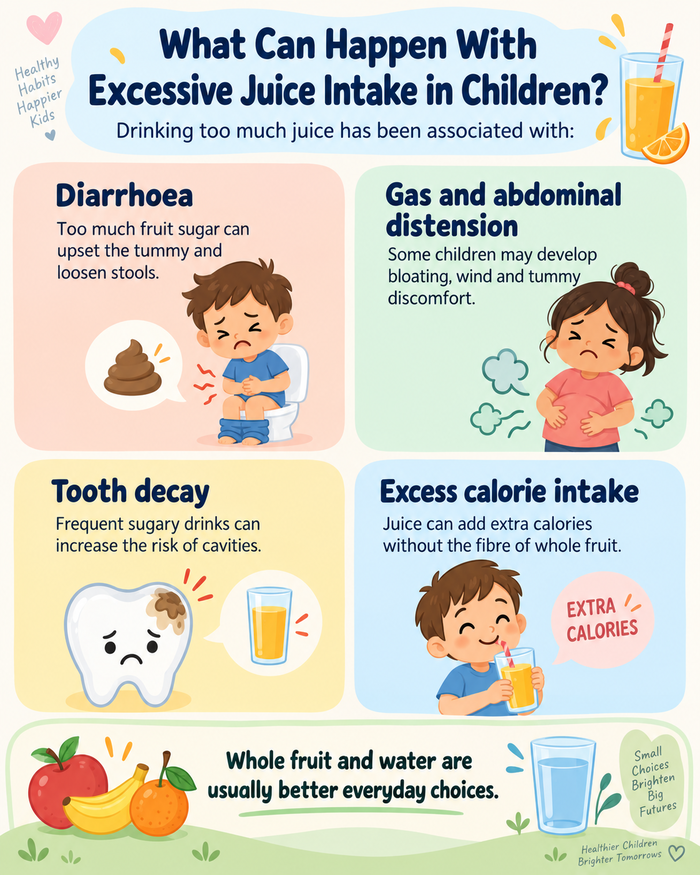
Excessive juice intake in children has also been associated with:
- Diarrhoea
- Gas and abdominal distension
- Tooth decay
- Excess calorie intake
What Should Babies Drink Instead?
For the first six months, Dr Jeenakeri advises, “Exclusively breastfeed your infant for the first six months,” where breastfeeding is possible and appropriate.From around six months, the WHO recommends introducing safe, nutritionally adequate complementary foods while continuing breastfeeding.
Whole Fruit Is Better Than Juice
Once complementary feeding begins, soft, mashed or puréed fruit can be introduced in an age-appropriate texture.The AAP recommends whole fruit over juice because it provides fibre and greater nutritional value.
After 12 months, juice can be offered in limited amounts. Dr Jeenakeri recommends keeping quantities modest rather than making juice an everyday drink.
Fruit juice for newborns is unnecessary and should generally be avoided during the first year. Breast milk or infant formula should remain the main source of nutrition, while whole fruit can be introduced from around six months as part of complementary feeding. After one year, small amounts of juice may be included occasionally.
FAQs on Juice for Newborns
- Can a six-month-old baby drink fruit juice?
The AAP recommends avoiding fruit juice before 12 months unless medically indicated. Whole, mashed or puréed fruit is a better choice once complementary feeding begins. - When can babies start eating fruit?
The WHO recommends beginning complementary foods at around six months. Soft, mashed or puréed fruit can be introduced in an age-appropriate texture alongside continued breastfeeding or formula feeding.