In this article:
Which Household Chemicals to Avoid During Pregnancy?
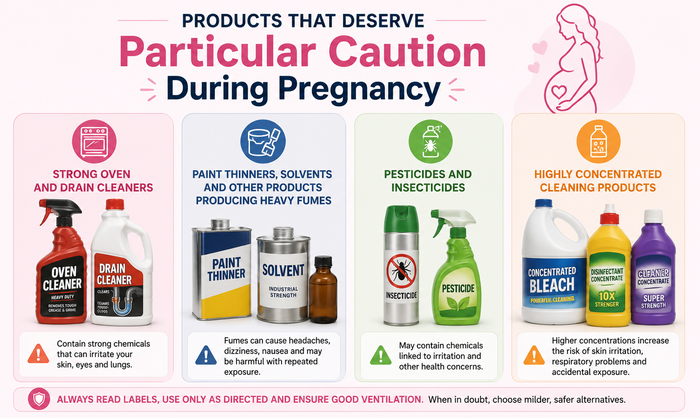
According to Dr Sukirti Jain, Senior Consultant – Obstetrics and Gynaecology, Cloudnine Group of Hospitals, Vashi, “You do not need to stop cleaning your home during pregnancy, but it is sensible to reduce unnecessary exposure to strong chemicals and fumes.”Products that deserve particular caution include:
- Strong oven and drain cleaners
- Paint thinners, solvents and other products producing heavy fumes
- Pesticides and insecticides
- Highly concentrated cleaning products
Safe Cleaning Practices During Pregnancy
The doctor epxlained further.Whenever possible, choose milder products, follow the instructions on the label and keep rooms well ventilated while cleaning.
Opening windows or using an exhaust fan can help reduce exposure to fumes. Wearing appropriate gloves can also limit direct skin contact with cleaning products.
One rule should never be overlooked: “Never mix cleaning products, especially bleach with ammonia or acidic cleaners, because dangerous fumes can be produced.”
When Should Someone Else Handle the Cleaning?
For jobs involving strong solvents, pesticides, paint or persistent fumes, it is sensible to ask someone else to do the task where possible.Dr Jain explains, “The aim is to minimise unnecessary exposure and use products safely, rather than trying to eliminate every chemical from your surroundings.”
Understanding which household chemicals to avoid during pregnancy is less about avoiding cleaning altogether and more about sensible exposure control. Follow product labels, ventilate rooms, use protective gloves and never mix cleaning products. After significant exposure or concerning symptoms, seek medical advice promptly.
FAQs on Safety Of Household Chemicals During Pregnancy
- Is it safe to clean the house during pregnancy?
Yes. Routine household cleaning is generally compatible with pregnancy, but strong chemicals and fumes should be handled carefully with good ventilation and according to label instructions. - What should I do after inhaling strong cleaning fumes during pregnancy?
Move to fresh air and seek medical advice if symptoms such as breathing difficulty, severe dizziness, vomiting or significant irritation develop.