In this article:
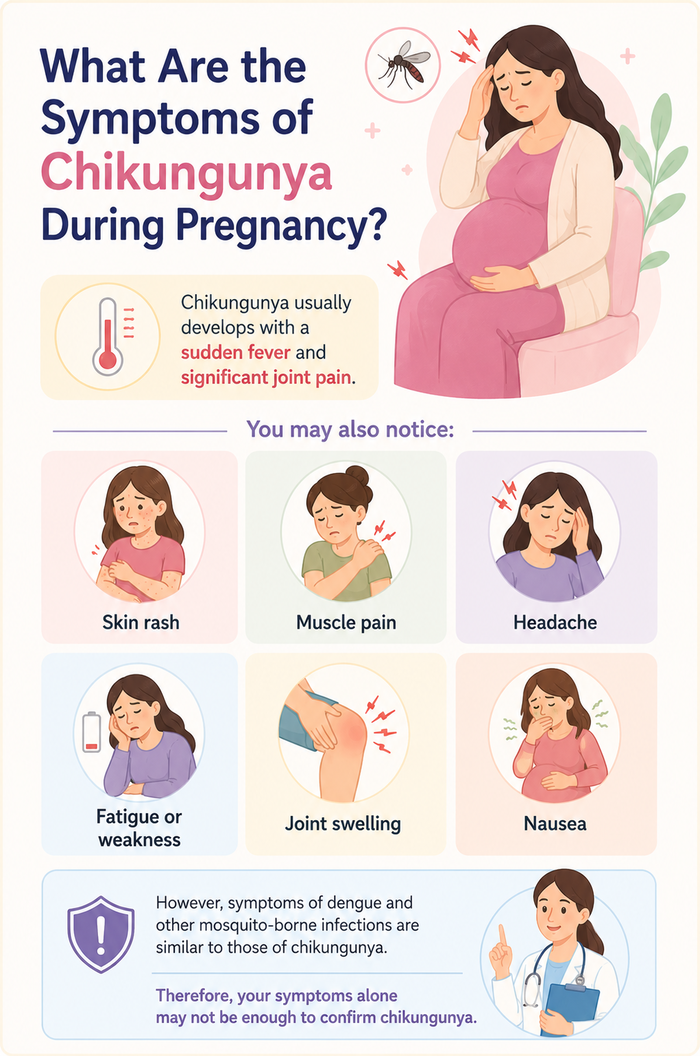
What Are the Symptoms of Chikungunya During Pregnancy?
Chikungunya usually develops with a sudden fever and significant joint pain.You may also notice:
- Skin rash
- Muscle pain
- Headache
- Fatigue or weakness
- Joint swelling
- Nausea
Your doctor may recommend testing to establish the diagnosis and rule out other infections, including dengue.
How Is Chikungunya Diagnosed During Pregnancy?
Your doctor may recommend a blood test to confirm chikungunya. The choice of test depends on when your symptoms started. During the early stage of illness, molecular tests such as RT-PCR can detect the virus in blood. Later, antibody tests may help identify the body's immune response to the infection. The most suitable test depends on how long you have had symptoms, as the virus and antibodies can be detected at different stages of the illness. In addition, your doctor may examine you for dengue because the two illnesses share the same symptoms.How Is Chikungunya Treated During Pregnancy?
There is currently no specific antiviral treatment for chikungunya. Treatment mainly focuses on relieving symptoms and preventing dehydration.Your doctor may advise the following:
| Supportive care | What it may involve |
| Hydration | Drink enough fluids to help prevent dehydration |
| Rest | Get adequate rest while your body recovers |
| Fever and pain relief | May be used for fever and pain when advised by your doctor |
| Avoid NSAIDs initially | Avoid self-medication with NSAIDs until dengue has been ruled out, as they may increase bleeding risk if you have dengue |
Can Chikungunya Affect Your Baby?
Most people recover from chikungunya. However, infection around the time of delivery needs close attention. Dr Lipi Sharma said that although chikungunya rarely causes birth defects, infection around the time of delivery may increase the risk of transmission to the newborn. Therefore, close obstetric and neonatal care is important. Evidence also shows that newborns are at greater risk of severe chikungunya when infection occurs around delivery. She added that if you develop chikungunya late in pregnancy, your regular foetal monitoring will be advised.How Can You Protect Yourself From Chikungunya?
Dr Lipi Sharma mentioned that the best protection is to avoid mosquito bites.During pregnancy, you can reduce your risk by:
- Using a mosquito repellent (if advised by your doctor)
- Choosing clothes that cover your arms and legs
- Using window and door screens
- Removing standing water around your home
- Taking extra care during the daytime, when Aedes mosquitoes commonly bite
When Should You Contact Your Doctor?
You should consult your obstetrician promptly if you develop the following:- Sudden fever
- Severe joint pain
- Rash with fever
- Marked fatigue or weakness
- Persistent vomiting or difficulty drinking fluids
- Symptoms after mosquito exposure in an area where chikungunya is circulating
Whether you’re pregnant, a new mom, or navigating postpartum, you don’t have to do it alone. Join our support group to connect, share, and support one another.
FAQs on What Should You Do If You Get Chikungunya While Pregnant?
- Is chikungunya dangerous during pregnancy?
Chikungunya can cause significant illness during pregnancy, although most people recover. Infection close to delivery is particularly important because the virus can be transmitted to the newborn during this period. - Can you take NSAIDs for chikungunya during pregnancy?
Do not take NSAIDs on your own. When chikungunya is suspected, these medicines are generally avoided until dengue has been ruled out because they can increase bleeding risk if the illness is actually dengue. - Does chikungunya cause birth defects?
Chikungunya is not generally associated with a pattern of birth defects. However, infection around the time of delivery can increase the risk of infection in the newborn.