
Understanding the truth behind common baby sleep myths can help parents make informed choices, reduce stress, and create a safe, supportive sleep environment for their little one from the very beginning.
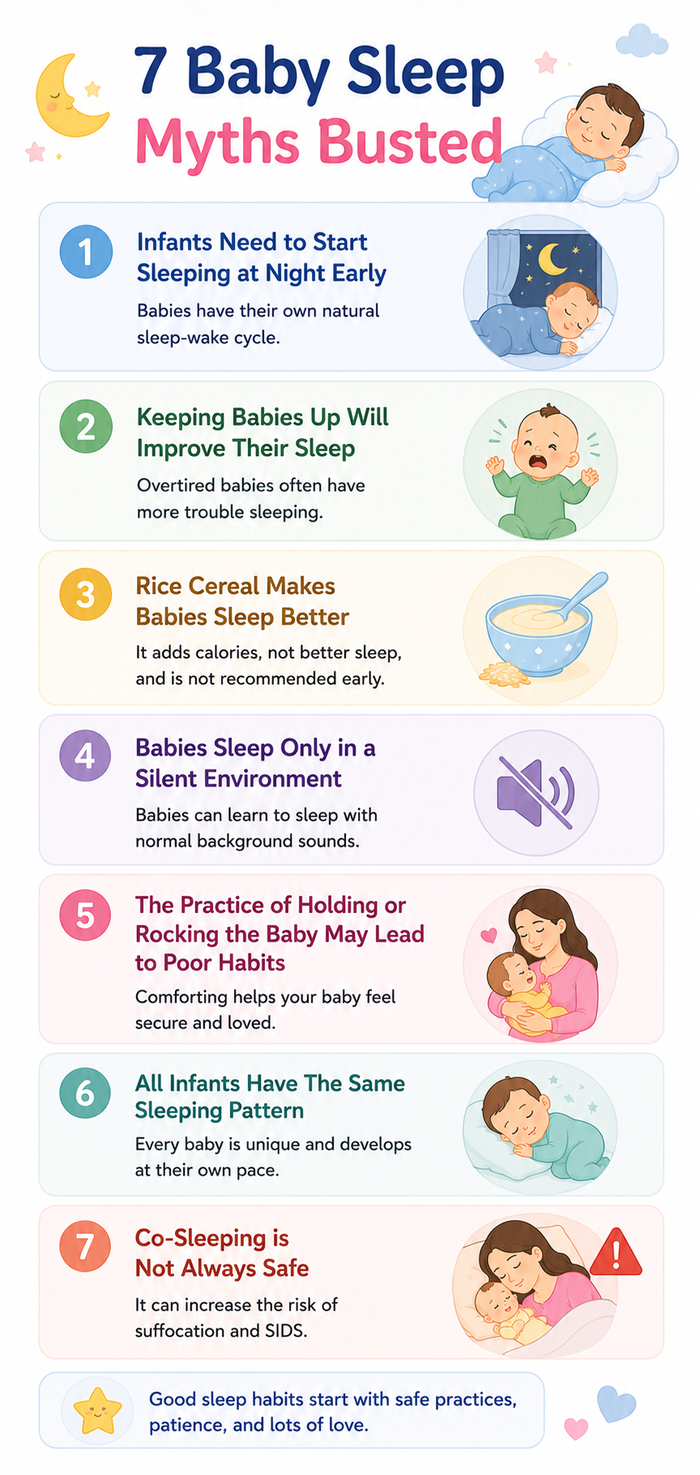
7 Baby Sleep Myths Busted
Here are 7 common baby sleep myths that parents should not ignore when it comes to their baby’s well-being:- Infants Need to Start Sleeping at Night Early
- An infant has a small stomach and feeds often
- Night waking is a common situation for many months
- Sleeping patterns change with time
Many parents believe that by keeping their babies up all day, they will be able to sleep better at night. However, in many cases, overtired babies have trouble sleeping well.
- Overly tired babies can become grumpy and irritable
- They will wake up more often during the night
- Consistent short naps will lead to better nighttime sleep
3. Rice Cereal Makes Babies Sleep Better
Another misconception is the idea that including rice cereal in babies’ milk will make them sleep better at night. This is not supported by any substantial evidence.
- Introduction of solids at an early age can negatively affect a baby’s digestion
- Choking is more likely when you introduce solids to infants
- The appropriate time to introduce solids is about six months, according to paediatric guidelines
4. Babies Sleep Only in a Silent Environment
Parents do attempt to create a completely silent environment for the baby to sleep. But this is not always possible.
- A soft background noise may be more soothing than complete silence
- Complete silence makes babies react sharply to even minor sounds
- Soft sounds like white noise are effective in helping babies sleep even with colic
Most parents fear that consoling their babies will develop poor sleeping habits. However, this is a myth.
- Babies need physical contact for emotional growth
- It helps build trust and confidence in them
- The sleep routine develops gradually with time
6. All Infants Have The Same Sleeping Pattern
No infant is alike. Making comparisons can cause unnecessary anxiety and worry.
- Every child sleeps differently
- Some infants require more naps
- Development and growth impact sleeping patterns
7. Co-Sleeping is Not Always Safe
Co-sleeping is one subject that has generated much discussion. Although there are some who opt for it, co-sleeping is not always safe when safety precautions are not observed.
- Insecure sleeping areas lead to high suffocation chances
- Soft sleeping surfaces such as bedding and pillows may pose danger
- Medical specialists recommend using hard sleeping surfaces for babies
Whether you’re pregnant, a new mom, or navigating postpartum, you don’t have to do it alone. Join our support group to connect, share, and support one another.
FAQs on 7 Baby Sleep Myths New Parents Should Ignore
- At what age do I begin a bedtime routine for my infant?
Start a simple bedtime routine at about 3 months of age; for newborns, keep it gentle and flexible because they are still too young for a strict schedule. A calm routine like dim lights, a diaper change, feeding, and a lullaby can help your infant learn that nighttime is for sleep. - How much sleep should a newborn get each day?
A newborn usually sleeps about 14 hours a day, but anything from 9 to 18 hours in 24 hours is normal. Newborns sleep in short bursts and wake often for feeds because they do not yet know day from night. - Do babies commonly wake up at night?
Yes, babies commonly wake up at night, especially newborns and young infants, because they often need feeding, comfort, or a diaper change. Many babies gradually sleep for longer stretches as they grow, but night waking can still be normal in the first months.