Understanding Your Baby's Growth Chart
One of the most useful tools your paediatrician uses to track your baby's progress is the growth chart. If you have ever sat in a clinic and watched the doctor plot a small dot on a graph, that is exactly what it is, and it tells a surprisingly detailed story.
Growth charts compare your baby's weight, length, and head circumference with those of other babies of the same age and sex. They are based on the WHO Child Growth Standards, which are used by paediatricians around the world to monitor healthy development from birth to five years.
Your baby does not need to be at the top of the chart to be healthy. A baby sitting at the 15th percentile is not necessarily underweight; it may simply mean that 85 out of 100 babies of the same age weigh more, and that is completely fine if your baby is growing steadily along their own curve.
What paediatricians pay close attention to is not the number itself, but the pattern over time. A baby who drops significantly across two or more percentile lines, for example, from the 50th to the 15th, over a short period, is more likely to need further evaluation than a baby who has consistently tracked at a lower percentile since birth.
It is also worth knowing that:
- Genetics play a role. Smaller parents often have smaller babies, and this is entirely normal
- Weight can vary slightly between visits, depending on feeding time, clothing, nappy weight, or the scale used
- Babies can grow in spurts, so a slower week does not always signal a problem
Signs Your Baby Is Not Gaining Enough Weight
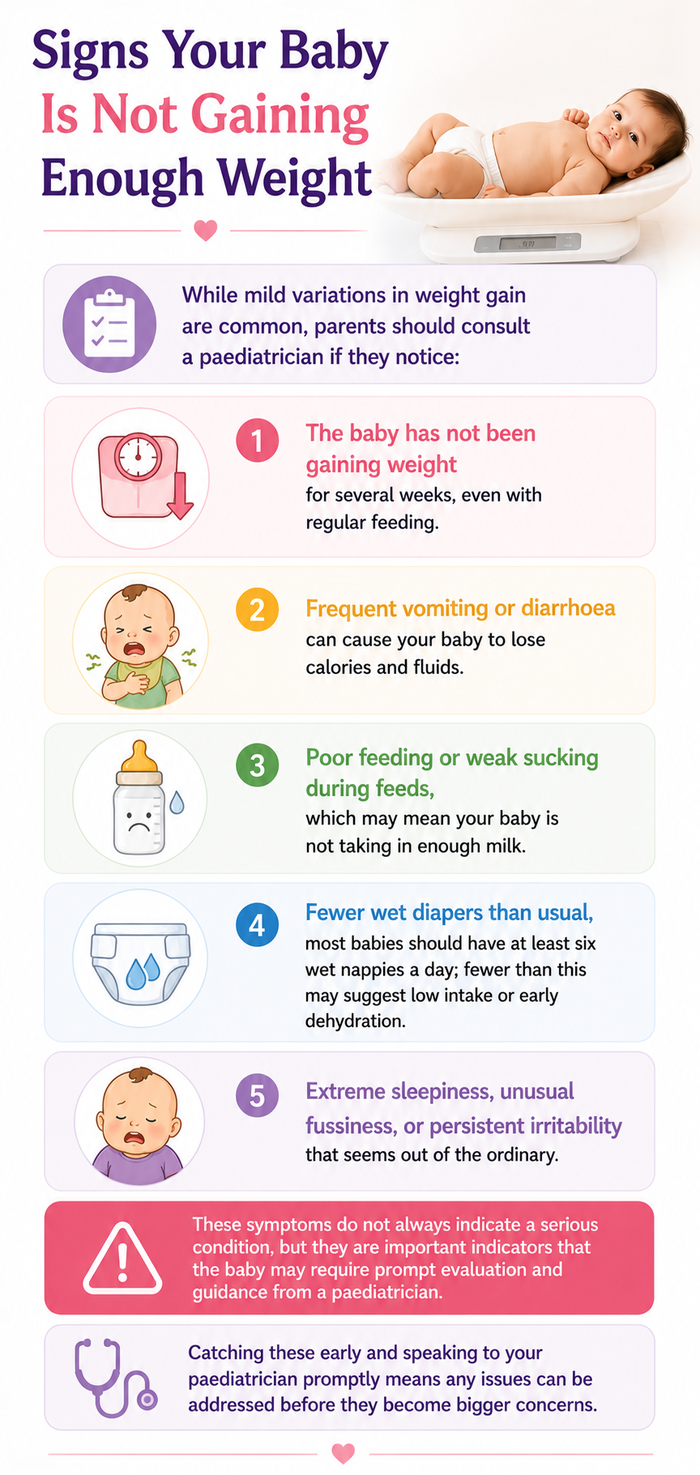
While mild variations in weight gain are common, parents should consult a paediatrician if they notice:
- The baby has not been gaining weight for several weeks, even with regular feeding
- Frequent vomiting or diarrhoea can cause your baby to lose calories and fluids
- Poor feeding or weak sucking during feeds, which may mean your baby is not taking in enough milk
- Fewer wet diapers than usual, most babies should have at least six wet nappies a day; fewer than this may suggest low intake or early dehydration
- Extreme sleepiness, unusual fussiness, or persistent irritability that seems out of the ordinary
What Parents Can Do at Home?
If a baby is feeding well but gaining slowly, a few practical steps at home may help support better growth while a paediatrician is monitoring the baby.Small, consistent changes often make a meaningful difference.
Feed Frequently
Young babies have small stomachs and digest milk quickly. Offering feeds more frequently (ideally every two to three hours) can increase the baby’s total daily caloric intake. Young infants typically require frequent feeds, and responding to early hunger cues such as rooting, sucking on hands, or increased alertness can help ensure they receive adequate milk.Ensure Effective Feeding
Sometimes, small adjustments in feeding technique can improve milk intake. Parents may benefit from guidance from a paediatrician or lactation consultant to ensure proper latch during breastfeeding or correct bottle-feeding techniques.Track Feeding and Diapers
Keeping a simple record for a few days can be helpful. Parents can note:- Feeding times
- Duration of feeds
- Number of wet and dirty diapers
This information can help physicians better understand the infant’s feeding patterns and determine whether any adjustments are needed.
Monitor Growth Regularly
Regular weight checks help confirm whether the baby’s growth is improving over time. Paediatricians may recommend scheduled follow-up visits to monitor weight, length, and overall development.Tracking growth across multiple visits allows doctors to see patterns rather than relying on a single measurement, helping them determine whether the baby is progressing well or if further evaluation is needed.
Slow weight gain can feel alarming, but it does not always mean something is seriously wrong. Many babies go through periods of slower growth, and with the right support, most do very well. What matters most is staying informed, watching for the signs that warrant a call to your doctor, and knowing that you do not have to figure this out alone.
Your paediatrician is your most important partner in this journey. If something does not feel right, trust that instinct and make the call. Early conversations are almost always better than waiting and worrying.
Whether you’re pregnant, a new mom, or navigating postpartum, you don’t have to do it alone. Join our support group to connect, share, and support one another.
FAQs on Is Your Baby Not Gaining Weight? Signs to Watch For and Simple Steps That Can Help
- How many wet nappies should my baby have each day?
Most babies should have at least six wet nappies every 24 hours, usually by the third or fourth day after birth. Fewer wet nappies than this can sometimes be an early sign that your baby is not getting enough milk. If you are concerned, keep a simple count for a day or two and share it with your paediatrician. - Can a baby look healthy and still not be gaining enough weight?
Yes, and this is exactly what makes slow weight gain so confusing for many parents. A baby can appear content, alert, and well-fed on the surface, yet still not be taking in enough calories to grow at the expected rate. This is why regular weight checks are so important, especially in the first few months of life. - How long should I wait before seeing a doctor if my baby's weight gain seems slow?
Do not wait too long. If your baby has not gained weight over two or more weeks, is showing any of the warning signs listed in this article, or if you simply feel that something is not right, speak to your paediatrician as soon as possible. When it comes to infant growth, early evaluation is always better than a wait-and-see approach.